
Can Laminate Flooring Be Repaired? What Works
A chair leg dragged across the kitchen, a dropped cast-iron pan, a pet accident that sat too long - these are the moments that make homeowners ask, can laminate flooring be repaired? Often, yes. Minor surface damage, small chips, and a few loose boards can usually be addressed without replacing an entire room. But laminate has a layered construction, so the right fix depends on whether the protective surface, decorative layer, core, or locking system has been damaged.
The goal is not simply to hide the problem. A good repair should protect the floor from further wear, moisture, and movement while keeping the repaired area from standing out. Knowing where laminate repair works well - and where replacement is the more dependable investment - can save time, money, and frustration.
What Makes Laminate Different to Repair
Laminate flooring is built in layers: a clear wear layer on top, a printed design layer, a dense fiberboard core, and a backing layer. That construction gives laminate its attractive appearance and practical price point, but it also means it cannot be sanded and refinished like solid hardwood.
When hardwood gets scratched, a professional can often remove a thin layer of wood and apply a new finish. With laminate, sanding cuts through the printed design. Once the wear layer is deeply damaged, the repair has to be cosmetic, localized, or involve replacing the affected plank.
This is why the first question is not just how noticeable the damage is. It is how deep it goes. Surface-level marks are usually manageable. Swollen edges, separated joints, and damage that reaches the fiberboard core call for a closer look.
Can Laminate Flooring Be Repaired for Scratches and Scuffs?
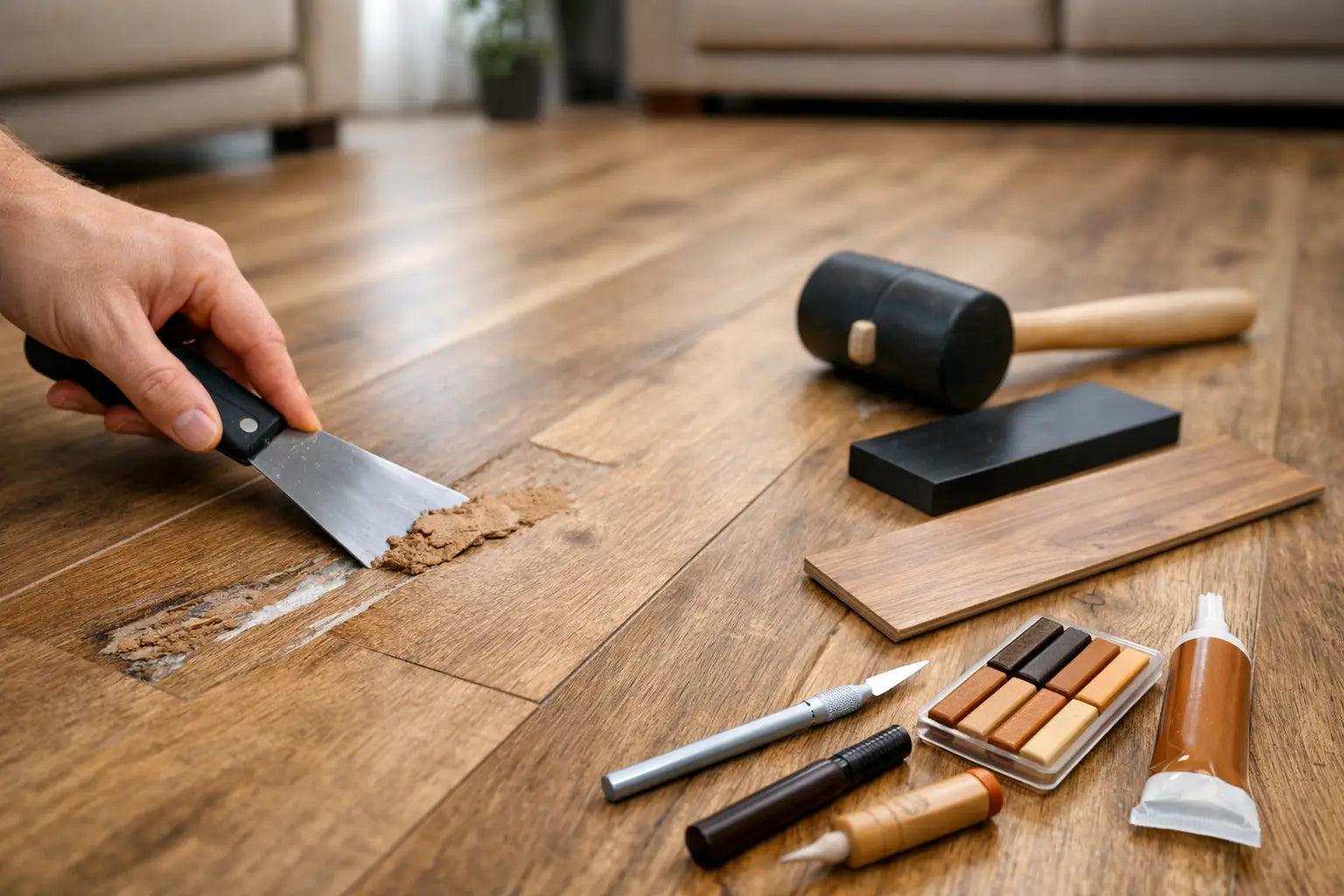
Light scuffs and shallow scratches are the easiest laminate issues to address. They may be caused by grit under furniture, shoes near an entryway, toys, or everyday cleaning tools. If the mark has not broken through the wear layer, a laminate repair kit or color-matched touch-up product can reduce its visibility.
Start by cleaning the area with a laminate-safe cleaner and a soft cloth. Dirt in a scratch can make it appear darker and deeper than it really is. For a small scratch, a touch-up marker, wax pencil, or repair putty matched closely to the plank color can fill and blend the mark. Work slowly, remove excess material, and allow the repair to cure as directed.
A repair product will not make every scratch disappear under direct sunlight or at a low viewing angle. Still, it can make ordinary wear far less noticeable and help seal a small break in the surface. Avoid abrasive pads, steel wool, or aggressive polishing compounds. They can dull the sheen around the repair and create a larger visible spot.
Chips and Small Gouges
A chip from a dropped object may expose the darker core beneath the laminate surface. In these cases, a laminate repair compound or putty is usually more effective than a marker alone. Choose a color that matches the base tone of the plank, rather than trying to match every grain detail.
For a more natural result, apply a small amount at a time and build the repair until it sits level with the surface. Some repair kits include several shades that can be blended for variation. This approach works best for isolated chips no larger than a coin. If several planks are chipped or the damage is in a highly visible area, replacing individual boards may produce a cleaner result.
Loose, Gapped, or Peaking Planks Need a Different Fix
Laminate is commonly installed as a floating floor. The boards lock together and rest over an underlayment rather than being nailed directly to the subfloor. That design means planks can separate, lift, or peak when the floor has insufficient expansion space, excess moisture, a subfloor problem, or a damaged locking edge.
A small gap near a wall may be corrected by removing the baseboard, checking the required expansion gap, and shifting the floor back into place. A gap in the middle of the room is more complicated. Tapping on a board without understanding why it moved can damage the locking system or force the gap somewhere else.
Peaking occurs when boards press upward at a seam. It is often caused by the floor being pinched between walls, cabinets, transitions, or heavy fixed objects. In some situations, relieving pressure at the perimeter solves the problem. If moisture has made the core swell, however, the affected boards generally need replacement.
When a plank's tongue or groove is broken, a flooring professional can assess whether an individual plank repair is possible. The process may require carefully removing trim, disassembling rows from the nearest wall, and reinstalling the floor. In other cases, a damaged board can be cut out and replaced using a precise repair method. The best option depends on the floor layout, the location of the board, and whether matching material is available.
Water Damage Is the Line Between Repair and Replacement
Laminate is water-resistant to varying degrees, but it is not automatically waterproof. Water that stays on the surface briefly and is wiped up quickly may cause no lasting damage. Water that seeps through joints can swell the fiberboard core, curl plank edges, weaken the locking system, and create a raised or uneven appearance.
Watch for darkened seams, soft spots, bubbling, cupped edges, or boards that no longer sit flat. These signs usually mean the damage is below the surface. A touch-up product cannot repair swollen laminate because the board itself has changed shape.
If the issue is limited to a few planks and the moisture source has been fully corrected, selective replacement may be practical. A dishwasher leak, refrigerator line leak, overflowing sink, or wet basement should be addressed before any flooring repair begins. Installing new boards over a damp subfloor can lead to the same problem again.
For widespread moisture damage, replacing the affected section is usually the safer choice. This is especially true if water traveled beneath the flooring, under cabinets, or through multiple rooms. The visible damage may be only part of the issue.
When Replacing a Plank Makes Sense
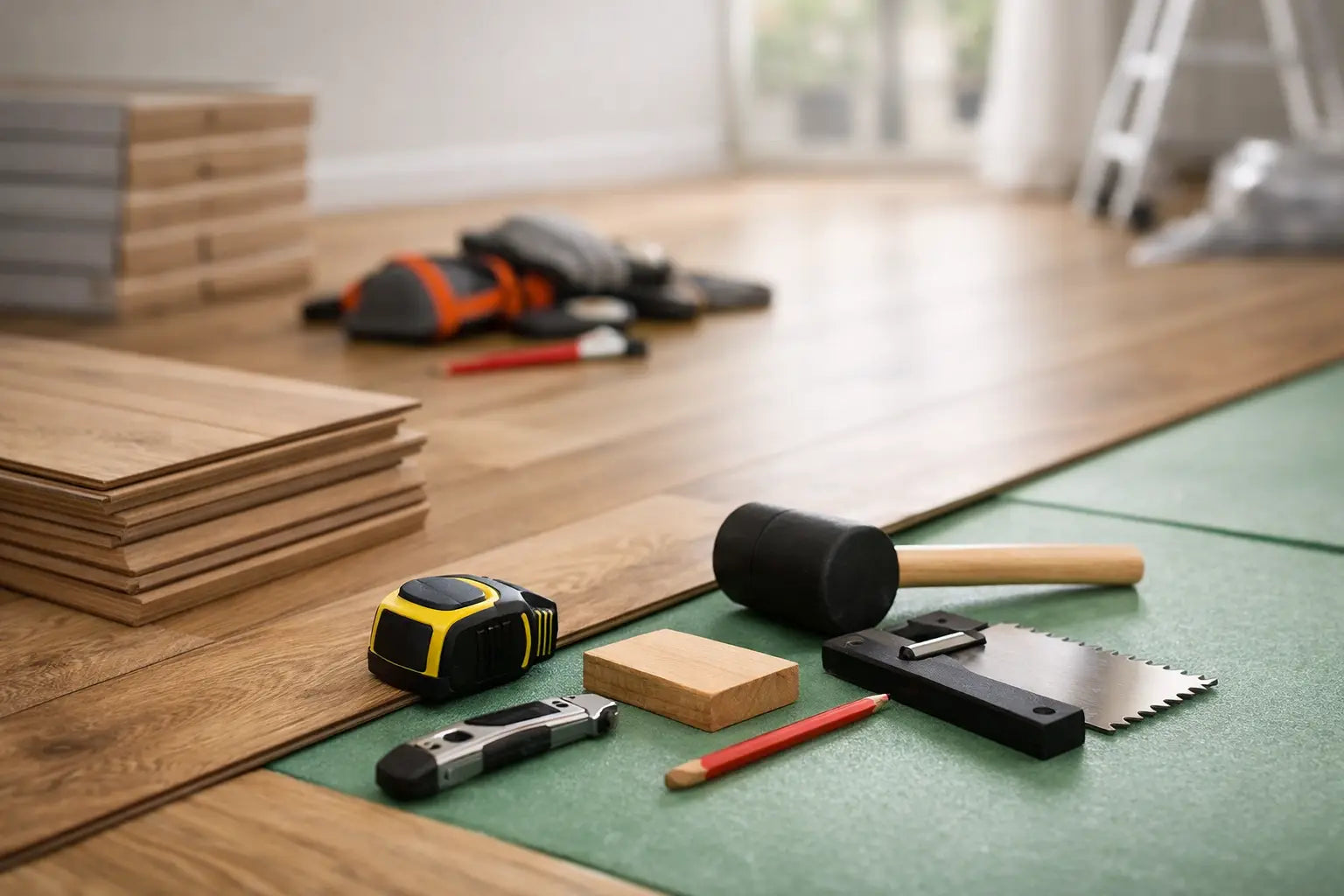
Replacing a few planks is often the most durable repair for deep gouges, chipped corners, swelling, or damaged locking edges. It works best when you have leftover boards from the original installation. If you do not, check the product name, color, and batch information on paperwork or packaging.
Even with the same product, a new plank may not match perfectly after years of sunlight, foot traffic, and cleaning. Flooring can fade or develop a slightly different sheen over time. A professional can help determine whether a replacement will blend acceptably, whether planks can be moved from a less visible area, or whether a larger section should be replaced for a more consistent appearance.
Replacement also deserves careful planning around transitions, doorways, cabinetry, and baseboards. A board in the center of an open living room is very different from a board tucked beneath a toe kick or beside a staircase. The repair may be possible, but the labor involved can change the cost calculation.
How to Prevent More Laminate Damage
A few practical habits will extend the life of a repaired laminate floor. Place felt pads under chair legs and furniture, then check and replace them when they collect grit. Use mats at exterior doors to catch moisture and small debris before it reaches the floor. Clean spills promptly with a dry or lightly damp cloth rather than soaking the area.
Use a vacuum designed for hard surfaces or a soft broom for routine cleaning. Steam mops and wet mops can force excess moisture into seams, especially on older laminate or flooring with worn joints. Keep indoor humidity reasonably stable as well. Seasonal swings can contribute to movement in any floating floor.
If damage keeps appearing in the same location, look beyond the plank. A chair that scrapes daily, a pet water bowl without a mat, or a door that tracks in rain may be the real problem worth solving.
Get a Clear Answer Before You Replace the Whole Floor
Not every damaged board means a full flooring replacement, and not every quick repair will hold up. The right decision comes down to the cause of the damage, the condition beneath the floor, the availability of matching planks, and how long you want the repair to last.
For homeowners in the Kansas City area, FC Hardwood Floors can help evaluate whether a laminate repair is realistic or whether replacement will give you the better long-term result. A careful on-site assessment can turn an uncertain spot in your floor into a practical plan that protects both your home and your budget.

Leave a comment
This site is protected by hCaptcha and the hCaptcha Privacy Policy and Terms of Service apply.