Hardwood Floor Restoration Without Sanding
If your wood floors look tired but the idea of dust, downtime, and a full refinish makes you hesitate, hardwood floor restoration without sanding may be the right middle ground. In many homes and commercial spaces, floors do not need to be taken down to bare wood to look noticeably better. They need the right cleaning, surface prep, and a fresh protective finish applied by someone who knows what the floor can handle.
That distinction matters. A no-sanding restoration is not a shortcut for every floor, and it is not the same as a full refinishing job. When used in the right situation, though, it can improve appearance, restore sheen, and extend the life of your hardwood at a lower cost and with less disruption.
What hardwood floor restoration without sanding actually means
This service focuses on renewing the top layer of the floor rather than removing the old finish and exposing raw wood. The goal is to clean away buildup, lightly prepare the existing finish so a new coat can bond, and then apply a fresh finish that improves protection and appearance.
For homeowners, that often means dull traffic lanes look richer again, light surface scuffs become less noticeable, and the floor feels cleaner and more cared for overall. For property managers and business owners, it can be a practical way to refresh a space without taking it out of service for as long as a full sand-and-refinish project would require.
It is best thought of as restoration at the finish level, not a reset of the wood itself.
When no-sanding restoration is a smart choice
The best candidates are floors with wear in the finish, not deep damage in the wood. If the surface looks cloudy, scratched, or uneven in sheen, but the boards are still structurally sound, this approach can make a real difference.
Signs your floor may qualify
A floor may be a good fit if you are seeing light surface scratches, minor scuffing, dullness in high-traffic areas, faded shine, or residue from years of cleaning products. In many cases, floors that look worse than they are simply need professional attention at the top layer.
Older homes often benefit from this approach when owners want to preserve character while avoiding a more invasive project. It also works well before listing a home, after a remodel, or as part of planned maintenance in rentals and commercial properties.
When sanding is still the better option
There are limits. If the floor has deep gouges, black water stains, pet damage that has penetrated the wood, cupping, warped boards, major finish failure, or uneven coloration from sun exposure and repairs, a no-sanding treatment will not truly fix those issues.
The same goes for floors with wax contamination or products that prevent proper bonding. In those cases, a professional evaluation is worth it because applying a new coat over the wrong surface can create peeling or adhesion problems later.
This is where honest guidance matters. A dependable flooring contractor should tell you when a lower-cost option makes sense and when it does not.
What kind of results you should expect
The right expectation is improvement, not transformation into brand-new wood. Hardwood floor restoration without sanding can refresh the look of the floor, deepen its color slightly, restore a more even sheen, and add protective life to the surface.
It will not erase every mark. Deep scratches and stains usually remain visible, although they may stand out less once the overall finish is renewed. If your floor has years of surface wear but good bones underneath, the improvement can still be dramatic enough to change how the whole room feels.
That is one reason many customers choose it. You get a cleaner, sharper, more polished floor without paying for work the floor may not need yet.
The process a professional typically follows
A quality result depends on preparation. The floor has to be evaluated first to identify the existing finish, contamination, wear patterns, and any areas that need repair before a new coat is considered.
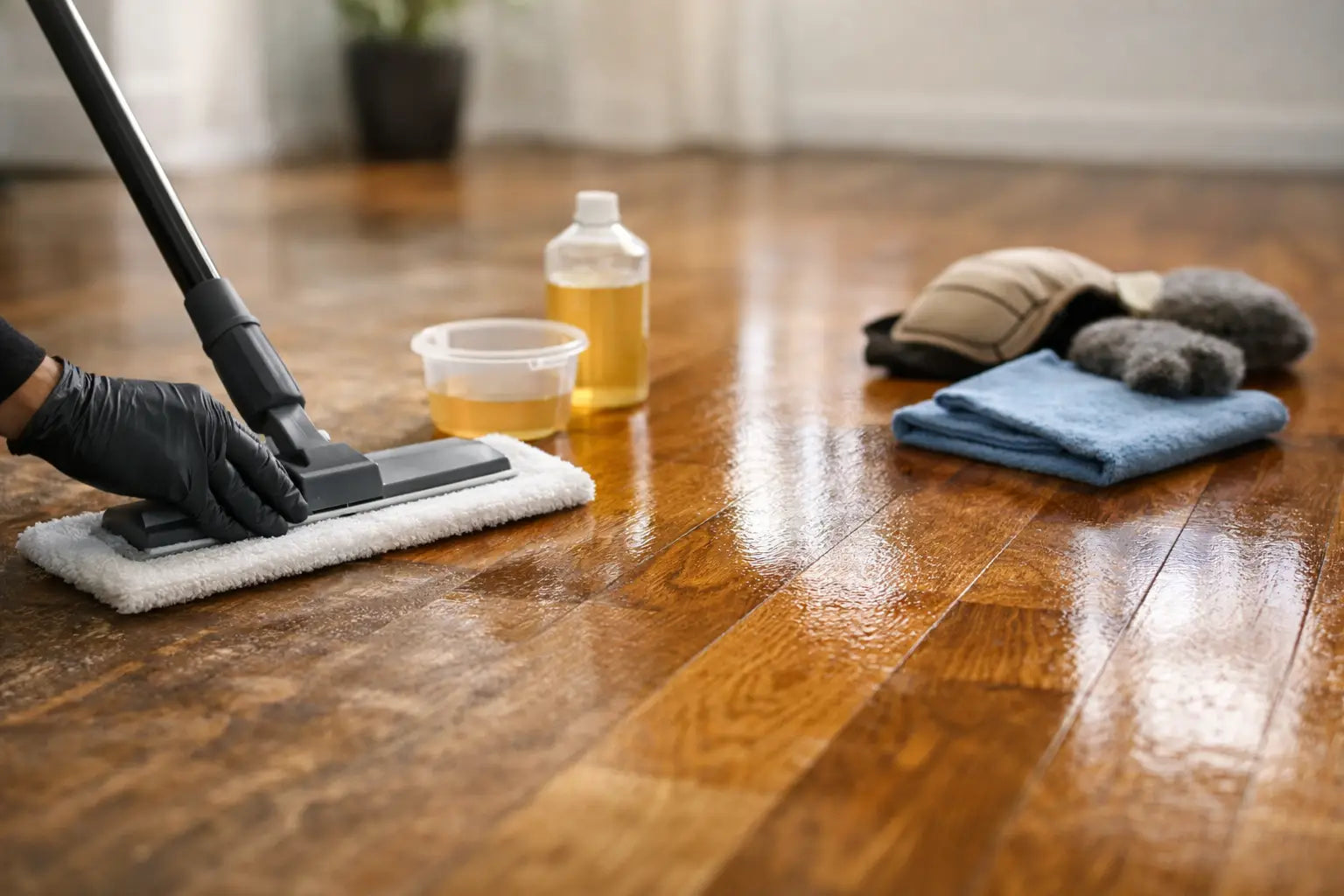
Next comes deep cleaning. This is not standard mopping. Dirt, grease, old cleaners, and residue have to be removed carefully because anything left behind can interfere with adhesion and final appearance.
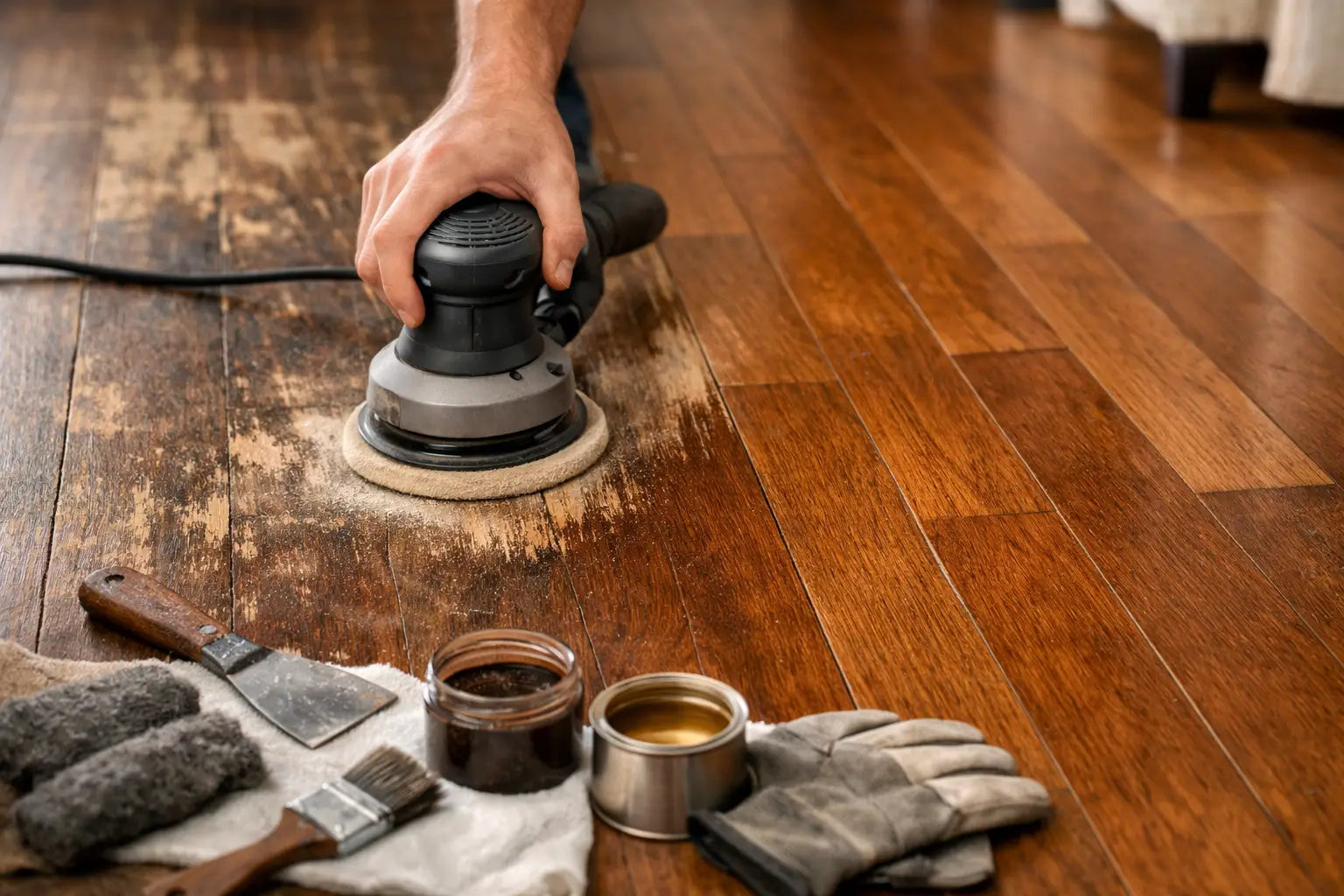
After cleaning, the existing finish is lightly abraded or otherwise prepared so the new finish can bond properly. This is different from sanding the floor down to raw wood. It is a surface-level prep step, and it is one of the reasons professional equipment and experience matter.
Then the new finish is applied. Depending on the product and the floor’s condition, that may be a water-based polyurethane or another compatible topcoat chosen for durability, dry time, and the level of sheen the customer wants.
Once cured, the floor has renewed protection and a more uniform look. The timeline is usually faster than full refinishing, which is a major advantage for busy households and active commercial spaces.
Why DIY often falls short
On paper, no-sanding restoration sounds simple. Clean the floor, scuff it, and coat it. In practice, a lot can go wrong.
Most DIY issues come from poor prep, the wrong product, or misunderstanding what is already on the floor. If there is wax, polish buildup, or an incompatible finish, the new coating may not bond. If the abrasion is uneven, the final appearance can look patchy. If the floor is overcoated when it really needs sanding, the problems get covered temporarily and then show up again.
There is also the issue of product quality and application technique. Streaks, bubbles, lap marks, and uneven sheen are common when the process is rushed or the room conditions are not controlled. What looked like a money-saving project can turn into a more expensive correction later.
For many property owners, the better value is getting the floor assessed correctly the first time.
Cost and value compared to full refinishing
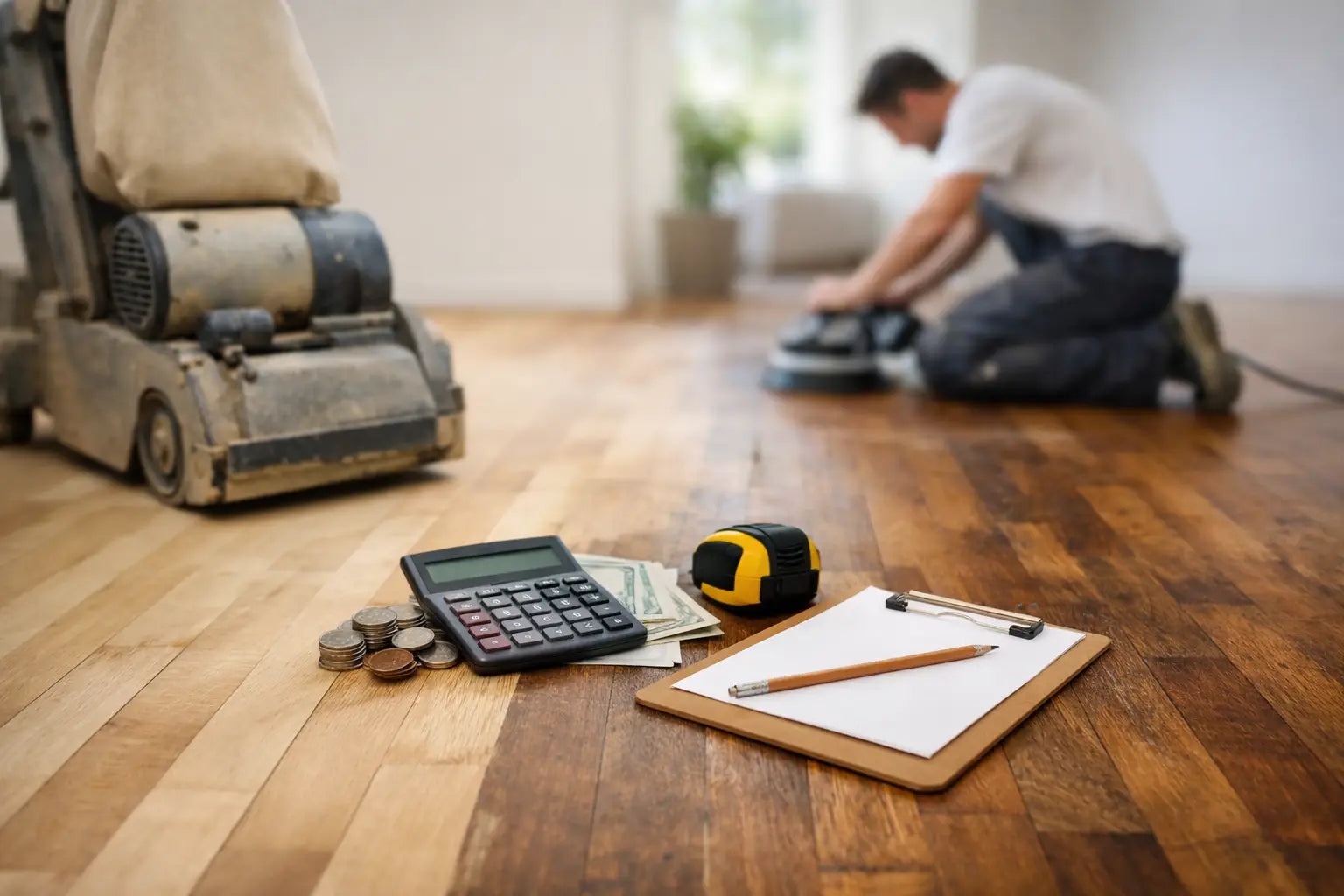
One of the biggest reasons people ask about this service is budget. In many situations, restoring hardwood floors without sanding costs less than a full refinish because it involves less labor, less material removal, and less downtime.
That said, the least expensive option is only the best option if it matches the condition of the floor. Paying for a no-sanding service on a floor that truly needs sanding is not saving money. It is delaying the right repair.
When the floor is a good candidate, though, this approach can be a strong value. It helps preserve the life of the existing finish, improves the room’s appearance, and may postpone a full refinishing project for years.
That can be especially useful for families managing renovation budgets or commercial owners trying to maintain a polished space without a long shutdown.
How to know if your floor is a good candidate
The quickest way is a professional inspection. Photos can help start the conversation, but an in-person look is often the best way to spot buildup, finish wear, moisture issues, or old coatings that affect the recommendation.
If you are in the Kansas City area and weighing your options, this is the point where local experience matters. A company that works on hardwood every day can usually tell the difference between surface wear and deeper damage quickly, and that saves you time and second-guessing.
At FC Hardwood Floors, the goal is to give straightforward guidance based on the floor in front of you, not a one-size-fits-all answer. Some floors need a simple refresh. Others need more involved restoration to get lasting results.
How to make the refreshed finish last longer
Once the floor has been restored, maintenance makes a big difference. Grit and furniture friction are still the biggest threats to the finish, so entry mats, felt pads, and regular dry dusting go a long way.
It also helps to avoid over-wetting the floor and to use cleaners made for hardwood finishes instead of general-purpose products that leave residue. Many floors lose their clarity not because the wood is damaged, but because the finish gets coated with the wrong cleaning products over time.
If you keep traffic dirt under control and clean the floor properly, a no-sanding restoration can hold up well and keep the space looking sharp longer.
A practical option when your floors need help, not replacement
There is a point where a floor looks worn enough to bother you but not damaged enough to justify a full sanding project. That is exactly where this service fits. It gives homeowners and business owners a way to protect their investment, improve appearance, and buy time before more extensive work is necessary.
The key is choosing the right treatment for the actual condition of the floor. A careful assessment, honest expectations, and skilled application can turn a dull, tired surface into one that feels clean, finished, and ready for everyday life again.
If your floors still have good structure and most of the wear is in the finish, a thoughtful restoration may be all they need to look like they belong in the room once more.

Leave a comment
This site is protected by hCaptcha and the hCaptcha Privacy Policy and Terms of Service apply.