

Is It Easy to Install Hardwood Floors?
A lot of homeowners ask the same question right after falling in love with the look of real wood - is it easy to install hardwood floors? The honest answer is no, not usually. Hardwood flooring can absolutely transform a room, but getting it installed the right way takes more than basic tools and a free weekend.
That does not mean every project is impossible for a handy homeowner. It means hardwood installation is one of those jobs where the details matter. A floor can look beautiful on day one and still fail months later if the boards were not acclimated, the subfloor was uneven, or the layout was rushed.
Is It Easy to Install Hardwood Floors for DIY Homeowners?
For most people, hardwood is not the easiest flooring to install. Laminate and luxury vinyl are generally more forgiving because they are designed with simpler locking systems and fewer installation variables. Traditional hardwood is less flexible, more precise, and less forgiving when something goes wrong.
Solid hardwood often needs to be nailed or stapled down with specialized equipment. Engineered hardwood can be easier in some cases, especially when it is designed for a floating or glue-down installation, but even then, the prep work is what separates a lasting floor from an expensive mistake.
If you have experience with finish carpentry, understand subfloor prep, and are comfortable using flooring tools, a small room may be manageable. If you are installing throughout a main living area, dealing with transitions, working around cabinets, or trying to match existing flooring, the difficulty level goes up quickly.
What Makes Hardwood Floor Installation Hard?
The boards themselves are only part of the job. The real challenge is everything that happens before the first plank goes down.
Subfloor condition matters more than most people expect
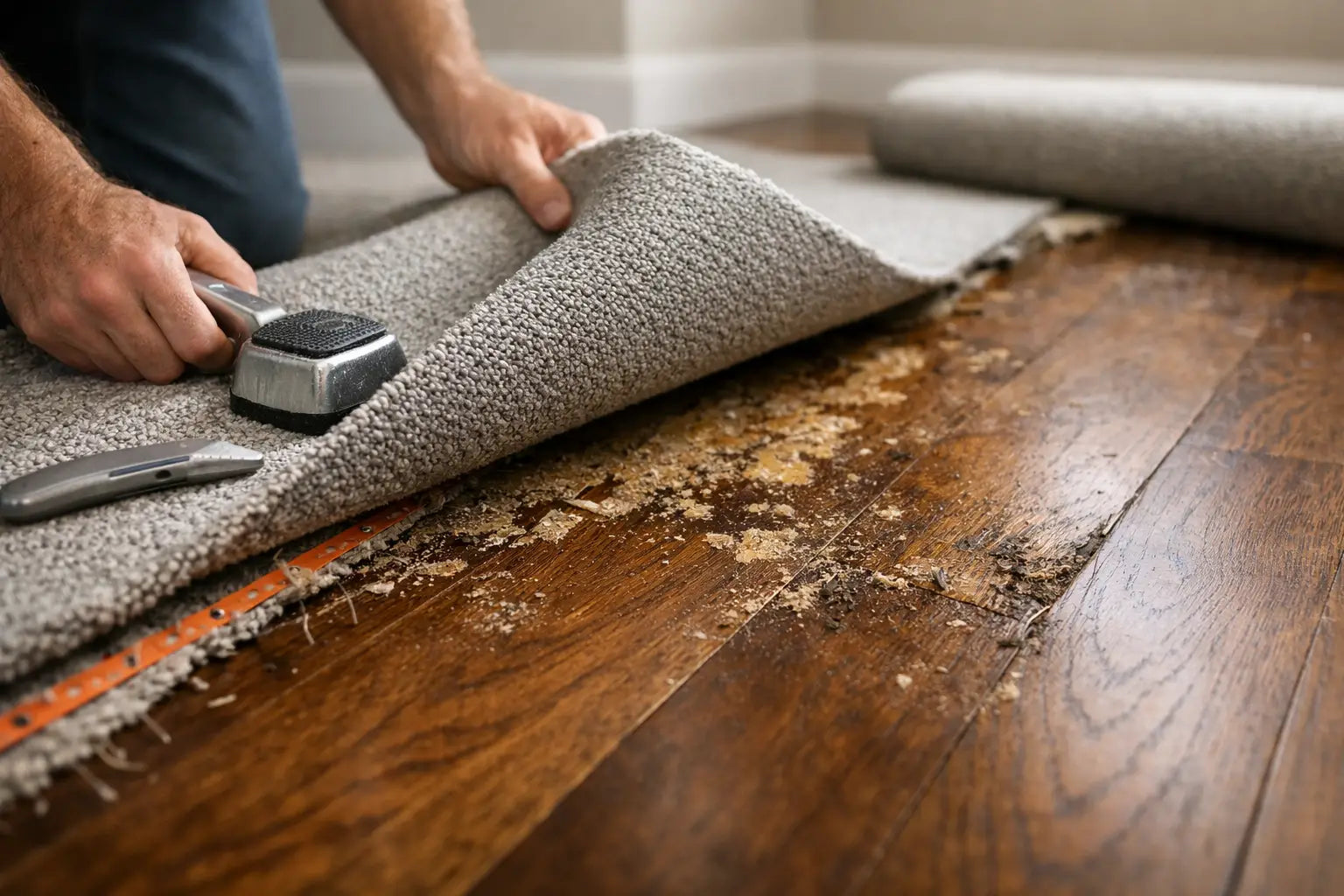
Hardwood needs a clean, dry, level, and structurally sound subfloor. If the subfloor has dips, squeaks, moisture issues, or old adhesive problems, those need to be fixed first. Even small imperfections can affect how the floor feels underfoot and how well the boards stay in place.
In older homes, this step can be the difference between a smooth project and a frustrating one. Uneven subfloors can lead to gaps, movement, or noisy spots. Skipping prep might save time at the start, but it usually costs more later.
Moisture can ruin the result
Wood is a natural material, which is part of why people love it. It is also why installation has to be handled carefully. Hardwood expands and contracts with changes in moisture and humidity. If the flooring is installed before it has acclimated properly, or if the moisture levels in the home and subfloor are not checked, problems can show up after installation.
That can mean cupping, warping, buckling, or gaps between boards. In places with seasonal humidity swings, this is not a minor detail. It is a core part of the installation process.
Layout takes planning
A professional-looking hardwood floor does not happen by accident. Board direction, stagger pattern, room shape, doorway transitions, and the width of the first and last rows all need to be planned before installation starts.
This is where many DIY jobs start to look off. You can have high-quality material and still end up with awkward narrow strips along one wall, uneven transitions, or distracting plank patterns if the layout was not thought through.
Cutting and fitting require precision
Hardwood installation includes a lot of detail work around vents, door jambs, corners, stair edges, and transitions to other flooring. Those cuts need to be tight and clean. A small measuring error repeated across a room can throw everything off.
There is also a practical side to this. Flooring nailers, saws, spacers, tapping blocks, moisture meters, and adhesives all need to be used correctly. Renting or buying the tools is one cost. Knowing how to use them without damaging the material is another.
When DIY Hardwood Installation Can Work
There are situations where a do-it-yourself approach makes sense. A small, square room with a stable subfloor and an engineered hardwood product designed for easier installation is much more realistic than a large open-concept main floor.
DIY may also be reasonable if you have solid home improvement experience and the time to move carefully. Hardwood rewards patience. Rushing almost always shows in the final result.
That said, even a successful DIY project has trade-offs. It may take much longer than expected, and mistakes with material waste, underlayment, trim removal, or transitions can reduce the savings. For homeowners balancing work, family, and a renovation timeline, the convenience of professional installation often has real value.
When Hiring a Pro Is the Smarter Choice
If you are investing in hardwood for long-term beauty and durability, professional installation is usually the safer route. That is especially true for larger spaces, custom layouts, stairs, high-traffic areas, or any job involving solid hardwood.
A professional installer can evaluate subfloor conditions, measure moisture, recommend the right product for the space, and handle the details that are easy to miss. That includes expansion spacing, pattern consistency, trim work, and transitions that make the whole project feel finished.
For commercial spaces and busy households, speed matters too. A trained crew can complete the job efficiently while minimizing disruption. That can make a big difference when you are trying to stay on schedule or get a property ready for use.
At FC Hardwood Floors, this is where hands-on guidance really matters. Choosing the right product is important, but installing it correctly is what protects your investment.
Solid vs. Engineered Hardwood: Which Is Easier to Install?
This is one of the biggest factors behind the question, is it easy to install hardwood floors.
Solid hardwood is generally harder to install. It is thicker, usually site-finished or mechanically fastened, and more sensitive to moisture conditions. It is a premium option with timeless appeal, but it demands more precision during installation.
Engineered hardwood is often easier. Because of its layered construction, it can be more dimensionally stable and may be installed in more ways depending on the product. Some engineered options are still best left to professionals, but they can be more forgiving than solid hardwood in certain environments.
The right choice depends on your subfloor, room location, budget, and long-term goals. A homeowner looking for affordable luxury may find that engineered hardwood offers a better balance of look, performance, and installation flexibility.
Cost Mistakes That Make DIY Less Affordable
Many people consider installing hardwood themselves to save money. Sometimes that works. Sometimes it does the opposite.
Material waste is one of the biggest issues. Wrong cuts, damaged boards, poor layout choices, or installation errors can burn through more flooring than expected. Tool rental, extra trim work, adhesives, and subfloor repairs can also add up fast.
Then there is the cost of correcting problems. If a floor starts moving, squeaking, gapping, or showing moisture damage, repairs may involve removing part of the installation and starting over. That is why the cheapest path at the beginning is not always the most affordable one over time.
Questions to Ask Before You Decide
Before you commit to DIY or professional installation, it helps to be realistic about the job. What type of hardwood are you using? What condition is the subfloor in? Are there moisture concerns? How visible will the room be? How much time can you actually give the project without rushing?
You should also consider what kind of finish you expect. If you want clean transitions, consistent spacing, smooth trim work, and a polished final look, experience matters. Hardwood is one of the first things people notice when they walk into a space. Done well, it adds warmth, value, and character. Done poorly, every gap and uneven line tends to stand out.
The Real Answer to Is It Easy to Install Hardwood Floors
Hardwood floors are not impossible to install, but they are rarely easy in the way people hope. The materials are beautiful, durable, and worth the investment, yet they demand careful prep, accurate installation, and a clear understanding of how wood behaves inside a home or commercial property.
If you are comfortable with the tools, working in the right space, and using the right product, a smaller project may be within reach. If you want the best long-term result with fewer surprises, professional installation is usually the better value.
A hardwood floor should feel like a lasting upgrade, not a project you have to second-guess every time you hear a creak. The right plan at the start makes all the difference.


Leave a comment
This site is protected by hCaptcha and the hCaptcha Privacy Policy and Terms of Service apply.