Does Installing Carpet Ruin Hardwood Floors?
A lot of homeowners ask the same question right after pulling up a corner of old carpet or planning a remodel: does installing carpet ruin hardwood floors? The honest answer is no, not automatically. Carpet itself is not the problem. The risk comes from how it is installed, what gets attached to the wood, how moisture is managed, and how long the floor stays covered.
That distinction matters if you are deciding whether to carpet over existing hardwood, protect original floors in a rental, or uncover wood that has been hidden for years. In many homes, hardwood under carpet can be preserved surprisingly well. In others, the damage is real, but still repairable.
Does installing carpet ruin hardwood floors or just cover them?
In most cases, installing carpet does not destroy hardwood floors. It covers them and changes how they age. Some parts of the wood may actually see less sun fading and less daily foot traffic. But carpet installation usually involves tack strips fastened around the perimeter, and those fasteners leave holes. Padding can also trap moisture, dust, and spills if conditions are not controlled.
So the better question is not whether carpet always ruins hardwood. It is whether the installation method, the room conditions, and the time under carpet create damage that goes beyond normal repair.
If carpet is installed carefully and kept dry, the hardwood underneath may only need cleaning, sanding, and refinishing when uncovered. If the carpet has been wet repeatedly, installed with heavy adhesive, or left in place for decades without ventilation, the wood may show staining, discoloration, odors, or localized deterioration.
What kind of damage can happen under carpet?
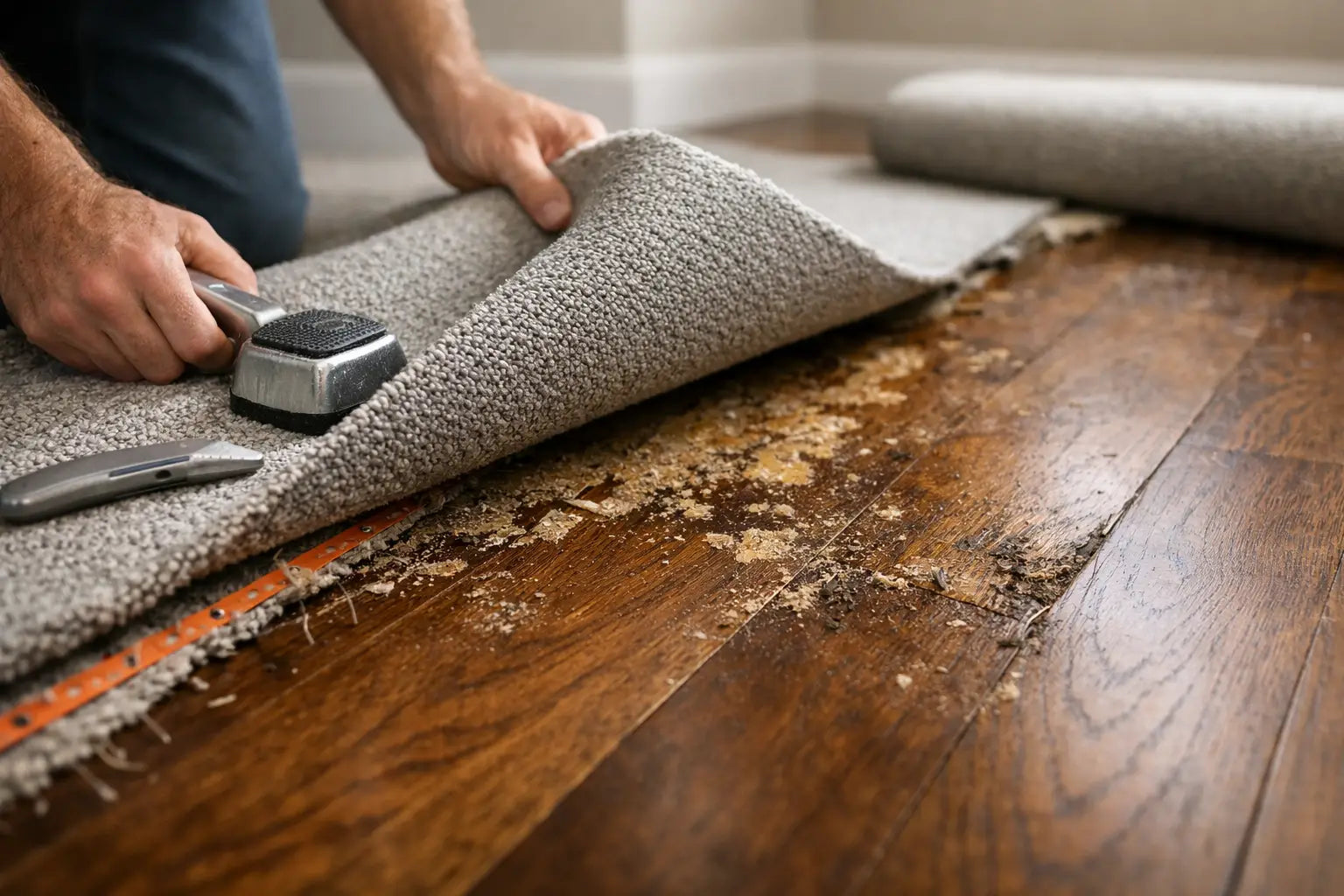
The most common issue is nail or staple holes from tack strips. These are usually placed near the edges of the room, where the carpet is stretched and secured. While the holes are permanent in the sense that they happened, they are often minor and can be filled during refinishing.
Surface scratching is another possibility. During installation, moving tools, dragging padding, or debris trapped between materials can scuff the finish. Usually, this affects the protective coating more than the wood itself.
Moisture is where problems become more serious. Carpet padding can hold onto humidity, pet accidents, spills, or cleaning residue. Hardwood does not respond well to prolonged moisture exposure. Boards can cup, stain, darken, or develop mildew-related odor. In severe cases, sections may need replacement instead of refinishing.
Adhesive can also be an issue, though it depends on the carpet system. Wall-to-wall carpet over hardwood is often installed with tack strips rather than full glue-down methods. But in some situations, adhesive products are used, and removing them from hardwood can be labor-intensive. Strong adhesive may pull finish, leave residue, or require careful sanding.
When carpet can actually help preserve wood
There is another side to this. Hardwood hidden under carpet is often shielded from direct sunlight, furniture wear, and daily abrasion. In bedrooms, upstairs spaces, and low-moisture areas, wood under carpet can stay in decent shape for years.
That is why homeowners are sometimes pleasantly surprised after carpet removal. The floors may look dull, and the perimeter may have tack-strip marks, but the field of the floor can still be structurally sound. If the wood species is desirable and the boards were well installed to begin with, restoration is often a smart investment.
Older homes especially can have solid hardwood beneath carpet that is worth saving. The finish may be uneven compared with exposed areas in nearby rooms, but that is usually a refinishing issue, not a total loss.
The biggest factors that determine whether hardwood gets damaged
The room itself matters. A dry guest room is very different from a basement-adjacent living area, a pet-heavy household, or a commercial space with frequent spills. Moisture, traffic, and maintenance habits all change the outcome.
The age of the carpet matters too. Carpet installed for five years is one thing. Carpet left in place for thirty years with repeated steam cleaning and little airflow is another. Over time, trapped dust, residue, and hidden moisture can affect both finish and wood condition.
Installation quality also makes a difference. A careful installer can minimize unnecessary damage. Poor installation can leave excessive fastener holes, rough tack-strip placement, or adhesive mess that complicates restoration later.
And then there is the condition of the hardwood before the carpet ever goes down. If the floor already had finish wear, gaps, water staining, or movement, carpet is not likely to improve those problems. It may simply hide them until the material is removed.
Signs your hardwood may still be in good shape under carpet
If you are considering carpet removal, there are a few encouraging signs. Floors that feel solid underfoot, with no soft spots or major movement, often have a better chance of restoration. A room that has stayed dry, with no history of leaks, usually points to fewer moisture-related issues.
You may also notice only light perimeter damage when a small section is lifted. That often means the wood field is intact and the main restoration work will involve patching, sanding, and refinishing. Even visible color difference between covered and exposed areas is common and usually manageable.
A professional inspection is the best way to know for sure. An experienced flooring contractor can identify whether the boards are solid hardwood or another material, how much sanding life remains, and whether damaged sections can be blended with the surrounding floor.
How to install carpet over hardwood with less risk
If you want the comfort and sound control of carpet but do not want to create unnecessary problems for the wood below, the goal is simple: keep the hardwood stable, clean, and as untouched as possible.
Start with a dry, clean floor. Existing moisture issues should be addressed before anything is covered. If there has been past water intrusion, that should be evaluated first rather than hidden under padding.
Use installation methods that are standard for hardwood-safe carpet installations, and avoid excessive adhesives unless there is a specific reason for them. Make sure the padding and carpet are appropriate for the room, especially in areas where humidity can fluctuate.
It also helps to think long term. If you believe you may want to restore the hardwood later, tell your installer that preserving the floor matters to you. That can influence how materials are chosen and how carefully the work is done.
What to expect when removing carpet from hardwood
The first surprise for many homeowners is that the hardwood usually does not come out ready to admire the same day. Even when the floor is fundamentally in good shape, it often needs attention. There may be tack-strip holes, slight finish lines, residue, discoloration near windows, or uneven sheen.
The good news is that these are often restoration issues, not deal-breakers. Sanding can remove many surface imperfections. Refinishing can bring back color and consistency. Small repairs can address isolated damage around the edges or near doorways.
The more challenging cases involve deep staining, pet odor penetration, warped boards, or previous patchwork that does not match. Those situations require a more tailored plan. Sometimes a partial board replacement followed by refinishing creates an excellent result. Sometimes the condition of the wood makes another flooring option the better investment.
That is why experienced guidance matters. At FC Hardwood Floors, this is exactly the kind of question we help homeowners sort through - whether the right next step is restoration, replacement, or a different surface that better fits the space and budget.
Is it worth carpeting over hardwood at all?
Sometimes yes. Bedrooms, nurseries, upper floors, and spaces where warmth and noise reduction matter can be good candidates. Carpet can make a room feel softer and quieter, and for some families that comfort is worth it.
But if the hardwood is high quality, already in excellent condition, and visible in a main living area, covering it may not add much value. Many homeowners prefer to keep hardwood exposed and use area rugs instead. That approach protects the floor while preserving its appearance and resale appeal.
For rentals and commercial properties, the decision often comes down to wear expectations, maintenance, and budget. Carpet may be less expensive upfront in some cases, but hardwood usually offers better long-term durability and easier cleaning when properly maintained.
The right answer depends on how the room is used, how long you plan to stay, and whether comfort, acoustics, restoration potential, or resale value is driving the decision.
If you are trying to choose between carpeting over hardwood or bringing wood back to life, the floor deserves a closer look before you commit. A good inspection can save you from guessing and help you make a choice that feels right now and still makes sense years from now.


Leave a comment
This site is protected by hCaptcha and the hCaptcha Privacy Policy and Terms of Service apply.