
Refinishing vs Replacing Hardwood Floors
A floor can look tired long before it is truly finished. Scratches, dull spots, fading, and worn traffic paths often make homeowners wonder about refinishing vs replacing hardwood, but the right answer depends on what is happening below the surface, not just what you see from standing height.
In many cases, a hardwood floor still has years of life left and simply needs professional sanding and a new finish. In other cases, boards are too thin, too damaged, or no longer a good fit for the space. If you are weighing both options, the smartest place to start is with the condition of the wood, your long-term plans, and how much disruption you are willing to take on.
Refinishing vs replacing hardwood: what is the real difference?
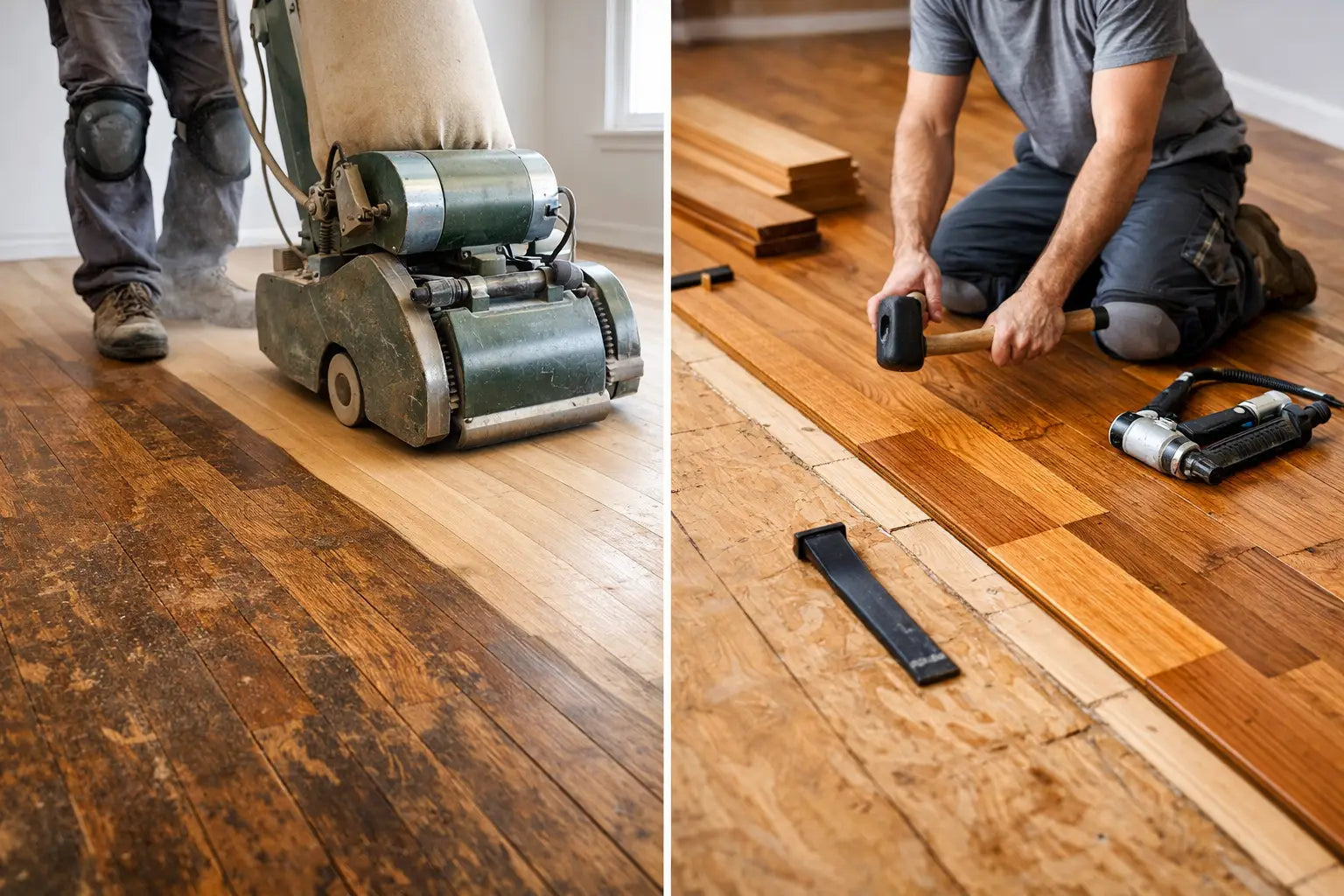
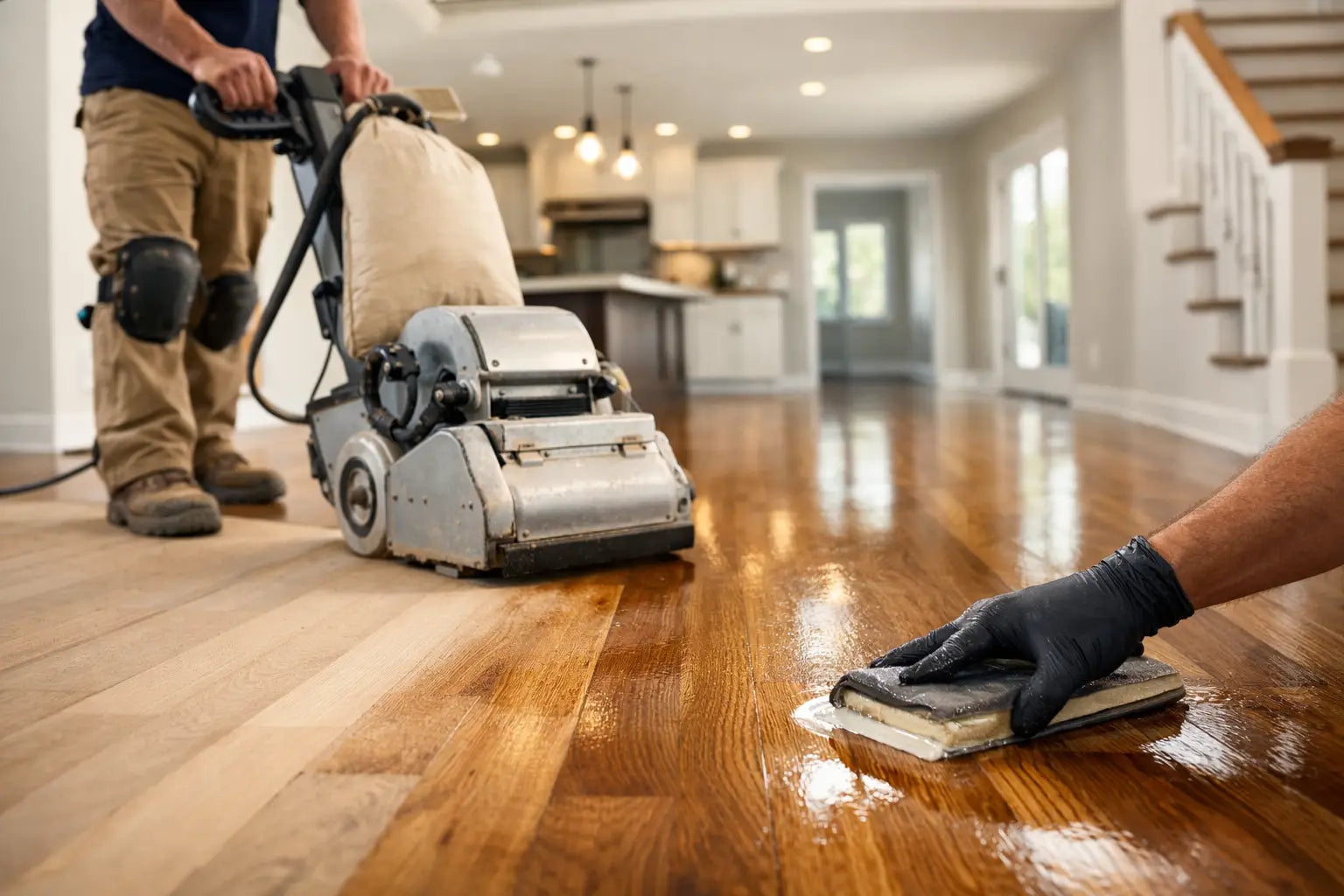
Refinishing keeps your existing hardwood floor in place. The top layer is sanded down to remove surface wear, then a new stain or finish is applied. This approach restores the look of the floor without removing the boards themselves.
Replacing means the old floor comes out and a new one goes in. That may involve installing brand-new solid hardwood, engineered wood, or even moving to another flooring product if the room calls for a different solution.
The distinction matters because these are not just two price points for the same result. Refinishing is a restoration project. Replacing is a fresh start. One preserves what you have. The other gives you the chance to change species, plank width, color, layout, and sometimes even improve performance in a challenging room.
When refinishing makes the most sense
If your hardwood floors are structurally sound and the damage is mostly cosmetic, refinishing is often the better investment. Surface scratches, minor dents, faded finish, and dullness are all common reasons to refinish.
This is especially true in older homes with quality solid hardwood. Many original wood floors were built to last and can be sanded and refinished multiple times over their lifespan. If the boards are still stable and there is enough wear layer left, refinishing can bring them back beautifully.
Refinishing also makes sense when you like the layout and character of the floor but want a cleaner, updated look. A darker stain can mask some variation, while a lighter finish can make a room feel more current and open. You are not stuck with the exact color you have now.
For homeowners who want affordable luxury, refinishing often delivers the strongest value. You keep the real hardwood, improve the appearance, and avoid the larger cost and labor of full removal and replacement.
Signs your floor is a good candidate for refinishing
A floor is usually a strong refinishing candidate when the boards are not loose, the subfloor is stable, and the wear is limited to the surface. Light cupping, everyday scratches, finish wear near entryways, and pet marks can often be corrected during sanding.
A professional inspection is important here. Some floors look beyond saving but respond well to restoration. Others seem fine until a closer look reveals previous sanding has left too little wood to work with.
When replacing hardwood is the better call
There are times when refinishing is simply not enough. Deep water damage, severe warping, widespread staining that has soaked into the wood, termite damage, and major structural movement can all push a floor past the point where restoration makes sense.
Replacement is also worth considering when the current floor no longer fits the needs of the property. Maybe you want wider planks, a different wood species, or a more durable product for a busy commercial setting. Maybe there are multiple patched areas from previous repairs, and the floor has started to look inconsistent room to room.
If your existing hardwood is engineered with only a thin top layer, refinishing may not be possible or may only be possible once. If the boards have already been sanded several times, replacement may be the safer long-term decision.
Common reasons to replace instead of refinish
A floor usually needs replacement when damage goes deeper than the finish. That includes boards that are cracked through, soft from moisture, uneven from subfloor issues, or too thin to sand again. Replacement also makes more sense when you are already doing a major remodel and want the flooring to match a new layout or design direction.
For rental properties or commercial spaces, replacement can also be the practical choice when downtime must be planned around a full renovation anyway. If you are already opening walls, changing floor plans, or upgrading several finishes at once, installing new flooring may be more efficient than restoring old material in place.
Cost matters, but value matters more
Most property owners start with budget, and that is reasonable. In general, refinishing costs less than replacing hardwood because you are not paying for complete tear-out and new materials across the whole floor.
But the lower upfront price is not always the best value. If a floor has hidden moisture issues or weak boards, refinishing may only improve the appearance for a short time. In that case, replacement can save money by solving the real problem once instead of revisiting it later.
The opposite is also true. Some homeowners assume replacement is better because it is new, when in reality the existing hardwood is higher quality than many modern alternatives. If the structure is sound, refinishing may preserve a better floor while keeping the project budget under control.
That is why the decision should not be based on price alone. It should be based on condition, lifespan, and what result you actually want from the space.
Appearance, dust, and disruption
Refinishing and replacing each come with some level of inconvenience. Refinishing usually means sanding, drying time, and staying off the floors while finishes cure. Replacement involves demolition, material delivery, installation, and often trim adjustments or transitions.
Neither project is completely disruption-free, but the experience is different. Refinishing can be ideal if you want to preserve the home’s original look and avoid a full construction process. Replacement can be better if you want a major visual change and are already prepared for a larger renovation.
Households with pets, kids, or tight schedules should think through timing carefully. The best flooring decision is not just about the boards. It is also about how the project fits into real life.
Refinishing vs replacing hardwood in high-traffic spaces
High-traffic areas deserve special attention. Entryways, kitchens, hallways, offices, and commercial spaces often show wear first. If the wood itself is still in good shape, refinishing can restore these areas and add a tougher protective finish.
If the traffic pattern has caused deep structural wear, repeated patching, or moisture problems, replacement may hold up better in the long run. In some properties, this is also the moment to consider whether hardwood is still the right product for that room or whether another flooring option would perform better.
This is where local, hands-on guidance helps. A family-owned flooring company like FC Hardwood Floors can look at the actual wear patterns, the age of the floor, and the demands of the space before recommending a solution.
How to make the right decision for your home or property
Start with three questions. First, is the damage cosmetic or structural? Second, do you want to preserve the current floor or change the look entirely? Third, are you planning for the next few years or the next few decades?
If the floor is solid and you like what is already there, refinishing is often the smart move. If the boards are failing or the floor no longer suits the property, replacement is the better investment.
The best decisions usually come from an in-person assessment, not a guess based on photos online. A professional can tell you whether the floor has enough material left to sand, whether damaged boards can be selectively repaired, and whether a full replacement would actually serve your budget and goals better.
A well-chosen flooring project should make daily life easier, improve the look of the space, and feel worth the investment every time you walk across it. If you are unsure which path makes sense, the next step is simple: have the floor evaluated by someone who will give you a clear recommendation based on condition, not a one-size-fits-all sales pitch.

Leave a comment
This site is protected by hCaptcha and the hCaptcha Privacy Policy and Terms of Service apply.