
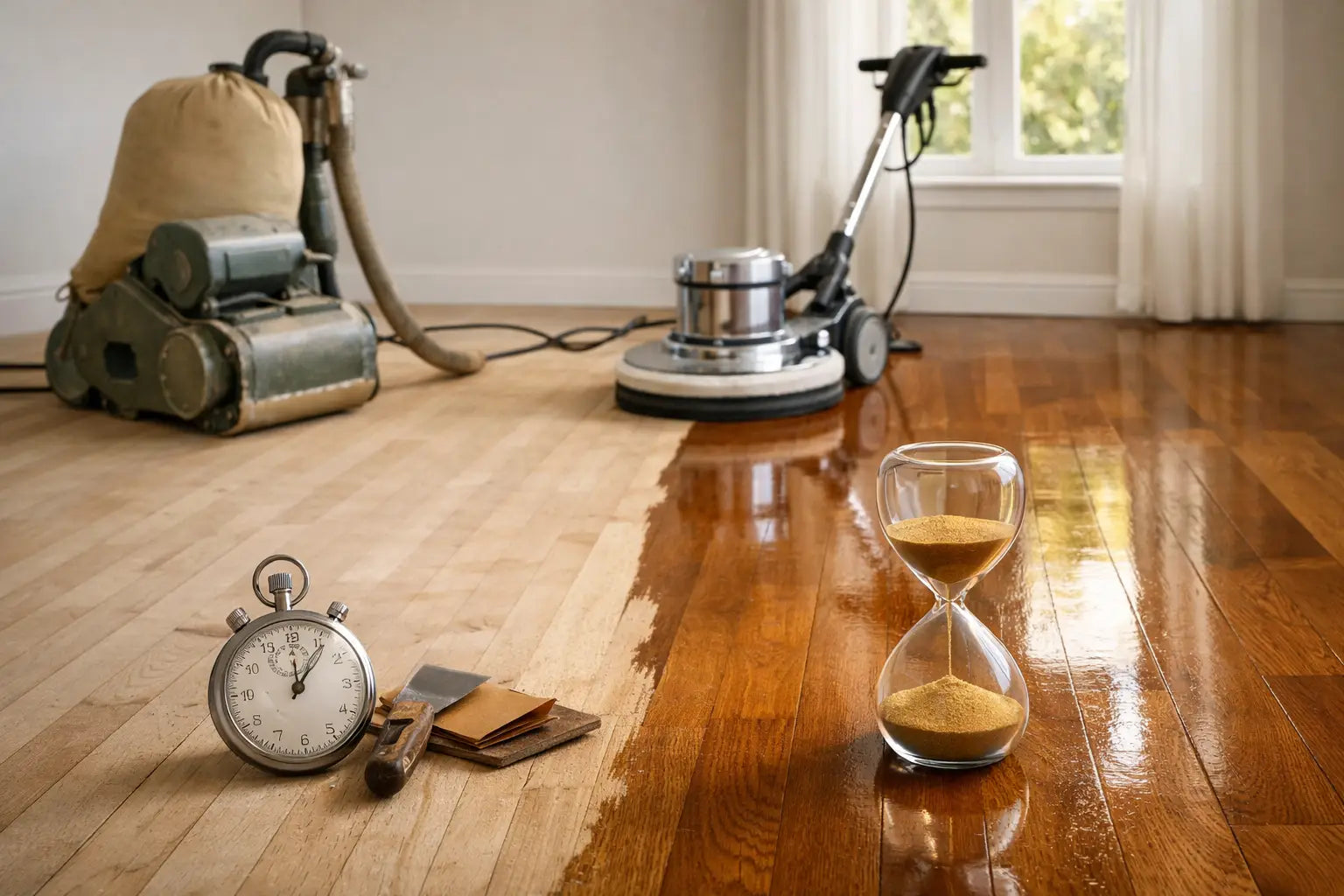
How Long Does Floor Refinishing Take?
If you are planning to refinish hardwood floors, the question usually is not whether the results will be worth it. It is how long does floor refinishing take, and how much that timeline will disrupt your home or business. The short answer is that most projects take 3 to 5 days from sanding to final coat, but the full timeline depends on floor condition, square footage, repairs, stain choice, drying time, and when the space can be used normally again.
That range can feel broad, but there is a reason for it. Floor refinishing is not just one job. It is a sequence of steps that have to happen in the right order, with enough time between them for the finish to cure properly. Rushing any part of the process can affect appearance, durability, and how long the floor lasts before it needs attention again.
How long does floor refinishing take for most homes?
For a typical residential hardwood refinishing project, expect active work to take around 3 to 5 days. Smaller rooms in decent shape may move faster. Larger homes, heavily worn floors, or projects that include repairs often take longer.
The work itself is only part of the schedule. Homeowners also need to plan for prep before the crew arrives and limited use of the floors after the final coat goes down. In many cases, you can walk carefully in socks after about 24 hours, but furniture, rugs, pets, and full daily traffic usually have to wait longer.
A realistic timeline often looks like this: one day for prep and sanding, one to two days for repairs and stain if needed, and one to two more days for finish coats and dry time. If the project includes multiple rooms, stairs, custom stain work, or a high-moisture environment, the schedule can stretch beyond that.
What affects how long floor refinishing takes?
The biggest variable is the condition of the floor. A hardwood floor with light surface wear is very different from one with deep scratches, pet stains, water damage, or boards that need replacement. Repairs add time, but they are often worth it because they improve both the final look and the life of the floor.
Square footage matters too, but not always in the way people expect. A large open area can sometimes move more efficiently than several small rooms with tight corners, closets, transitions, and detailed trim work. Layout affects labor just as much as size.
Finish type also changes the schedule. Some finishes dry and cure faster than others. Water-based finishes often allow for a quicker turnaround, while oil-based finishes usually need more time between coats and before regular use. Stain can add another day or more, since it has to dry before protective coats are applied.
Weather and indoor conditions play a role as well. Humidity slows drying. Poor ventilation can do the same. In the Kansas City area, seasonal swings can affect project timing, especially in homes without steady indoor climate control.
A step-by-step floor refinishing timeline
Day 1: Prep and sanding
Before refinishing starts, the space needs to be cleared as much as possible. Furniture, rugs, window treatments near the floor, and breakable items should be removed. Dust containment and prep work help protect the rest of the home, but sanding is still a process that requires planning.
Once the floor is ready, sanding begins. This removes the old finish and smooths out wear, scratches, and minor imperfections. Depending on the condition of the wood, the crew may use multiple sanding passes with different grit levels to get the surface ready for stain or finish.
Day 2: Detail sanding and repairs
After the main sanding is complete, edges and corners are refined. This is also the stage where repairs are often handled, such as replacing damaged boards, filling gaps where appropriate, or addressing problem spots that become more visible once the old finish is removed.
Not every floor needs significant repair work, but when it does, this is not the place to cut corners. A proper repair may add a day, yet it usually prevents a disappointing final result.
Day 3: Stain application, if selected
If you want to change the color of the floor or refresh it with a new stain, that step typically happens after sanding and repairs are complete. Stain needs time to dry fully before a protective topcoat can be applied.
Some homeowners skip stain and keep a more natural wood look. That can save time. It can also reduce variables in the final appearance, since stain can highlight differences between old boards and repaired areas.
Day 4 and beyond: Finish coats and drying
Protective finish is what gives the floor its durability. Most refinishing projects involve multiple coats, with dry time between each one. The exact number of coats and the schedule between them depend on the product being used and the condition of the floor.
This is the part of the job where patience matters most. A floor may look dry before it is ready for real traffic. Touching it too soon, moving furniture back too early, or laying rugs down before the finish has cured can leave marks or trap moisture.
When can you walk on refinished floors again?
This is where many timelines get misunderstood. There is a difference between dry enough to walk on and cured enough for normal life.
In many cases, light foot traffic in socks is allowed after 24 hours. Shoes, pets, and heavier traffic may need to wait longer. Furniture often stays off the floor for at least 48 to 72 hours, and rugs may need to stay off for several days or even a couple of weeks depending on the finish.
That means the answer to how long does floor refinishing take is not only about when the crew finishes. It is also about when your rooms can function normally again. If you are refinishing a kitchen, main hallway, office, or an entire first floor, that distinction matters a lot.
How to plan around the disruption
If you are refinishing floors in a home you are living in, timing matters almost as much as craftsmanship. Bedrooms, kitchens, and high-traffic paths can create bottlenecks that make daily life difficult for a few days. A good project plan should account for where people will sleep, how they will move through the home, and where furniture will go during the process.
For commercial spaces, scheduling is even more important. Retail stores, offices, and rental properties often need a tighter turnaround. In those cases, it may make sense to phase the work by area rather than trying to refinish everything at once. That can extend the overall calendar but reduce the impact on operations.
This is also why clear communication from your flooring contractor matters. A dependable team should walk you through the likely schedule, explain what can shift it, and give realistic expectations for re-entry and full use.
Can floor refinishing be done faster?
Sometimes yes, but there are limits. A straightforward project with minimal repairs, no stain, and a fast-drying finish can move more quickly than average. On the other hand, trying to force a rushed schedule is one of the easiest ways to compromise the result.
Fast is helpful only if the floor still gets the prep, sanding quality, and cure time it needs. If a contractor promises an unusually short turnaround without asking about the floor condition, layout, or finish preferences, that is worth questioning.
Affordable luxury should still feel like a lasting investment. A beautiful floor that wears poorly because the finish did not have time to cure is not really a time-saver.
Signs your project may take longer than expected
Some delays are easy to predict once a professional sees the floor. Deep pet stains, uneven boards, previous patch jobs, squeaks tied to subfloor issues, and older floors with thin wear layers can all affect the schedule. Custom stain matching can also add time because samples may need to be tested before the final color is approved.
Another common issue is hidden damage under furniture or rugs. Floors often look fine until everything is moved and the full surface is exposed. If there is a sharp contrast between sun-faded areas and covered areas, or if there are repairs from older leaks, the refinishing plan may need to be adjusted.
That is why estimates based only on square footage are not always enough. An on-site evaluation usually gives a more accurate timeline and helps avoid surprises once the work begins.
Is it worth leaving the house during refinishing?
For some families, yes. If only one room is being refinished, staying home may be manageable. If the project covers large portions of the home, especially the main living areas, leaving for a few days can make the process much easier.
This is not always necessary, but it often reduces stress. It also helps protect the work, since fewer people moving through the area means less risk of disturbing dust barriers or stepping on floors before they are ready.
If you are scheduling a refinishing project in Olathe, Overland Park, Lenexa, Leawood, Shawnee, or Kansas City, ask for a room-by-room timeline before work starts. That makes it easier to decide whether staying home is realistic.
A well-refinished floor can change the whole feel of a space, but the best results come from giving the process enough time to be done right. A few extra days of planning is usually a small trade for floors that look better, last longer, and feel like they belong in the home you actually want to live in.


Leave a comment
This site is protected by hCaptcha and the hCaptcha Privacy Policy and Terms of Service apply.