

What Is Dustless Hardwood Floor Refinishing?
If you have ever pictured hardwood floor refinishing as a house full of fine dust, plastic sheeting, and a cleanup that lasts longer than the sanding, you are not alone. That is exactly why so many homeowners ask, what is dustless hardwood floor refinishing, and is it actually worth it? The short answer is that it is a sanding and refinishing process designed to capture most of the dust at the source, making the project cleaner, more comfortable, and easier to manage.
For busy households, commercial spaces, and anyone trying to improve floors without turning the property upside down, that difference matters. Cleaner refinishing does not just make the job feel more convenient. It can also help protect adjacent rooms, reduce airborne debris, and create a better experience from start to finish.
What Is Dustless Hardwood Floor Refinishing?
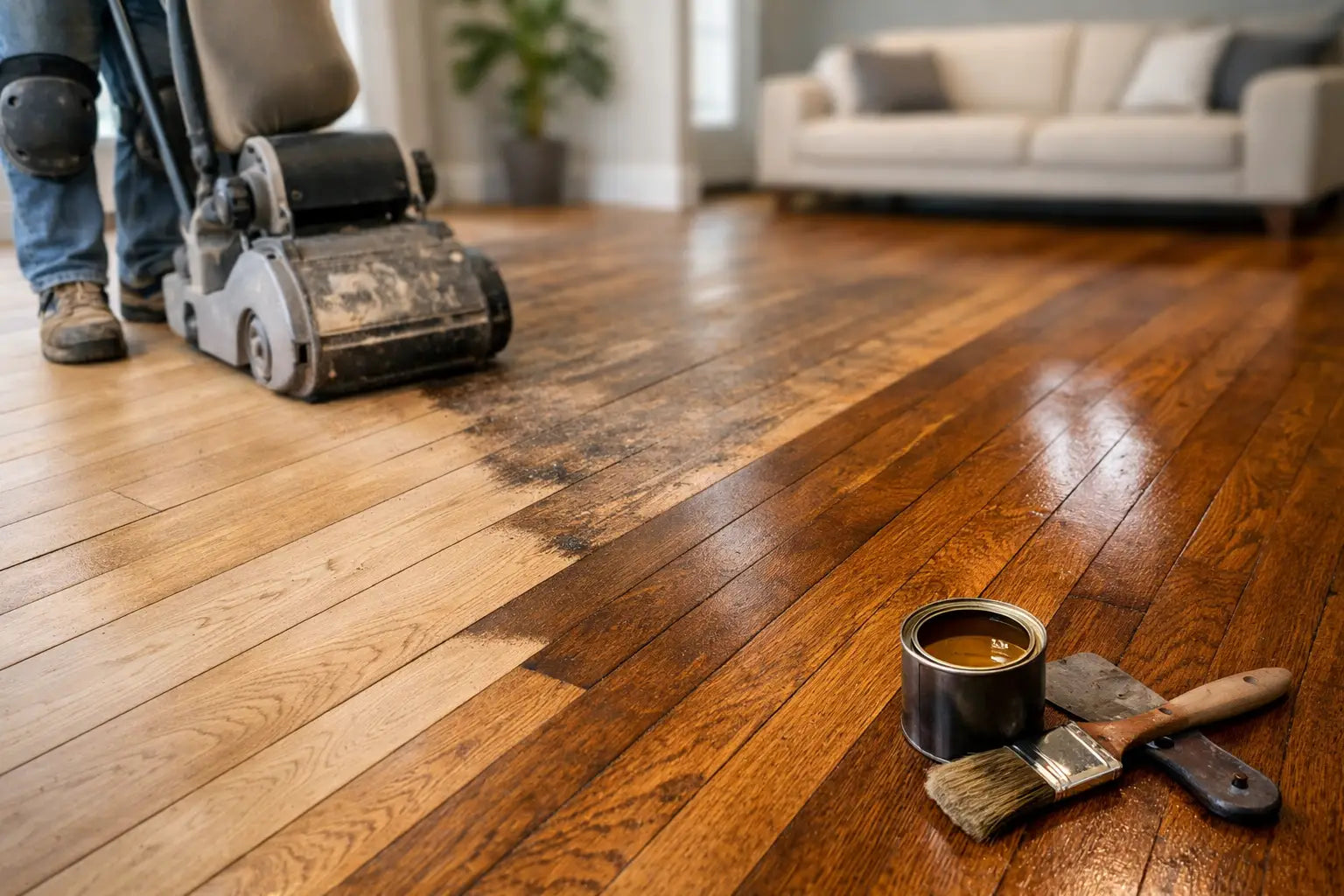
Dustless hardwood floor refinishing is a method of sanding hardwood floors with equipment that is connected to high-powered vacuum systems. As the sanding machine removes the old finish and smooths the wood, the vacuum captures the majority of the dust before it spreads through the room.
The key word here is majority. Dustless does not mean zero dust in the literal sense. Any trustworthy flooring professional should be clear about that. There can still be a small amount of residual dust from edges, corners, or general jobsite activity. But compared with traditional sanding, the amount of airborne dust is dramatically reduced.
That is why many homeowners prefer it for occupied homes, remodels with finished nearby spaces, and projects where cleanliness is a high priority.
How Dustless Refinishing Works
The process itself is still hardwood refinishing. The floor is inspected, repaired as needed, sanded down to bare wood, stained if desired, and sealed with a protective finish. What changes is the sanding setup.
With dustless systems, sanding machines are attached to containment units that pull dust directly from the machine as it is created. Instead of allowing particles to settle across trim, vents, furniture, and neighboring rooms, the system collects them in sealed containers or filtration bags.
A professional crew will also prepare the space before sanding begins. That may include moving furniture, checking for protruding nails, protecting transitions, and planning around traffic patterns so the work moves efficiently. In a family home or active commercial setting, that preparation helps keep disruption down.
Why Homeowners Ask for Dustless Refinishing
Most people are not choosing dustless refinishing because it sounds trendy. They are choosing it because they want real-world benefits.
The biggest advantage is cleaner air during the project. Traditional sanding can release a large amount of fine wood dust into the space. Even after cleanup, that dust can linger on shelves, in HVAC vents, and along baseboards. Dustless systems greatly reduce that issue, which is especially appealing for households with children, pets, allergies, or sensitive respiratory conditions.
The second advantage is easier cleanup. When less dust escapes into the room, post-project cleaning is much more manageable. That saves time and makes the entire refinishing process feel less intrusive.
There is also a practical benefit for the finish itself. Excess airborne dust can interfere with the final coating if it settles back onto the floor during application. A cleaner sanding environment helps support a cleaner result.
What Dustless Refinishing Can and Cannot Fix
Dustless refinishing is not a different cosmetic treatment. It is still full refinishing, which means it can address many of the same problems as traditional sanding.
If your hardwood floors have surface scratches, dull finish, worn traffic paths, minor stains, sun fading, or uneven color, refinishing can often bring them back to life. It can also remove shallow blemishes and allow for a completely new stain color if you want to update the look of the room.
What it cannot do is solve every structural problem. Deep gouges, pet stains that have penetrated too far, warped boards, water damage, or loose planks may require board replacement or more extensive repair before refinishing makes sense. In some cases, a floor may be too thin to sand again, especially if it has already been refinished several times.
That is why an on-site assessment matters. A good contractor will tell you whether your floor is a strong candidate for dustless refinishing or whether repair, screening and recoating, or replacement would be the better investment.
Is Dustless Hardwood Floor Refinishing Worth the Cost?
For many property owners, yes. Dustless refinishing can cost more than basic sanding because it involves specialized equipment, better containment, and a more controlled process. But the value is not just in the machine. It is in the overall experience.
If you are living in the home during the project, managing a business, protecting recent renovations, or trying to avoid dust throughout the property, paying more for a cleaner process often makes sense. It can reduce cleanup, minimize inconvenience, and make the job less stressful.
That said, value depends on the condition of the floor and your priorities. If the space is vacant and dust is less of a concern, traditional sanding may still be acceptable in some situations. If your goal is comfort, cleanliness, and a more controlled restoration process, dustless refinishing is usually the better fit.
Dustless Refinishing vs. Screen and Recoat
This is where some confusion happens. Homeowners sometimes hear about dustless service and assume it is the same as a screen and recoat. It is not.
A screen and recoat lightly abrades the top layer of finish and adds a fresh coat, but it does not sand down to bare wood. It is a maintenance option for floors that are dull or lightly worn but do not have deep scratches, staining, or color issues.
Dustless hardwood floor refinishing is more complete. It removes the existing finish and surface imperfections so the floor can be restored more thoroughly. If your floor needs a full reset, not just a refresh, refinishing is the more appropriate service.
What to Expect During the Process
Most projects begin with a walkthrough and evaluation. The contractor will look at the wood species, thickness, existing damage, previous coatings, and any repairs that may be needed. From there, you can talk through finish options, stain color, timeline, and whether the space can remain partially in use.
Once the work starts, furniture needs to be removed and the floor needs to stay clear. Sanding is completed in stages, including edges and corners. If you are changing the color, stain is applied after sanding. Then the protective finish is added in multiple coats, with dry time between coats.
The exact timeline depends on the size of the space, the condition of the floor, and the finish selected. Some finishes cure faster than others. Water-based finishes often allow for quicker turnaround, while oil-based products may take longer but offer a different look and wear profile.
A trustworthy contractor will explain when it is safe to walk on the floor, move furniture back, and resume normal use.
Is It a Good Fit for Commercial Spaces?
Yes, often more than people realize. Offices, boutiques, restaurants, and other commercial properties can benefit from dustless refinishing because cleanliness and downtime directly affect operations. When a business is trying to improve its flooring without creating a mess throughout the entire space, dust containment becomes a major advantage.
For commercial projects, scheduling and logistics matter just as much as the finish itself. A professional team can help plan around business hours, customer traffic, and reopening needs so the floor upgrade supports the business instead of disrupting it.
Choosing the Right Contractor Matters
Not every company that says dustless delivers the same level of results. Equipment quality, crew experience, and jobsite preparation all affect how clean and successful the process will be.
Ask direct questions. How much dust does the system actually capture? What repairs can be handled before sanding? What finish options are available? How long will the project take, and what should you do to prepare?
A company that values craftsmanship and customer comfort will answer clearly and set realistic expectations. That is especially important when you are investing in original hardwood floors that add warmth, value, and character to the property.
At FC Hardwood Floors, this kind of project is about more than sanding a surface. It is about helping families and property owners restore a space with less mess, reliable guidance, and results that feel worth the investment.
If your hardwood floors still have good bones but have lost their shine, dustless refinishing may be the upgrade that makes your home or business feel fresh again without making the process harder than it needs to be.


Leave a comment
This site is protected by hCaptcha and the hCaptcha Privacy Policy and Terms of Service apply.