What Is Hardwood Floor Restoration?
A hardwood floor can look worn long before it is actually worn out. Scratches from pets, dull traffic paths, sun fading, minor stains, and years of cleaning product buildup can make a solid wood floor seem ready for replacement when it may still have plenty of life left. That is usually where homeowners start asking, what is hardwood floor restoration, and is it the right move for their space?
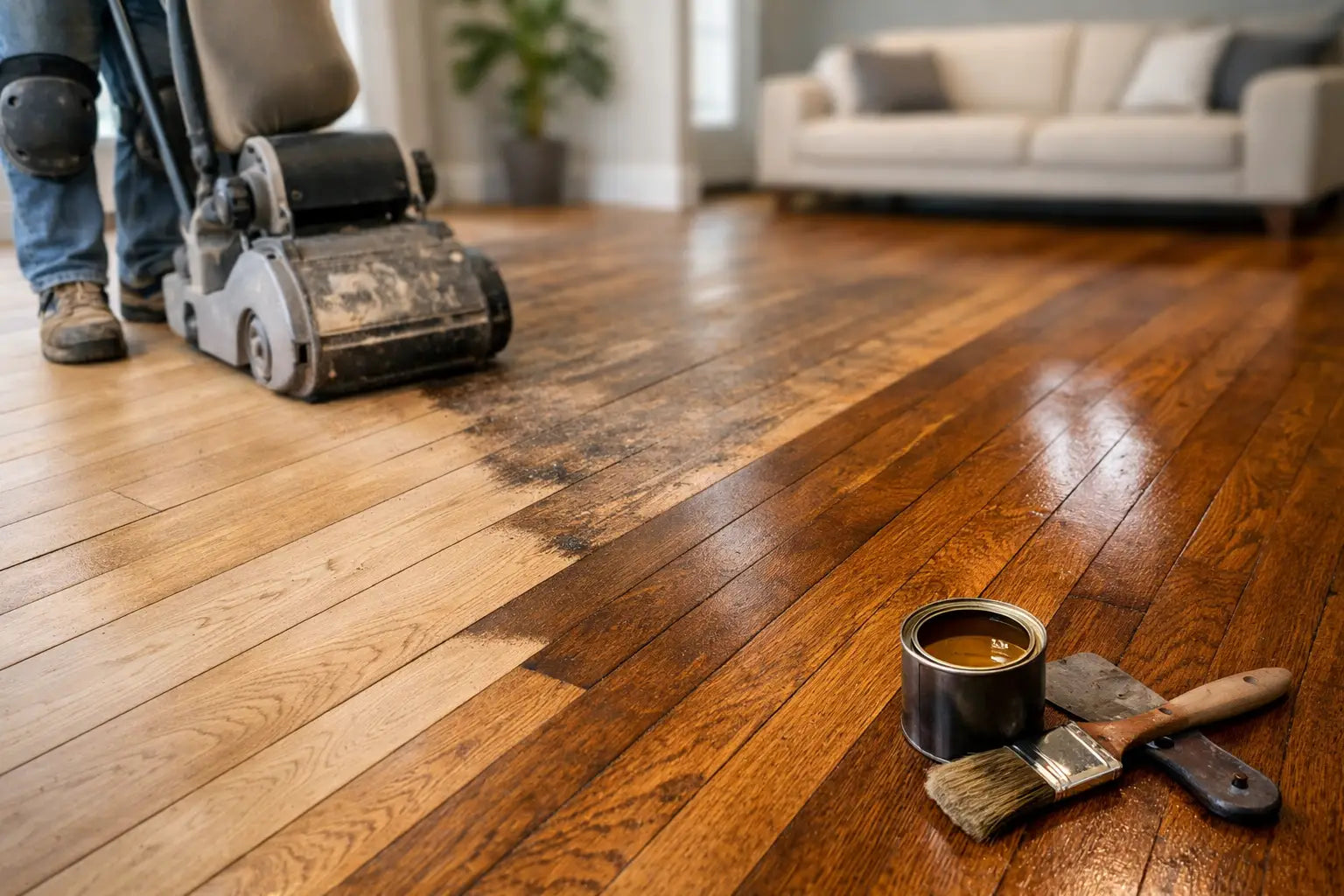
Hardwood floor restoration is the process of improving and renewing an existing wood floor so it looks better, performs better, and lasts longer. Depending on the condition of the floor, restoration can include deep cleaning, repairs, sanding, staining, refinishing, board replacement, and protective sealing. The goal is not just to make the floor look newer. It is to preserve the wood you already have and restore the character, durability, and value that made hardwood a strong investment in the first place.
What Is Hardwood Floor Restoration, Exactly?
People often use restoration, refinishing, and repair as if they mean the same thing. They overlap, but they are not identical.
Refinishing usually refers to sanding the floor down and applying a new stain and finish. Repair focuses on fixing specific problems such as loose boards, gaps, cracks, water-damaged sections, or squeaks. Restoration is the broader term. It can include refinishing and repair, but it also takes a more complete view of the floor's condition, appearance, and lifespan.
In practical terms, restoration means bringing an older or damaged hardwood floor back to a healthy, attractive condition without starting over from scratch. For some homes, that means a full sand and refinish. For others, it may involve targeted repairs and a new protective coat. The right approach depends on the type of wood, the thickness of the wear layer, the age of the floor, and how much damage is present.
Why Homeowners Choose Restoration Instead of Replacement
The biggest reason is simple. Restoration is often more cost-effective than tearing out hardwood and installing all new flooring. If the existing floor is structurally sound, restoring it can deliver a major visual upgrade while keeping material and labor costs more controlled.
There is also the benefit of character. Older hardwood floors often have grain patterns, board widths, and natural variation that are hard to replicate with newer materials. Once restored, those features can become one of the strongest design elements in the room.
For many property owners, restoration also makes sense because it is less disruptive than a full replacement project. That does not mean it is mess-free or instant. Sanding, repairs, and curing time still require planning. But when the subfloor and most of the wood remain in place, the process is usually more efficient than a complete tear-out.
There are trade-offs, though. Restoration is only worthwhile when the floor still has enough usable material left. If boards are heavily warped, badly water-damaged, or too thin to sand again, replacement may be the smarter long-term decision.
What the Restoration Process Usually Includes
Every project starts with an honest evaluation. A professional needs to determine whether the floor is solid hardwood or engineered wood, how much wear is visible, whether there is hidden moisture damage, and how many times the floor may have been sanded before.
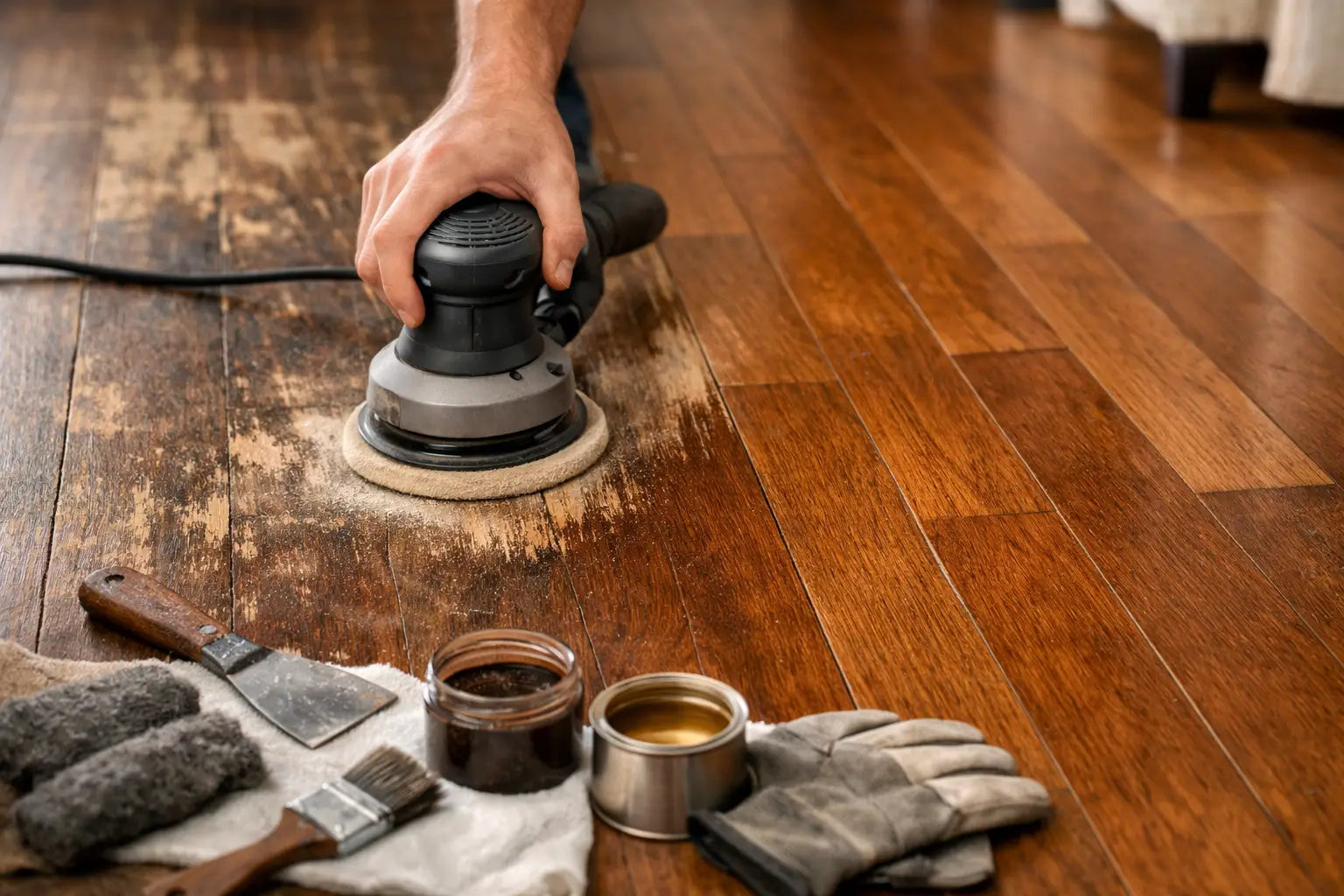
If restoration is a good fit, the process often begins with repairs. Damaged boards may be replaced, loose boards secured, and problem areas patched before any sanding starts. This step matters because applying a fresh finish over unresolved damage only hides the issue for a short time.
Next comes sanding, when appropriate. Sanding removes the old finish and smooths out surface-level damage such as scratches, shallow dents, and discoloration. It can also even out differences between repaired areas and original boards. After sanding, the floor may be stained if the homeowner wants to change or refresh the color.
The final step is applying a finish or topcoat to protect the wood. This is what gives the floor its durability and sheen, whether that is matte, satin, semi-gloss, or another look that fits the space. The finish helps the floor hold up to everyday traffic, spills, pets, and routine use.
Signs Your Floor May Need Hardwood Floor Restoration
A floor does not have to look terrible to qualify for restoration. In fact, addressing wear early can help prevent bigger problems later.
Dullness is one of the most common signs. When a floor loses its finish, it no longer reflects light evenly and can start to look tired even after cleaning. Scratches that sit mostly in the finish layer are another common reason to restore a floor.
You may also notice fading from sunlight, gray worn areas in busy walkways, or small gaps and movement between boards as the home cycles through seasonal humidity changes. Pet stains, minor water marks, and isolated board damage are also worth having evaluated.
What matters is the cause and depth of the problem. A few surface scratches are very different from deep gouges, black water staining, or widespread cupping. That is why a professional assessment is important. Restoration is not one-size-fits-all.
When Restoration Works Well - and When It Does Not
Restoration works best when the floor has cosmetic wear, minor to moderate damage, and enough remaining thickness to handle repair or sanding. Solid hardwood is often the strongest candidate because it can usually be refinished multiple times over its lifespan.
Some engineered hardwood floors can also be restored, but that depends on the thickness of the top wood layer. If the veneer is too thin, aggressive sanding is not a safe option. In those cases, a lighter buff and recoat may be possible, or replacement may make more sense.
Restoration may not be the best choice if the floor has major structural issues, severe water damage, mold concerns, or boards that have already been sanded down too many times. It also may not solve every design problem. If someone dislikes the species, plank width, or layout itself, a restored floor may still not deliver the look they want.
This is where good guidance matters. A dependable flooring contractor should not push restoration if replacement is the more practical answer.
What Results Can You Expect?
A properly restored hardwood floor should look cleaner, richer, and more consistent across the room. Surface wear is reduced or eliminated, the finish looks fresh, and the wood grain becomes visible again instead of hidden under scratches and haze.
Beyond appearance, restoration can improve performance. A renewed finish helps protect against day-to-day wear and can make regular maintenance easier. In homes that are being prepared for sale, restored hardwood floors can also improve perceived value and help rooms feel more polished and move-in ready.
That said, restoration does not turn every old floor into a brand-new product. Very old wood may still show some character marks, slight movement, or natural variation. In many homes, that is part of the appeal. The goal is improvement, not erasing every sign that the floor has been lived on.
Why Professional Work Makes a Difference
Hardwood restoration looks simple from a distance, but the details matter. Uneven sanding, poor stain matching, skipped repairs, or the wrong finish can create expensive problems fast. Dust control, moisture awareness, and product selection all affect the final result.
A professional team can also help homeowners weigh options based on budget, timeline, and floor condition. Sometimes the best answer is a full refinish. Sometimes it is a repair plus recoat. Sometimes the most honest answer is replacement in one area and restoration in another.
For families and property owners who want affordable luxury without guesswork, that kind of step-by-step guidance is what turns a flooring project into a smart investment. Companies like FC Hardwood Floors build trust by giving customers a clear assessment, realistic expectations, and workmanship that holds up long after the job is done.
How to Decide if It Is Time
If you are staring at scratches, faded color, or worn finish and wondering whether your floor is past saving, the next step is not to assume the worst. It is to have the floor evaluated while options are still open. Many hardwood floors that look tired can be restored beautifully, and many others can at least be improved enough to buy more years before replacement is needed.
A good restoration plan starts with the condition of the wood, not a sales pitch. When the process is done right, you keep the character you love, improve the way the space looks and feels, and protect one of the hardest-working surfaces in your home.


Leave a comment
This site is protected by hCaptcha and the hCaptcha Privacy Policy and Terms of Service apply.