
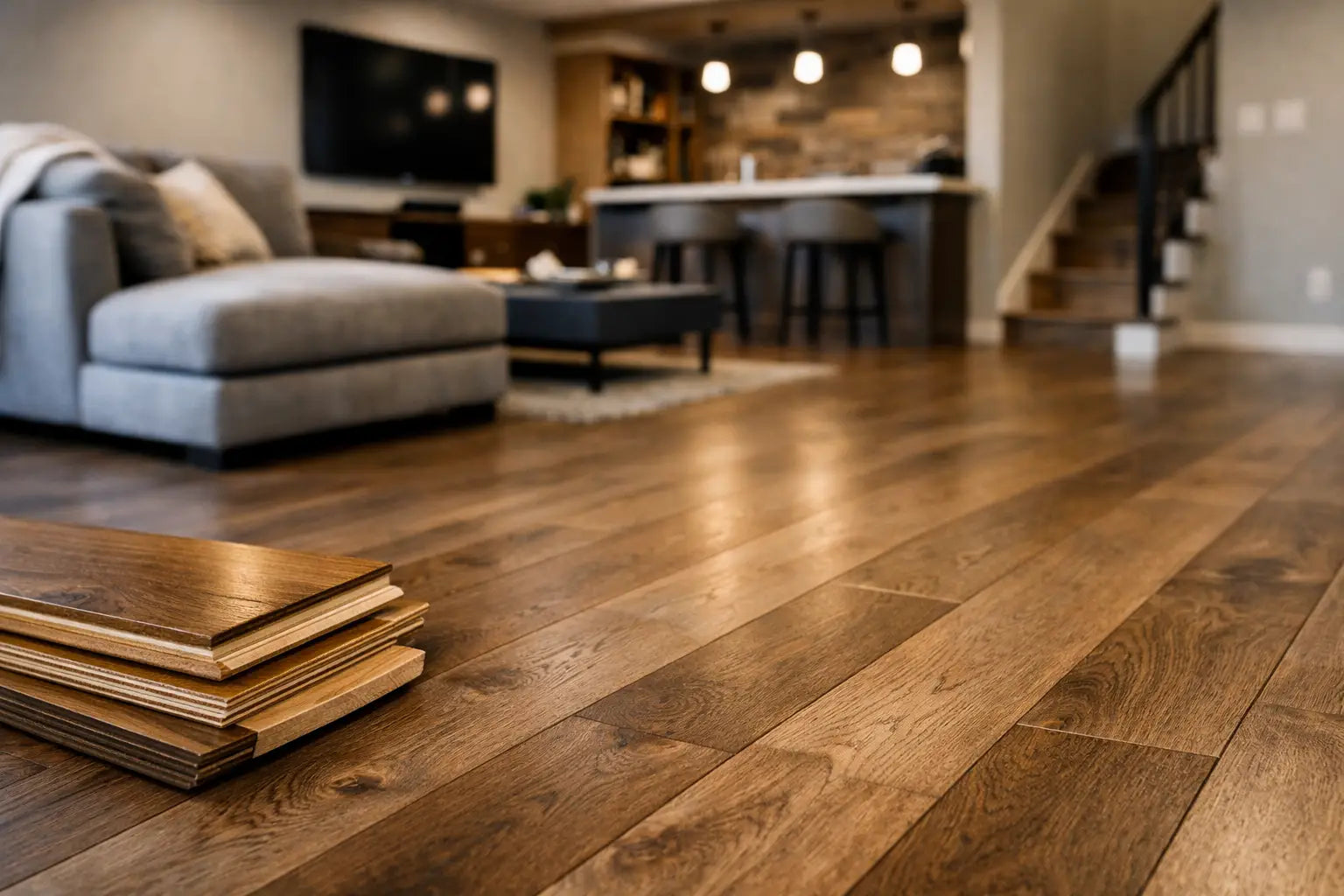
Engineered Hardwood for Basements: Is It Worth It?
A basement floor has to earn its place. It deals with cooler temperatures, higher humidity, and the occasional surprise that never happens upstairs. That is why homeowners often ask whether engineered hardwood for basements is a smart investment or a risk waiting to show up after the first wet season. The honest answer is that it can be an excellent choice, but only when the space is dry enough, the product is chosen carefully, and the installation is handled the right way.
If you want the look and feel of real wood below grade, engineered hardwood is usually the version worth considering. Solid hardwood is generally a poor fit for basements because it expands and contracts more dramatically with moisture changes. Engineered hardwood is built in layers, with a real hardwood veneer on top and a more dimensionally stable core underneath. That layered construction gives it a better chance of performing well in spaces where moisture is the main concern.
Why engineered hardwood for basements can work
The biggest advantage of engineered hardwood is stability. Because the core is designed to resist movement better than solid wood, it is less likely to cup, gap, or warp when basement humidity rises and falls. That does not make it waterproof, and it does not mean every basement is a good candidate. It simply means engineered hardwood gives you a more realistic path to getting a wood floor appearance in a below-grade space.
There is also a design benefit that matters to many homeowners. Basements have come a long way from basic storage and utility use. Today, they are family rooms, home offices, guest suites, workout rooms, and finished entertainment spaces. Carpet is not always the right fit, and many people want something warmer and more upscale than standard concrete or tile. Engineered hardwood can make a basement feel connected to the rest of the home instead of feeling like a separate zone.
For households thinking about resale value, appearance matters too. A finished basement with a quality floor can feel more intentional and more inviting. Buyers notice when the lower level feels like true living space rather than an afterthought.
Where engineered hardwood for basements goes wrong
The short version is moisture. Most flooring problems in basements trace back to moisture, whether it comes from the slab, the surrounding air, plumbing issues, or poor drainage outside the home. Even a premium engineered hardwood product can fail if it is installed over a damp concrete slab or in a space with ongoing humidity problems.
This is where homeowners sometimes get mixed messages. They hear that engineered hardwood is "better for basements" and assume that means it is safe in any basement. It is not. Better than solid hardwood is not the same as suitable in every condition.
If your basement has had water intrusion, visible condensation, musty odors, or seasonal dampness, those issues need to be addressed before you think about wood flooring. A dehumidifier may help with air moisture, but it will not solve slab moisture or water coming in from outside. The floor should never be the first fix for a basement problem.
What to check before you install
Before choosing any wood-based floor for a basement, start with the condition of the space itself. Is the basement consistently dry? Has there ever been standing water? Does the concrete slab test within the manufacturer's moisture limits? These are not small details. They decide whether engineered hardwood is a smart long-term choice or a short-term mistake.
Professional moisture testing is one of the most important steps in the process. A basement can look dry and still hold too much moisture in the slab for a wood floor installation. That is why experienced installers rely on testing rather than guesswork.
Subfloor and underlayment decisions matter too. Depending on the product and installation method, a moisture barrier may be required. In some cases, a floating floor system is appropriate. In others, glue-down installation may be recommended. The right approach depends on the specific flooring product, the slab condition, and the environment in the home.
Acclimation is another factor people tend to overlook. Engineered hardwood should be allowed to adjust to the home's conditions before installation, based on the manufacturer's guidelines. Rushing this step can create unnecessary movement later.
Choosing the right product matters as much as the species
Not all engineered hardwood is built the same. The thickness of the wear layer, the type of core, the quality of the finish, and the manufacturer's basement installation guidelines all matter. A bargain product may look attractive at first, but it often comes with limitations that show up once the floor is in daily use.
A thicker wear layer can be a real advantage if you want better longevity and, in some cases, the possibility of refinishing. A strong factory finish helps protect against everyday wear in active spaces like rec rooms, hallways, and basement offices. Plank width also plays a role. Wider planks can be beautiful, but in moisture-sensitive environments, product construction becomes even more important.
Wood species and color deserve some thought as well. Basements often have less natural light than upper floors, so very dark flooring can make the space feel smaller unless the room is well lit. Lighter tones and medium natural shades tend to keep basements feeling open and comfortable. That is not a rule, just a practical design consideration.
Installation is where good material can still fail
Even the right product can underperform if the installation is rushed or done without attention to site conditions. Basements are less forgiving than main-level rooms. Expansion spacing, moisture barriers, slab prep, and transitions to other flooring all need to be handled properly.
This is one reason many homeowners prefer to work with a flooring company that offers both product guidance and installation. The person helping you choose the floor should also understand what that product needs in a basement setting. That kind of consultative process helps avoid the common mismatch between a showroom sample and real-world performance.
For homeowners in the Kansas City area, seasonal humidity swings make proper installation even more important. What looks stable in one month can shift in another if the floor was installed without the right moisture controls or room for expansion.
Engineered hardwood vs. luxury vinyl in a basement
This is the trade-off many homeowners are really weighing. If you love the authenticity of real wood, engineered hardwood has a clear advantage in look and feel. It brings natural character that wood-look products imitate but do not fully replicate. For finished basements used as living space, that can be worth a lot.
If moisture resistance is the top priority, luxury vinyl often has the edge. In basements with any uncertainty around dampness, vinyl is usually the more forgiving material. It can be a better fit for homes with kids coming in from the backyard, pets, workout areas, or spaces where occasional spills are part of daily life.
That does not mean one option is universally better. It depends on the basement and on your goals. If the space is dry, climate controlled, and designed as an extension of the main living area, engineered hardwood may be the better design choice. If the space has a history of moisture concerns or you want maximum practicality with lower risk, luxury vinyl may make more sense.
When engineered hardwood is a smart basement investment
Engineered hardwood makes sense in a basement when the space is finished, dry, and intended to feel like true living space. It is especially appealing for home offices, guest rooms, media rooms, and lower-level lounges where comfort and appearance matter just as much as durability.
It is also a strong option for homeowners who want affordable luxury rather than the cheapest possible floor. A well-selected engineered hardwood floor can elevate the room and create continuity with hardwood on the main level. That kind of design consistency can make the whole home feel more cohesive.
At FC Hardwood Floors, this is the kind of decision we help homeowners think through carefully. A basement floor should look great, but it also has to suit the conditions of the home and the way the space is actually used.
When you should choose something else
If your basement has any unresolved water issue, skip engineered hardwood for now. Fix the source first. If the slab fails moisture testing, if the room smells damp, or if you are trying to floor a space that occasionally takes on water, wood-based products are not the safest bet.
You may also want a different material if the basement is a heavy-traffic utility space, a kids' play area with frequent messes, or a room where durability matters more than the character of real wood. In those cases, a more water-tolerant floor can provide better peace of mind.
The best flooring decision is rarely about what looks best in a sample board alone. It is about choosing a floor that fits your space, your budget, and your daily life. If engineered hardwood is paired with a dry basement, the right product, and expert installation, it can be a beautiful and lasting choice. If those conditions are not there yet, the smarter move is to solve the basement first and let the flooring follow.

Leave a comment
This site is protected by hCaptcha and the hCaptcha Privacy Policy and Terms of Service apply.