
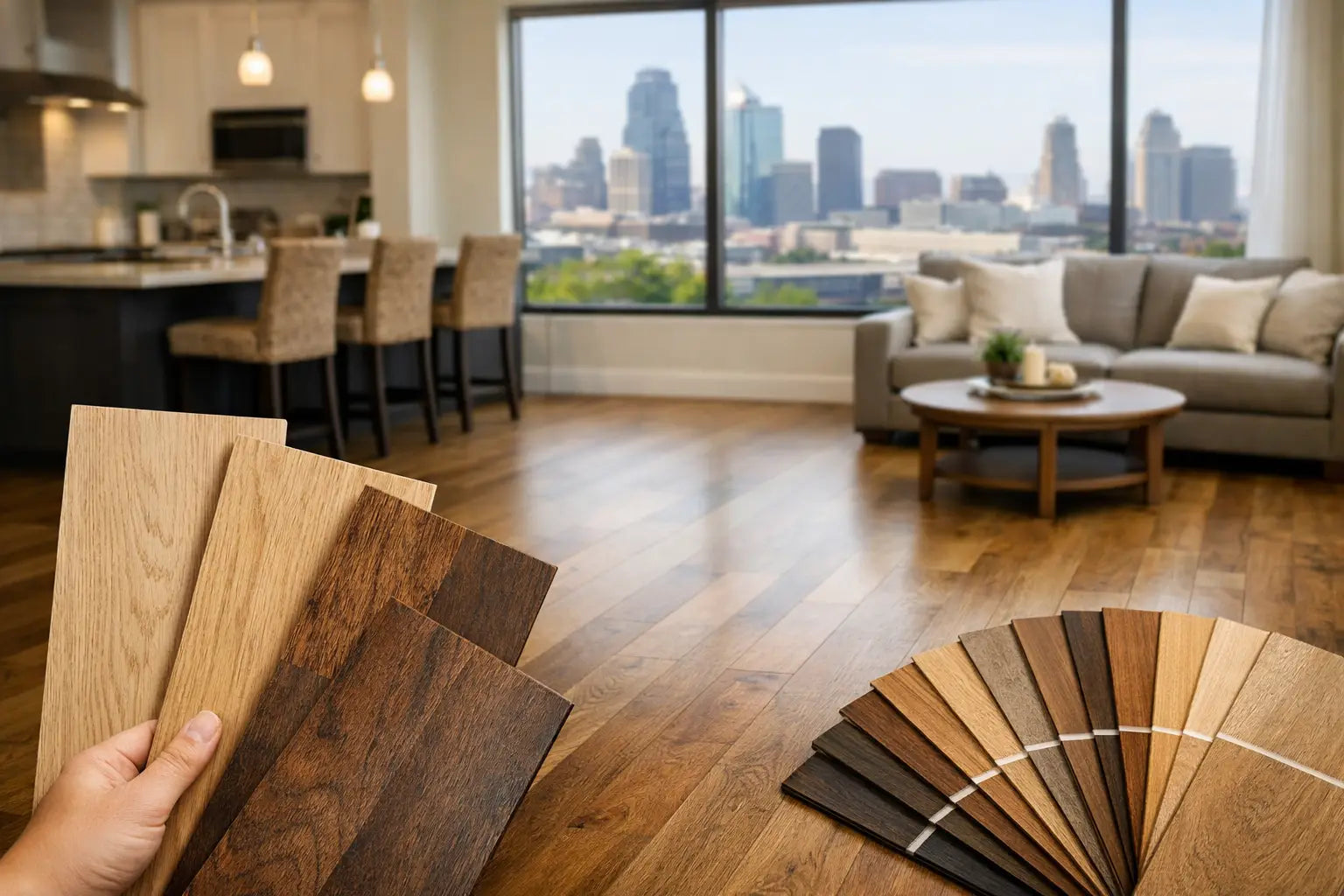
Hardwood Flooring Color Trends for Kansas City Homes
A floor color can make the same room feel entirely different. A light oak floor can make a compact kitchen feel open and relaxed, while a deep brown stain can give a dining room the grounded, finished character many homeowners want. That is why hardwood flooring color trends are worth looking at closely - not as a rulebook, but as a starting point for a choice you will live with every day.
For homeowners in the Kansas City area, the strongest color direction is not one extreme or another. It is a move toward natural warmth, believable wood character, and colors that work with real life. The best choice still depends on your home's light, existing finishes, household routine, and the feeling you want each room to have.
Hardwood Flooring Color Trends Lean Warmer and More Natural
For several years, cool gray flooring was a major design choice. It can still work in a modern space with the right finishes, but the broader shift has moved toward warmer, more natural-looking wood. Think honeyed oak, soft beige-brown, muted caramel, cinnamon, medium walnut, and neutral greige tones with visible grain.
This change makes sense in homes where flooring has to connect multiple rooms, furniture styles, and paint colors. Warm-neutral hardwood tends to feel less tied to a single trend. It also works especially well with the soft whites, creamy cabinets, natural stone, aged brass, black accents, and earthy textiles appearing in many current remodels.
Natural does not mean unfinished or orange. Today’s popular warm tones are usually softened and balanced, allowing the wood’s grain variation to show without making the floor look overly yellow or red. A carefully selected stain can add depth while preserving the character that makes hardwood feel special.
White Oak Remains a Flexible Favorite
White oak continues to be one of the most requested looks because its grain is clean, its color is adaptable, and it takes a wide range of finishes well. It can look pale and airy, warm and organic, or medium-toned and tailored depending on the stain and finish system.
Homeowners often like white oak because it supports a wide range of design directions. It can complement a contemporary kitchen, a traditional home, or a transitional remodel without competing with the rest of the space. For a home intended to stay appealing through several decorating changes, that flexibility matters.
Keep in mind that species, grade, board width, stain, and sheen all affect the final appearance. A sample viewed under showroom lighting can look different in a room with west-facing windows or warm LED bulbs. Reviewing samples in your own home is one of the simplest ways to avoid a color surprise.
Medium Browns Are Making a Strong Return
Medium brown hardwood is one of the most practical and enduring choices available. It offers more richness than a light natural finish without the visual weight of a very dark floor. Shades such as warm walnut, chestnut-inspired brown, and medium oak can make a home feel welcoming while still giving it a polished appearance.
This is also a smart range for busy households. Medium tones generally hide everyday dust, small scuffs, and pet hair better than very dark or very pale floors. They do not eliminate maintenance, but they can be more forgiving between cleanings.
For homes with existing wood trim, brick fireplaces, or traditional furniture, medium brown floors often create an easy visual connection. They can also balance modern elements such as white cabinetry, quartz counters, and matte black hardware. The result feels intentional rather than overly matched.
Rich Dark Floors Still Have a Place
Dark espresso, deep walnut, and nearly black-brown hardwood are no longer the default choice for every formal space, but they are far from outdated. A dark floor can add drama, contrast, and a sense of permanence in a large room with generous natural light.
The trade-off is maintenance visibility. Dark floors can show dust, footprints, scratches, and lighter pet hair more readily. They may also make a small or low-light room feel tighter. If you love the richness of a darker floor, consider a brown with warmth and variation instead of a flat, nearly black stain. Wire-brushed texture or a lower-sheen finish can also help make day-to-day wear less noticeable.
Light Wood Tones Create an Open, Relaxed Feel
Light hardwood colors remain popular, particularly in homes where homeowners want rooms to feel brighter and less formal. Natural white oak, pale honey, blonde oak, and soft neutral beige-brown finishes can make open floor plans feel continuous without becoming sterile.
A light floor is especially helpful when a room has limited daylight, dark cabinetry, or a lower ceiling. It reflects more light and can make the home feel more spacious. It also pairs naturally with the comfortable, layered look many families prefer: upholstered furniture, woven textures, warm white walls, and wood furnishings in mixed tones.
However, light does not always mean low maintenance. Very pale floors can make dark debris, muddy shoe marks, and dark pet hair easier to see. The right finish and wood texture can help, but lifestyle should guide the decision as much as appearance.
Matte and Low-Sheen Finishes Are Part of the Color Story
Floor color is only half the decision. Sheen changes how that color reads throughout the day. Satin has long been a dependable choice, but matte and low-sheen finishes are increasingly popular because they give hardwood a softer, more natural appearance.
A matte finish reduces glare from windows and overhead lighting, so the floor tends to show its grain and color rather than reflections. It can make a warm neutral stain feel more relaxed and contemporary. It also does a better job of disguising minor scratches and dust than a high-gloss finish.
That does not mean matte is automatically right for every project. Some homeowners prefer the slight polish of satin, especially in a formal dining room or a home with traditional details. The goal is to choose a sheen that supports the character of your space and the level of maintenance you are comfortable with.
How to Choose a Trend That Will Last
Trends are useful when they help you identify what you like. They become less helpful when they push you toward a floor that clashes with your home or daily routine. Before choosing a color, look beyond a small sample board and consider the full picture.
Start with fixed elements that are staying: cabinets, countertops, fireplaces, trim, interior doors, and tile. Hardwood does not need to match these features exactly. In fact, too much matching can make a room feel flat. Instead, look for undertones that work together. Warm floors usually pair best with other warm or balanced finishes, while cool floors need careful coordination to avoid looking disconnected.
Next, think about lighting. Morning light, afternoon sun, and artificial lighting can all change the appearance of stain. Place samples flat on the floor and view them at different times of day. If possible, compare larger samples, because a small swatch cannot show the full grain movement or color variation of a finished floor.
Finally, be honest about use. A home with two dogs, children, and a busy entryway may need a more forgiving medium tone and low-sheen finish than a lightly used formal room. For commercial spaces and rental properties, durability, cleanability, and a broadly appealing color often matter more than following the newest look.
Refinishing Can Bring a New Color Direction
If your existing hardwood is structurally sound, refinishing may be the best way to update the color without replacing the floor. Sanding and refinishing can remove worn finish, reduce surface scratches, and open the door to a more current stain direction.
Not every wood species takes stain the same way, and not every existing floor should be pushed dramatically lighter or darker. Red oak, for example, has a different grain and undertone than white oak. An experienced flooring professional can help you test stain options and set realistic expectations before the full floor is finished.
At FC Hardwood Floors, the process begins with understanding how you use your space, what is staying in the room, and what kind of maintenance fits your household. That guidance matters because a beautiful floor should feel right long after the trend photos are forgotten.
The most successful floor colors are the ones that support the way your home feels when people walk through the door. Bring samples into your space, look at them in real light, and choose the tone that makes your house feel more like home.

Leave a comment
This site is protected by hCaptcha and the hCaptcha Privacy Policy and Terms of Service apply.