

Hardwood Floor Refinishing Guide for Homeowners
A scratched hallway, dull finish in the kitchen, and gray wear paths near the back door usually tell the story before a homeowner does. If your floors look tired but still feel solid underfoot, this hardwood floor refinishing guide can help you figure out whether a full replacement is unnecessary and what it really takes to bring wood floors back to life.
Refinishing is one of the best ways to protect the value and appearance of real hardwood. It can erase years of surface wear, refresh the color, and add a new protective finish without tearing out the floor. But it is not the right solution for every floor, and the difference between a beautiful result and a frustrating one often comes down to timing, wood condition, and the quality of the prep work.
When refinishing makes sense
Refinishing works best when the hardwood itself is still structurally sound. Light to moderate scratches, worn finish, minor discoloration, and general dullness are all good signs that the floor may be a candidate. If you can see bare wood in traffic lanes, or if water no longer beads on the surface, the protective layer has likely worn down enough that action is worth considering.
What refinishing cannot do is fix every problem. Deep pet stains that have soaked into the wood, widespread board movement, severe cupping, termite damage, and sagging subfloors usually point to repairs or partial replacement before any sanding begins. Engineered wood can also be tricky. Some products have a thick enough wear layer to refinish once or twice, while others do not. That is one of those areas where it depends on the specific product, not just the category.
Age alone does not decide it. We have seen older hardwood floors clean up beautifully with the right process, and newer floors that were too damaged by moisture to justify a standard refinish. The better question is whether the wood has enough life left and whether the problems are mostly on the surface.
A hardwood floor refinishing guide to the actual process
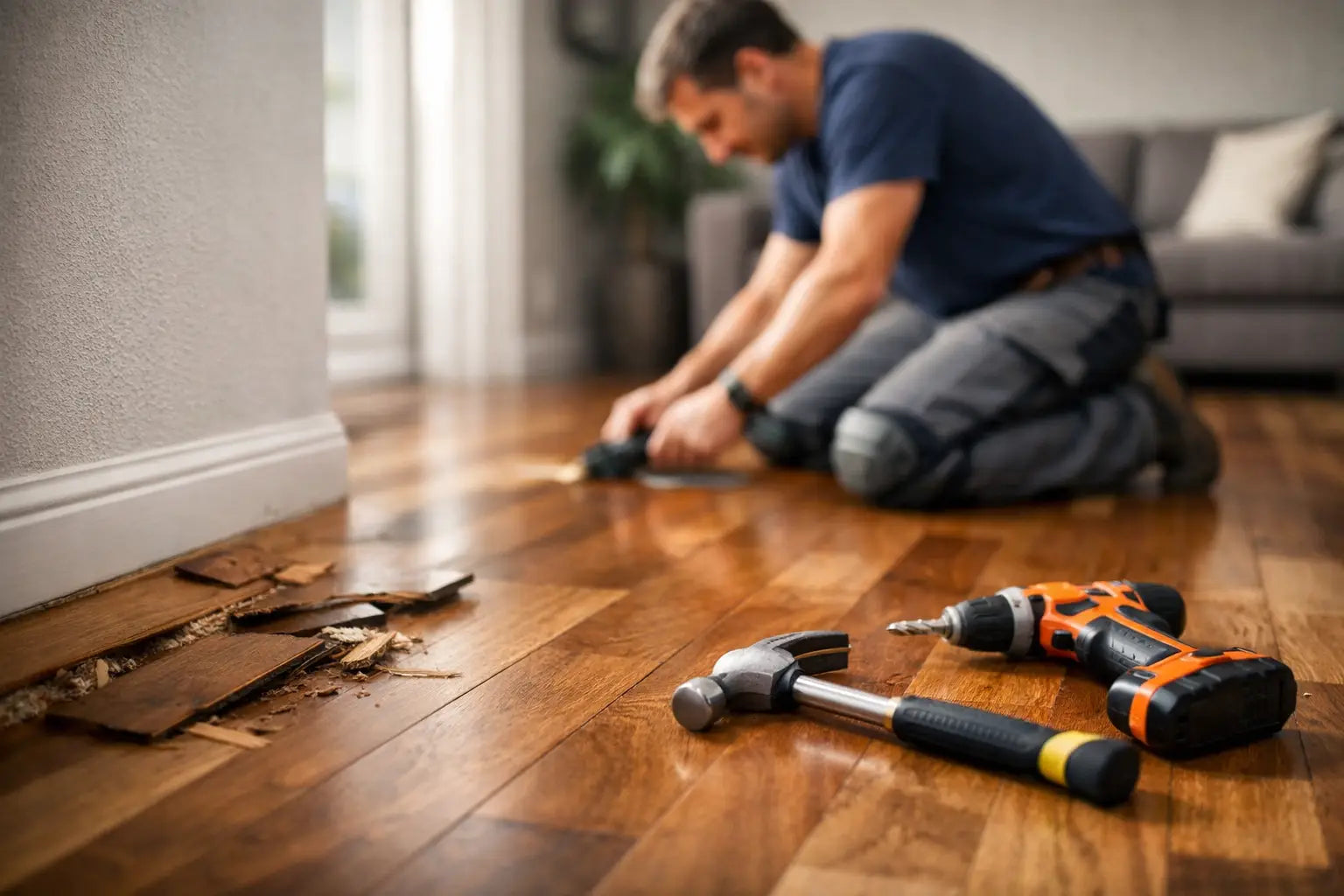
Homeowners are often surprised that refinishing is less about the final coat and more about everything that happens before it. The process starts with inspection and prep. Furniture is removed, transitions may need attention, and damaged boards are identified. If there are loose boards or isolated stains, those issues should be handled before sanding starts.
Next comes sanding. This is where the old finish is removed and the wood is leveled. Professional crews typically use a sequence of sanding grits rather than trying to do the job in one pass. That matters because aggressive sanding can leave waves, chatter marks, or uneven stain absorption. Done correctly, sanding creates a clean, consistent surface that is ready for the next step.
After sanding, any gaps, minor imperfections, or nail holes may be filled depending on the floor and the desired look. Then the floor is screened or buffed, cleaned carefully, and prepared for stain if a color change is part of the plan. Stain is optional. Some homeowners prefer the natural look of oak or maple with a clear finish, while others want a richer, darker tone to update the room.
The final step is applying the finish. This is the layer that gives the floor its protection and sheen. Oil-based and water-based finishes each have advantages. Oil-based finishes often bring out a warmer tone and can be very durable, but they usually have a stronger odor and longer dry time. Water-based finishes dry faster, tend to have lower odor, and keep the wood color more neutral, but product quality and application matter a lot. Neither option is universally better. The right choice depends on your schedule, your sensitivity to fumes, the look you want, and how the space is used.
How long does hardwood floor refinishing take?
For a typical residential project, refinishing usually takes several days, not several hours. Sanding and prep may happen quickly, but drying and curing times are what determine when you can walk on the floor, move furniture back, or bring pets into the space.
That timeline also depends on the finish selected, the size of the area, humidity levels, and whether repairs are needed first. Commercial spaces often need even more careful scheduling because downtime affects business operations. In those cases, planning matters just as much as workmanship.
If you are living in the home during the project, it helps to think through traffic flow ahead of time. Bedrooms, kitchens, and main hallways can become temporarily off-limits. A good plan keeps the project moving without making the home unmanageable.
Cost factors homeowners should know
There is no one-size-fits-all price for refinishing, because square footage is only part of the equation. Floor condition, species, layout, stain choice, repair needs, and finish type all affect the final cost. Stairs, tight closets, custom inlays, and heavy damage can add labor even when the room itself is not very large.
This is also where the cheapest quote is not always the best value. Proper sanding equipment, dust control, experienced application, and realistic scheduling all have a real effect on the finished floor. A lower price may leave out board replacement, prep work, or enough finish coats to hold up well over time.
For homeowners balancing budget and appearance, refinishing is often a strong middle ground. You keep the character of real hardwood, avoid the cost of full replacement, and still get a major visual improvement. That is one reason so many families see it as an affordable luxury rather than just a maintenance expense.
Should you refinish or replace?
This is one of the most common questions we hear, and the answer depends on what is under the finish. If the boards are thick enough, stable, and mostly sound, refinishing is usually the smarter investment. It preserves the original floor and gives you a refreshed surface at a lower cost than starting over.
Replacement becomes more attractive when the wood is too thin to sand again, when moisture has caused major distortion, or when large sections are beyond repair. It can also make sense if you want to change plank width, wood species, or move from solid hardwood to another product better suited for the space.
There are practical cases in between. A homeowner may replace damaged areas and refinish the rest. A commercial property may decide that refinishing one zone while upgrading another creates the best mix of appearance, durability, and downtime control. Good guidance matters most when the answer is not obvious.
DIY vs. professional refinishing
Some home projects reward a weekend effort. Hardwood refinishing usually is not one of them.
Rental sanders are available, but they are powerful enough to damage a floor quickly if used incorrectly. Uneven pressure can create gouges. Poor edging can leave visible lines around the room. Inconsistent stain application can make every patch and stop mark stand out. Even cleanup matters more than people expect, because a small amount of dust left behind can show up in the final finish.
That does not mean homeowners should not be informed. Understanding the process helps you make better decisions, compare proposals more confidently, and prepare your home properly. But if the goal is a smooth, durable result that adds value to the property, professional refinishing is usually the safer route.
For families in busy homes and for property managers who need dependable turnaround, hiring a qualified flooring team often saves money in the long run by avoiding rework. Companies like FC Hardwood Floors build their reputation on that difference - not just making wood floors look better, but helping customers choose the right path before the sanding even starts.
How to get the best result after refinishing
Once the work is complete, maintenance plays a big role in how long that new finish lasts. Use felt pads under furniture, keep grit and salt off the floor, and clean with products made for finished hardwood. Area rugs help in high-traffic spots, but avoid trapping moisture underneath them.
It also helps to manage indoor humidity. Wood moves with seasonal changes, and stable indoor conditions can reduce gaps, stress, and finish wear over time. If you have pets, trimmed nails and quick cleanup of spills make a noticeable difference.
Most importantly, do not wait until the floor is heavily worn again. A maintenance coat or early evaluation can extend the life of your investment and keep minor wear from becoming a bigger project.
If your floors have lost their shine, show wear in the places your family uses most, or simply no longer match the quality you want in your home, refinishing may be the step that brings the whole space back together.


Leave a comment
This site is protected by hCaptcha and the hCaptcha Privacy Policy and Terms of Service apply.