How to Choose Commercial Flooring That Lasts
A commercial floor has to do more than look good on opening day. It must hold up to foot traffic, rolling loads, spills, cleaning routines, and the expectations people form the moment they walk through the door. Knowing how to choose commercial flooring starts with a clear view of how the space will actually be used, not simply which sample looks best under showroom lighting.
For business owners and property managers, the right floor supports day-to-day operations while reinforcing the quality of the space. The right choice may be warm hardwood in a client-facing office, durable luxury vinyl in a busy retail store, or a combination of materials that gives each area the performance it needs.
Start With the Demands of the Space
Commercial flooring is not one category with one answer. A quiet professional office has different needs than a restaurant entrance, medical waiting room, boutique, multifamily common area, or retail showroom. Before comparing colors or price ranges, look closely at traffic, moisture, maintenance, and the type of activity taking place on the floor.
Think about who uses the space and what they bring in. Customers entering from a parking lot may track in water, salt, mud, and grit. Employees may roll office chairs across the surface all day. Delivery teams may move carts, racks, or equipment. A floor that performs beautifully in a conference room may not be the right fit for a front entry or stockroom.
It helps to separate the building into zones. Consider these four questions for each area:
- How much daily foot traffic will it receive?
- Is moisture, food, or frequent spills likely?
- Will rolling chairs, carts, or heavy equipment cross it?
- How often can staff realistically clean and maintain it?
Choose Commercial Flooring for Traffic First
Traffic is usually the biggest factor in commercial flooring performance. High-traffic areas need surfaces that resist scratching, denting, wear patterns, and loss of finish. Entrances, hallways, reception areas, retail aisles, and shared corridors deserve the most attention because they take the greatest daily abuse.
Luxury vinyl flooring is often a strong option for busy commercial settings. It offers a wide range of wood and stone visuals while providing water resistance, easy cleaning, and a comfortable surface underfoot. The wear layer matters here. A thicker commercial-grade wear layer generally provides better protection against scuffs and everyday use.
Laminate can also be a cost-conscious choice for commercial offices and low- to moderate-traffic spaces, especially when the goal is a clean wood-look finish. However, not every laminate product is designed for commercial use or extended exposure to moisture. Product rating and installation conditions matter as much as appearance.
Hardwood remains an excellent choice for spaces where character, craftsmanship, and long-term value are central to the customer experience. A law office, boutique, executive office, hospitality setting, or upscale retail environment can benefit from the warmth and credibility of real wood. Hardwood requires more thoughtful moisture control and regular care than vinyl, but it has one advantage many other materials cannot match: it can often be refinished rather than fully replaced when the surface eventually shows its age.
Balance Appearance With Everyday Maintenance
A beautiful floor that requires more upkeep than your team can provide will quickly become a frustrating investment. Ask how the floor should be cleaned, whether it needs special products, how it reacts to spills, and what kind of maintenance will preserve its warranty.
For many businesses, luxury vinyl is appealing because it offers a premium look without a demanding care routine. Regular sweeping and damp mopping are typically enough to keep it presentable. It is especially practical in waiting areas, retail spaces, offices, and break rooms where appearance matters but staff need a straightforward cleaning process.
Hardwood calls for more attention, but that does not make it impractical. Proper entry mats, prompt spill cleanup, felt pads under furniture, and a consistent cleaning plan go a long way. In the right setting, a well-maintained hardwood floor becomes part of the business's visual identity rather than another surface to manage.
Color and finish affect maintenance, too. Very dark floors can make dust and light debris more visible. Extremely light or smooth finishes may show dirt in high-use areas. Mid-tone colors, natural grain variation, and lower-sheen finishes are often forgiving choices for commercial environments that need to look polished throughout a busy week.
Do Not Overlook Safety and Comfort
Commercial floors should support a safe, comfortable experience for employees and visitors. That means considering slip resistance, transitions between materials, floor height, and how the surface feels after hours of standing or walking.
Entryways, restrooms, food service areas, and any location exposed to water deserve added attention. The best material depends on the setting, but a flooring professional can help identify products and finishes with appropriate traction for the expected conditions. Proper installation is equally important. A high-quality product can still create a hazard if transitions are uneven or edges are not finished correctly.
Acoustics can also shape the decision. Hard surfaces can create more noise in open offices, retail stores, and multi-use spaces. Area rugs, acoustic treatments, strategic furniture placement, and material changes in select zones can help manage sound without sacrificing durability.
Plan for Moisture Before It Becomes a Problem
Moisture is one of the fastest ways to shorten a floor's life. It can come from weather, spills, plumbing issues, concrete slabs, cleaning methods, or humidity changes. Kansas City weather adds another consideration, with wet springs, snowy winters, and changing seasonal conditions that can follow customers indoors.
Luxury vinyl is a practical choice for many moisture-prone areas because it handles water better than natural wood or standard laminate. Still, water resistance does not mean every installation issue disappears. The subfloor must be properly evaluated, prepared, and leveled before installation. Moisture testing is especially important over concrete, in lower-level spaces, and in buildings with a history of water concerns.
Hardwood is best reserved for areas where moisture can be controlled. When installed over a properly prepared subfloor and maintained with sensible precautions, it can perform for decades. But a location with repeated wet traffic or spill exposure may call for a wood-look luxury vinyl floor instead.
Set a Budget Around Total Value, Not Just Material Cost
The least expensive flooring option is not always the most affordable choice over time. A lower initial price can be offset by frequent repairs, early replacement, downtime, or a finish that no longer reflects the quality of your business.
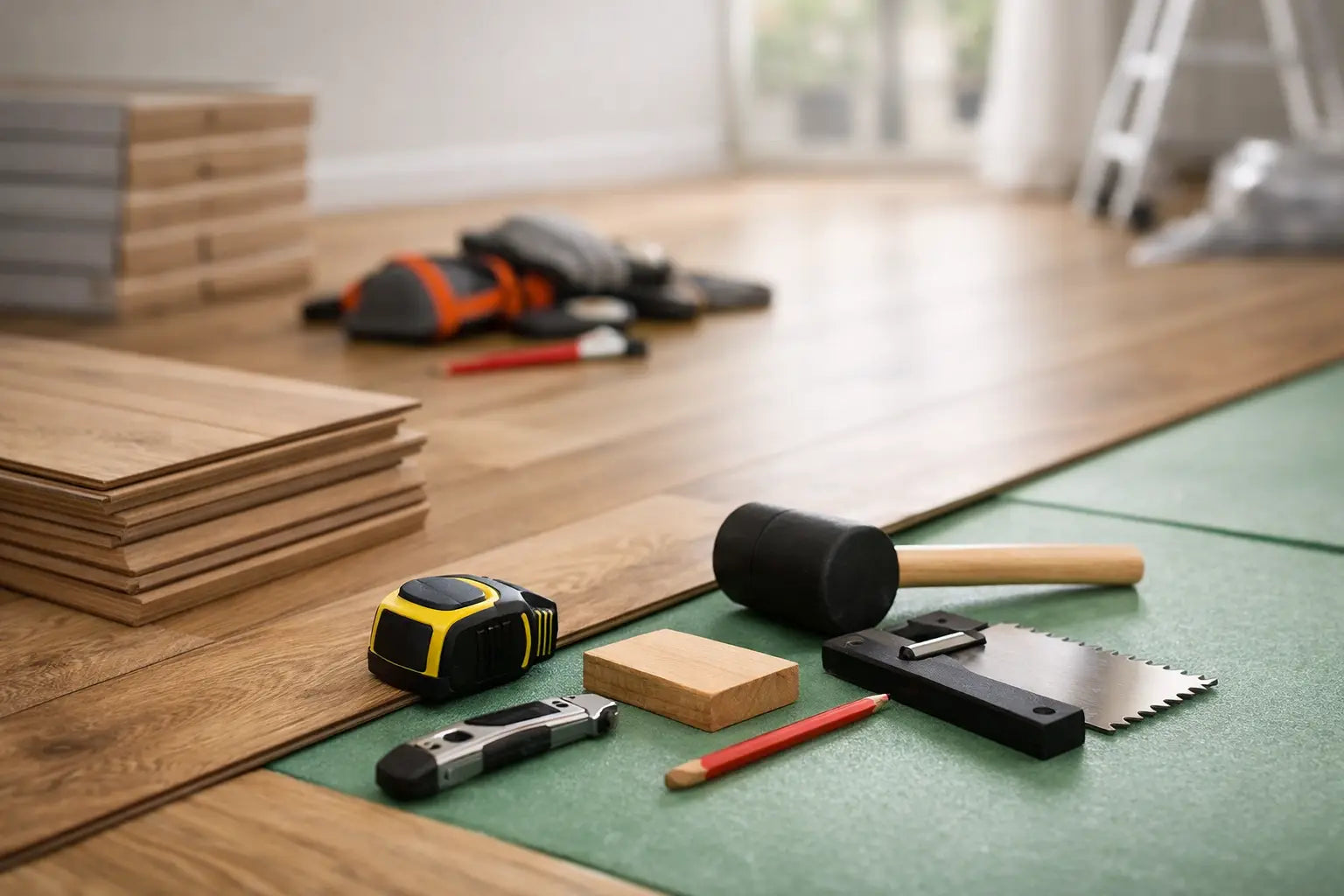
When building a commercial flooring budget, include material, subfloor preparation, removal of existing flooring, installation, trim, transitions, furniture moving, and future maintenance. Installation should never be treated as an afterthought. Commercial spaces often have scheduling restrictions, occupied areas, uneven subfloors, and detailed finishing work that affect both cost and project timing.
A reliable installer can explain where it makes sense to invest and where a more economical material will still perform well. For example, choosing premium hardwood for a reception area while using luxury vinyl in workrooms or corridors may create a high-end impression without stretching the budget across every square foot.
Request Samples and Review Them in Your Actual Space
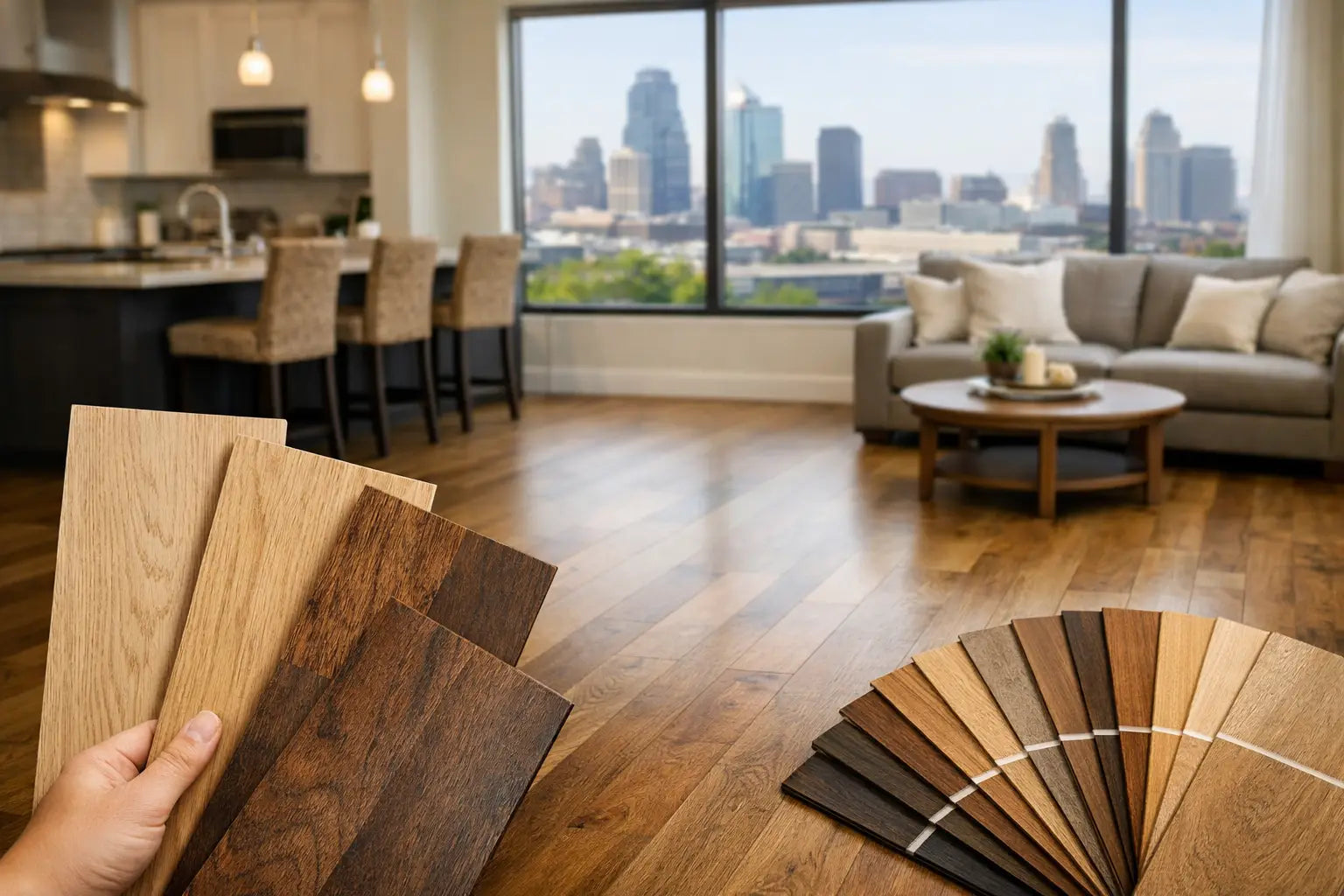
Samples are essential because lighting changes everything. A color that looks warm in a showroom may look cooler under office LEDs or brighter near large windows. Bring samples into the space, view them at different times of day, and place them next to wall colors, cabinetry, furniture, and signage.
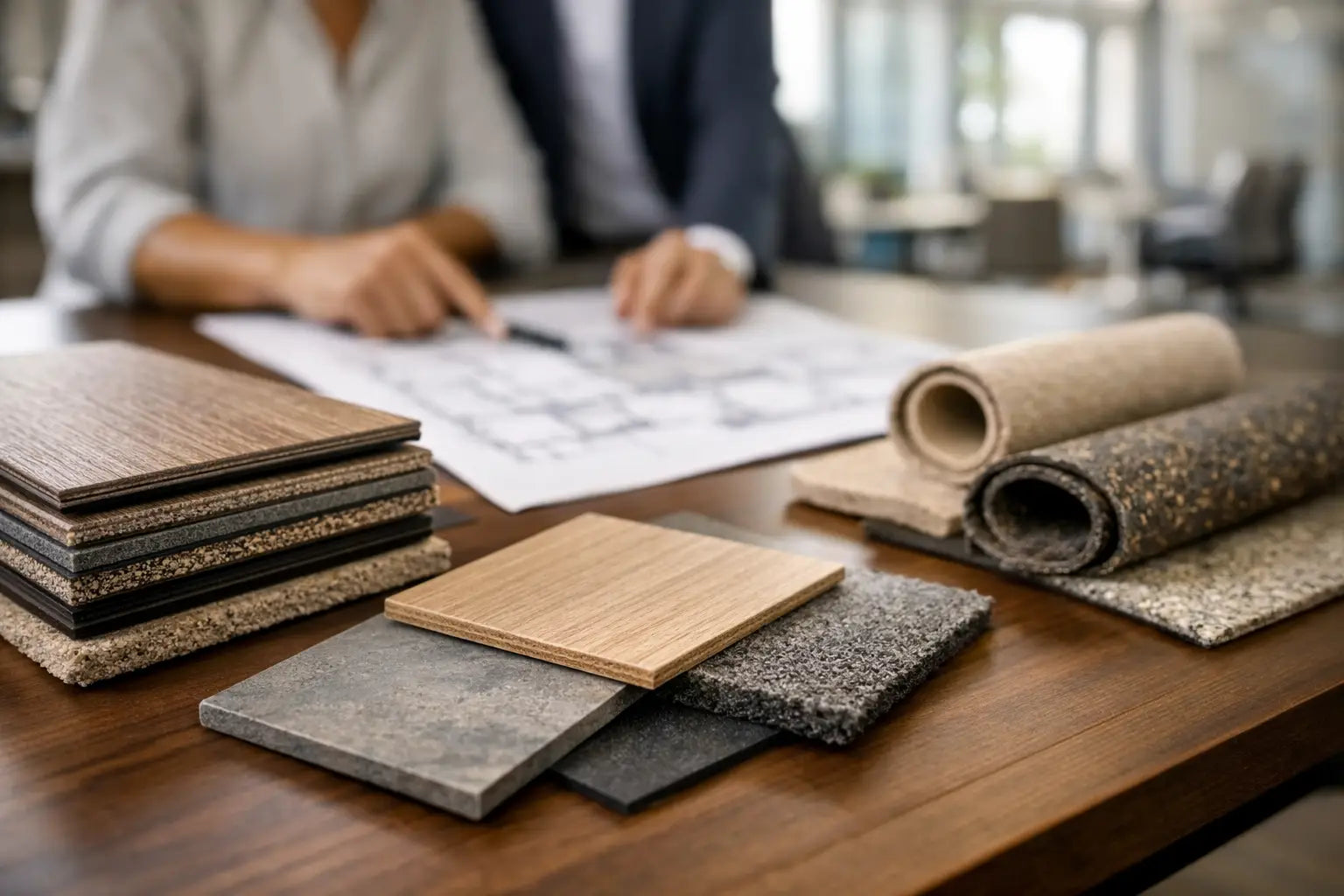
This is also the time to test the practical side. Look at texture, sheen, plank size, and how easily marks show on the sample. If possible, place it near the entry or work area it is intended for. The goal is not just to find a floor that looks attractive in isolation, but one that belongs in the complete environment.
Work With an Installer Who Understands Commercial Details
Commercial flooring projects require coordination as well as product knowledge. The installer should ask about traffic patterns, moisture exposure, access to the building, work hours, furniture, subfloor condition, and deadlines. Those questions are a sign that the recommendation is based on the job, not just the inventory.
At FC Hardwood Floors, our consultative process is built around helping property owners make confident choices before installation begins. A clear estimate, product samples, and an honest discussion about performance can save time and prevent costly surprises later.
The best commercial floor is the one that fits your business after the first rush of opening day has passed. Choose a material that welcomes customers, supports your staff, and gives you confidence every time you look down.

Leave a comment
This site is protected by hCaptcha and the hCaptcha Privacy Policy and Terms of Service apply.