
How to Choose Hardwood Flooring Right
You can make a beautiful hardwood floor choice and still end up frustrated six months later if it does not fit the way the space is actually used. A bright, open living room with two large dogs needs a different floor than a formal dining room. That is really the starting point for how to choose hardwood flooring - not the color, not the trend, and not what looked good in someone else’s house.
Hardwood is one of the best long-term flooring investments you can make, but only when the material, construction, finish, and installation all match the room. For homeowners and property decision-makers, the goal is not just to pick a wood floor that looks good on day one. It is to choose one that still looks right, wears well, and fits the budget years from now.
How to Choose Hardwood Flooring for Real Life
The first question is simple: what will this floor have to handle every day? In a busy home, traffic, pets, kids, chair movement, and tracked-in grit matter just as much as appearance. In a commercial setting, the pressure is even higher because durability, maintenance, and downtime can affect operations.
This is where many buyers get stuck. They shop by color first, then back into performance later. A better approach is to think through the room in layers. Start with traffic level, then moisture exposure, then style, then budget. When you work in that order, the right options narrow down quickly.
For example, solid hardwood is a classic choice and a great fit for many main-level living spaces, bedrooms, and hallways. But if the area has humidity swings or is below grade, engineered hardwood may be the smarter move. If the room takes heavy wear and you want real wood, species hardness and finish type become more important than the stain color.
Start With Solid vs. Engineered Hardwood
If you are learning how to choose hardwood flooring, this is one of the biggest decisions.
Solid hardwood is made from a single piece of wood. It can be sanded and refinished multiple times, which makes it attractive for long-term ownership. It is a strong option for above-grade spaces where moisture is controlled. Many homeowners love solid hardwood for its traditional feel and long lifespan.
Engineered hardwood has a real hardwood top layer over a stable core. That layered construction helps it handle changes in humidity better than solid wood in many situations. It is often a better fit for basements, condos, concrete slab installations, or homes where seasonal movement is a concern.
Neither is automatically better. It depends on where it is going, what subfloor is underneath, and how much future refinishing flexibility matters to you. If you want the most forgiving product for a space with environmental variation, engineered often makes sense. If you want a floor with decades of refinishing potential in a stable interior setting, solid hardwood is hard to beat.
Pick a Wood Species That Matches Wear Expectations
Not all hardwoods wear the same way. Some dent more easily, some hide character better, and some show every scratch in direct sunlight.
Oak remains a favorite for good reason. It is durable, versatile, and available in a wide range of stains and grades. Red oak tends to show warmer undertones, while white oak leans more neutral and is especially popular for cleaner, contemporary looks. For many homes, white oak strikes a strong balance between style and everyday performance.
Hickory is harder and more dramatic in grain pattern. It works well when you want a rustic or natural look and need added toughness. Maple is smoother and cleaner in appearance, but can be trickier to stain evenly. Walnut offers rich character and warmth, though it is softer than oak or hickory.
The trade-off is simple. Harder species generally resist dents better, but the visual style changes from one wood to another. A floor that hides wear well may not give you the exact grain look you had in mind. That is why samples matter. You are choosing both performance and personality.
Color Matters, but So Does What It Hides
Color is usually the most emotional part of the decision. It is also where practical mistakes happen.
Very dark floors can look elegant and high-end, but they tend to show dust, pet hair, and surface scratches more clearly. Very light floors can brighten a room and help it feel larger, but some tones may show dirt or seem too raw if they do not fit the rest of the home. Mid-tone floors often give homeowners the easiest day-to-day experience because they hide more while still feeling timeless.
Natural finishes are popular because they let the wood grain do more of the work. They also tend to age well as styles shift. Gray-toned floors had a strong run, but many buyers now prefer warmer, more natural wood colors that feel less tied to a specific design era.
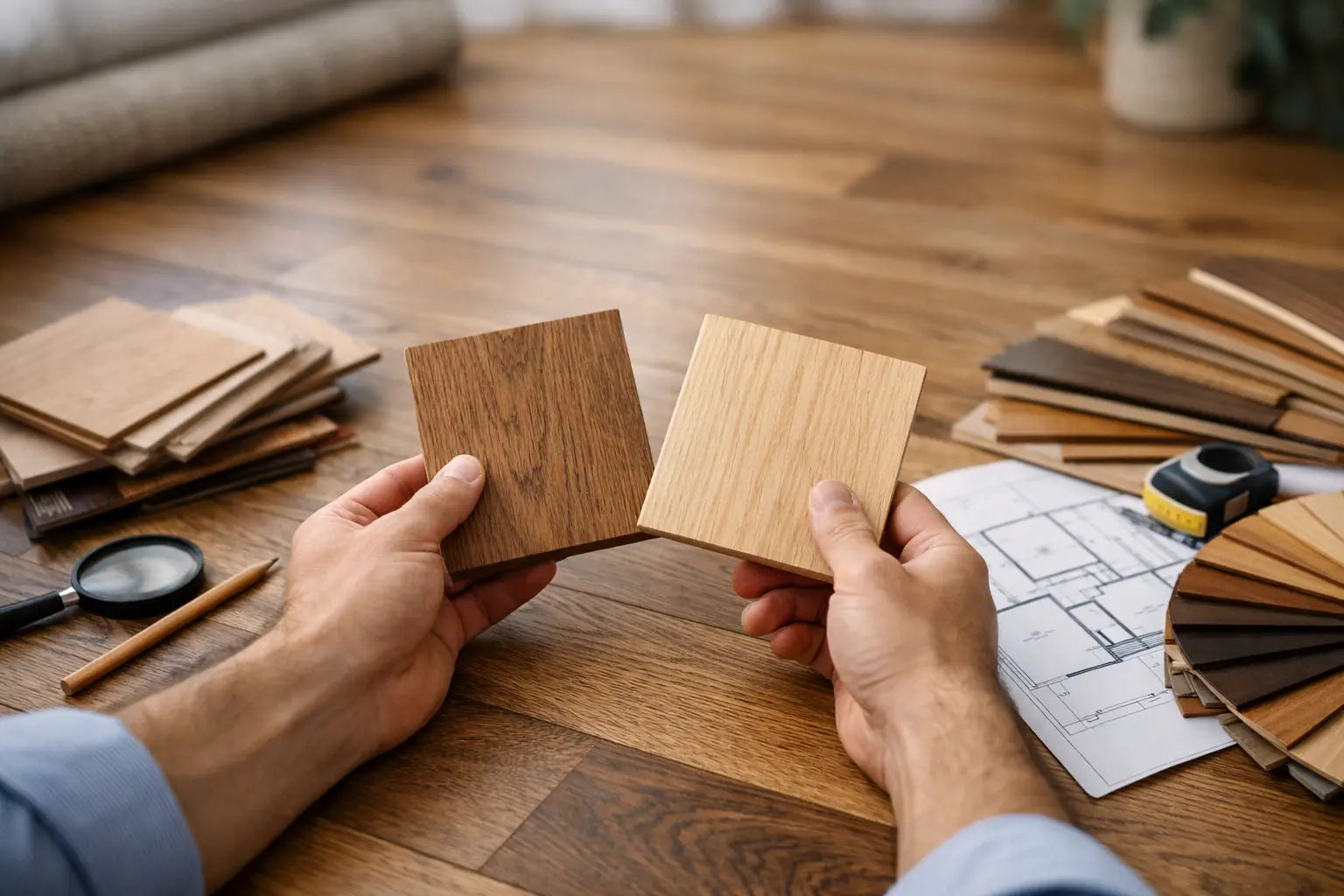
A good rule is to compare the floor against your cabinets, trim, wall color, and natural light. Do not judge a sample under showroom lighting alone. The same board can read completely different in a south-facing room than in a hallway with limited daylight.
Think About Plank Width and Grade
Wider planks create a more open, custom look, and they are especially popular in larger rooms. Narrower planks feel more traditional and can work well in older homes or tighter spaces. There is no wrong answer here, but proportion matters. A very wide plank in a small room can feel oversized, while a narrow strip floor in a large open-plan area may not deliver the visual effect you want.
Wood grade also affects the final look. Cleaner grades have fewer knots and less variation, creating a more uniform appearance. Character grades show more natural markings, mineral streaks, and color movement. Some homeowners want a calm, consistent floor. Others want the floor to feel organic and full of texture.
This is one of those choices where budget and style often intersect. More select material can cost more, while character-rich boards may offer a distinctive look with a bit more visual forgiveness.
Finish and Sheen Change Maintenance More Than People Expect
The finish you choose plays a big role in how the floor wears and how often it needs attention.
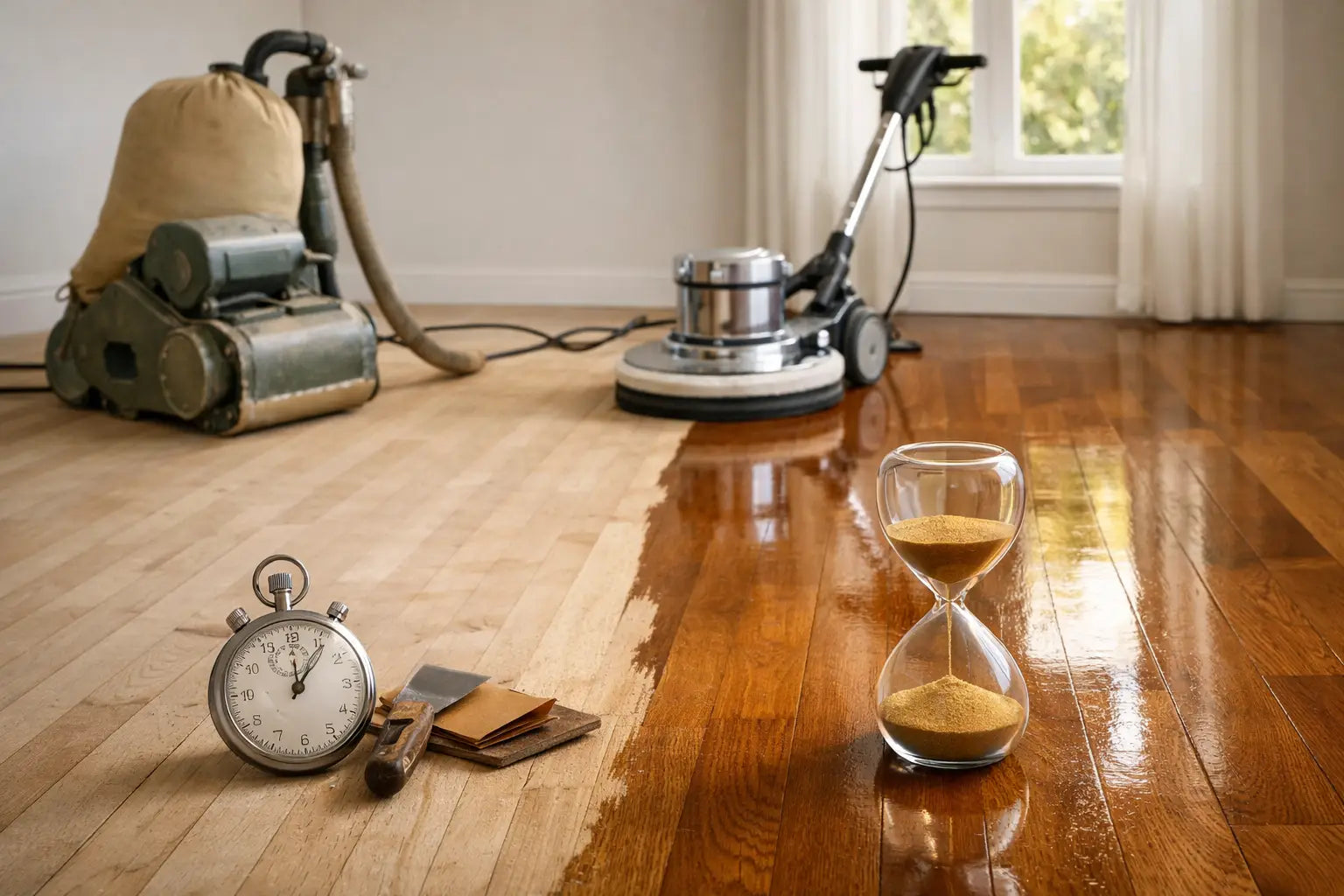
Site-finished hardwood is sanded and finished after installation. This can create a very smooth, custom result and gives you more flexibility in stain and sheen. Factory-finished hardwood arrives with the finish already applied, which can speed up installation and reduce disruption.
Then there is sheen. High-gloss floors reflect more light, but they also highlight scratches, dust, and small imperfections. Satin and matte finishes are more forgiving, which is one reason they are so popular in family homes and commercial spaces alike.
If low maintenance is a priority, this is worth serious attention. Many people focus on species and stain, then realize too late that the shine level is what really affects daily appearance.
Budget for the Full Project, Not Just the Material
A hardwood floor decision should always include installation, prep work, trim transitions, furniture moving, and any needed subfloor correction. The board price alone does not tell you what the project will really cost.
This is especially important when comparing hardwood options with laminate or luxury vinyl. Hardwood offers long-term value, refinishing potential, and a premium feel, but it does come with a higher upfront investment. In some spaces, that investment makes perfect sense. In others, a complementary flooring product may better match moisture exposure, wear demands, or budget limits.
The smartest approach is not to force hardwood everywhere. It is to choose the right flooring for each area of the property while keeping the overall design cohesive.
How to Choose Hardwood Flooring Without Regret
If you want to avoid second-guessing, slow the process down enough to compare real samples in the actual space. Look at them morning, afternoon, and evening. Put them next to cabinets, rugs, paint, and trim. Ask how the floor will look after a year of use, not just after installation.
It also helps to work with a flooring professional who asks practical questions instead of only showing attractive boards. The right guidance should cover room conditions, subfloor type, traffic, finish expectations, and budget from the start. That is where a consultative process really matters, especially if you want affordable luxury instead of an expensive mistake.
For many homeowners in the Kansas City area, the best hardwood floor is not the trendiest one. It is the one that fits the home, the family, and the way the space is used every day. If you choose with that in mind, the floor will do more than look good. It will feel like it belongs there.
A well-chosen hardwood floor should make your next step feel easy every time you walk through the room.

Leave a comment
This site is protected by hCaptcha and the hCaptcha Privacy Policy and Terms of Service apply.