
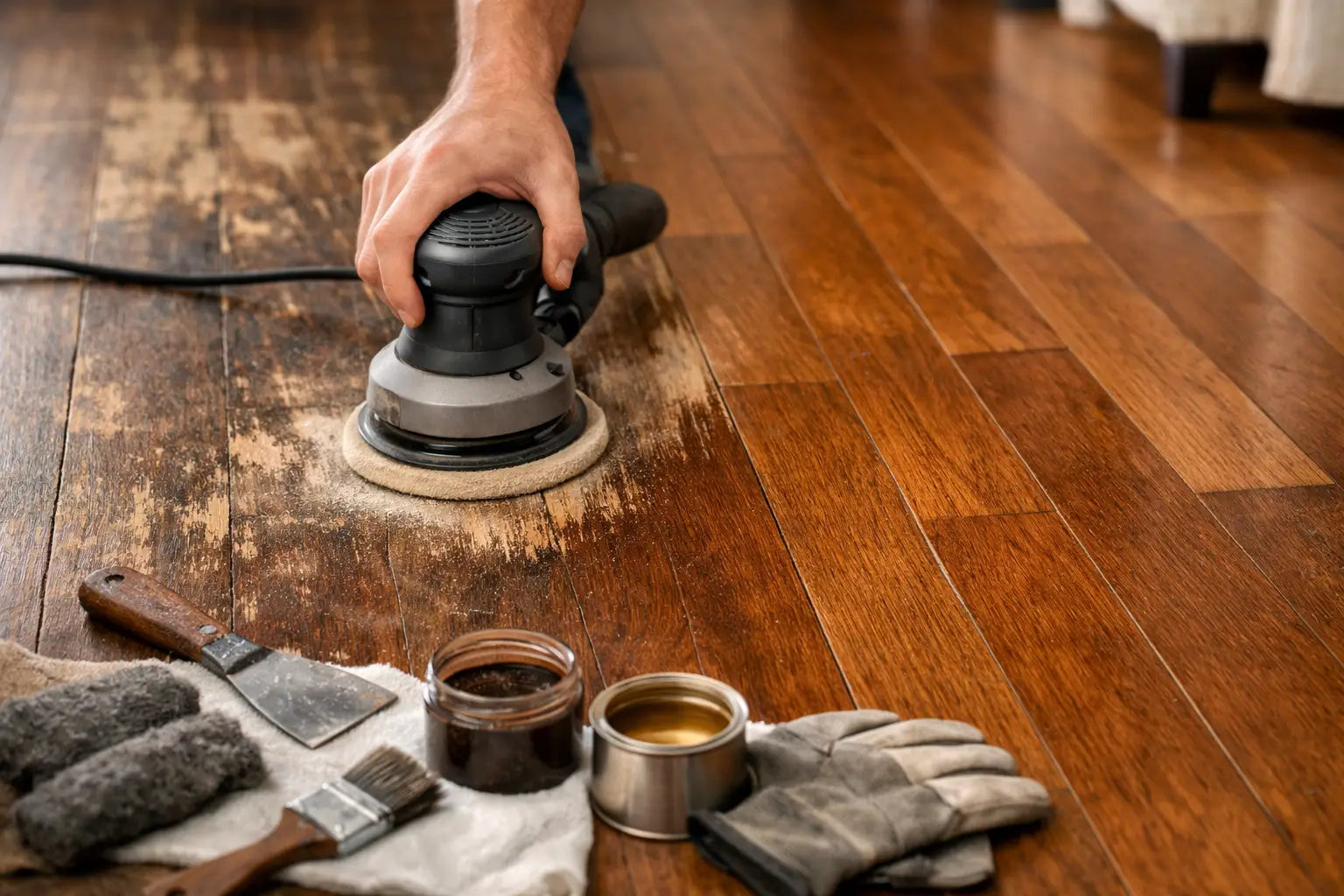
How to Restore Damaged Hardwood Floors
A hardwood floor can go from warm and polished to tired and beaten up faster than most homeowners expect. One leaking appliance, a few years of pet traffic, or old finish wearing thin in the busiest rooms can leave you wondering how to restore damaged hardwood floors without wasting money on the wrong fix.
The good news is that many damaged wood floors can be brought back to life. The part that matters is knowing what kind of damage you are dealing with. Scratches, dull finish, black stains, cupping, soft spots, and deep gouges do not all get the same treatment. Some issues call for a light repair. Others need full sanding and refinishing. And in a few cases, replacement is the smarter long-term move.
How to restore damaged hardwood floors starts with the damage type
Before you rent equipment or buy stain, take a close look at the floor itself. Surface-level wear usually shows up as light scratches, fading, and a finish that looks cloudy or uneven. If the wood underneath still feels solid and flat, that is often a good sign.
Deeper damage is a different story. Boards that feel soft, lift at the edges, show dark water staining, or have gaps that keep growing may point to moisture problems or structural movement. When that happens, cosmetic work alone will not hold up.
A simple test can help. If you place a few drops of water on the floor and they soak in quickly, the protective finish is likely worn away. If the water beads up, the topcoat may still be doing its job and the floor may only need targeted repair or screening and recoating.
Start with cleaning, not sanding
It is common to assume every worn floor needs to be sanded down right away. In reality, built-up grime can make hardwood look much worse than it is. A proper cleaning gives you a more honest picture of the condition.
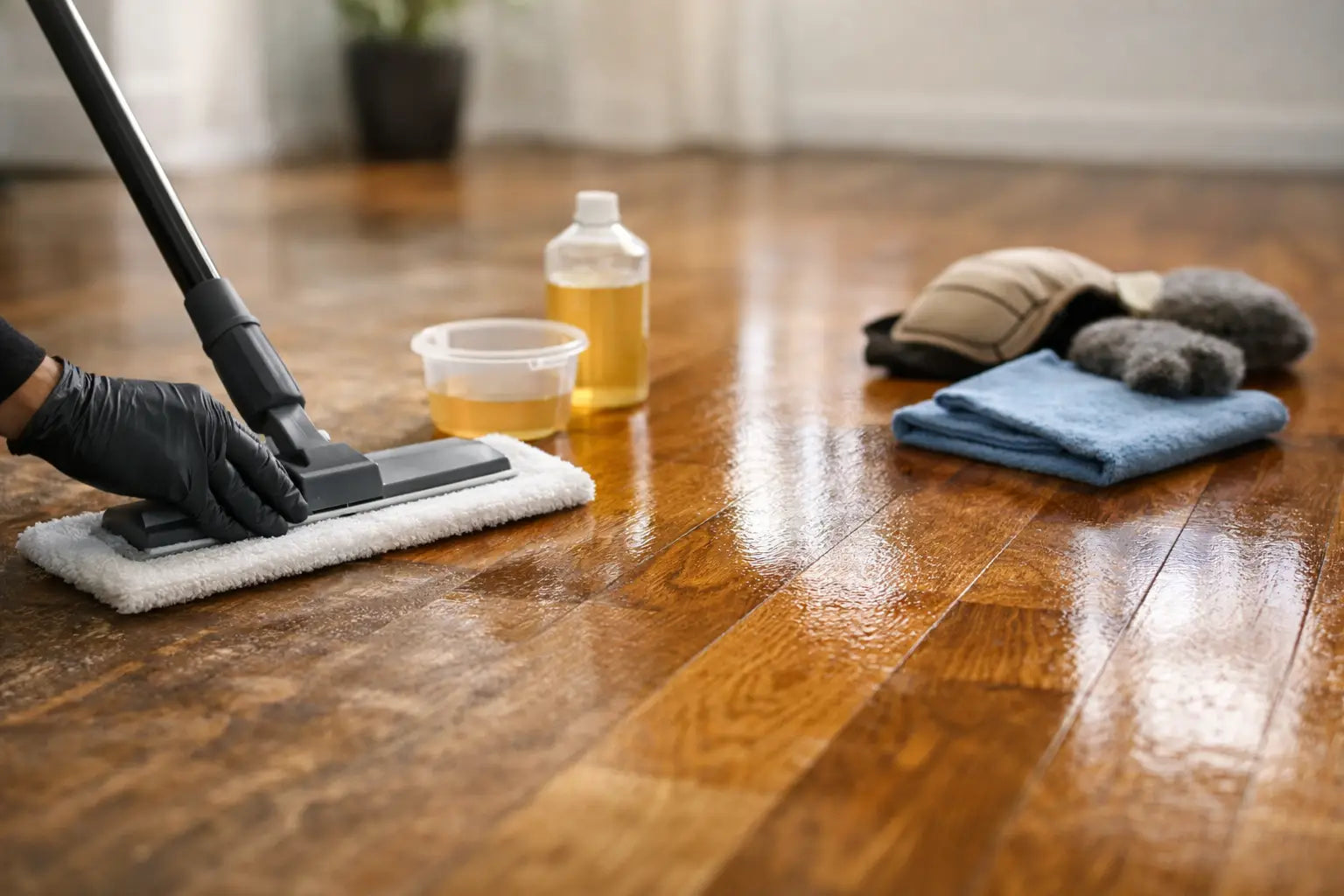
Use a cleaner made for hardwood floors, not a steam mop and not a soaked rag. Too much moisture can make damage worse, especially on older floors. Once the dirt and residue are gone, you can usually tell whether you are looking at dull finish, actual wood damage, or both.
This step also helps reveal problem areas that deserve extra attention, such as entryways, kitchen sink zones, or spots near exterior doors where water may have gotten in over time.
When a hardwood floor only needs minor repairs
If the damage is limited to light scratches, small dents, or isolated finish wear, you may not need a full restoration. Spot repairs can improve the look of the floor and buy you more time before refinishing.
For shallow scratches, a stain marker or blend stick that matches the floor color can make the damage far less visible. For slightly deeper marks, wood filler may work, but color matching matters. A repair that is smooth but the wrong shade can stand out just as much as the original scratch.
Small gouges or chipped edges may be repaired board by board. This is especially useful when most of the floor still looks good. In higher-end spaces, careful individual board repair often gives a cleaner result than trying to patch a larger area with quick cosmetic products.
That said, spot repairs have limits. If the finish is wearing off across the whole room, small fixes can start to look inconsistent. At that point, the floor usually needs broader attention.
Refinishing is the best answer for widespread wear
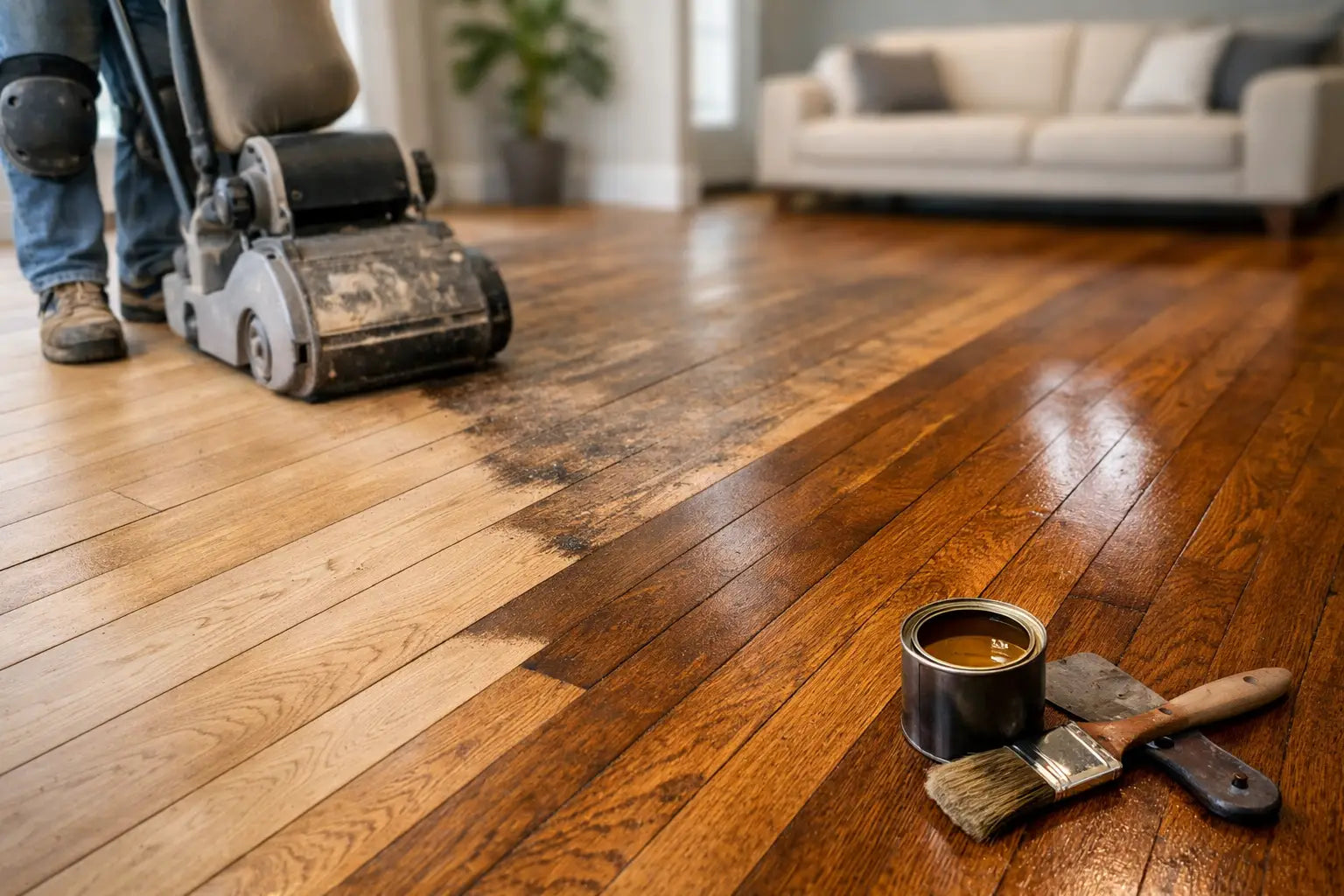
If your hardwood has lost its color, shows heavy scratches, or has finish worn down in traffic lanes, refinishing is often the most effective way to restore it. This process removes the old finish and a thin layer of wood, then applies new stain and protective coating.
Refinishing works best when the boards are still structurally sound. Solid hardwood can usually be refinished multiple times, depending on its thickness and past sanding history. Engineered hardwood is more limited. Some engineered products can be refinished once or twice, while others have a veneer too thin for aggressive sanding.
The biggest advantage of refinishing is that it treats the floor as a whole. Instead of masking damage, it resets the surface. That can dramatically improve the appearance of older floors and often costs less than full replacement.
The trade-off is disruption. Sanding creates dust unless contained properly, furniture has to be moved, and the floor needs time to cure after finishing. For busy households or commercial spaces, timing matters.
Water damage changes the plan
Water is where hardwood restoration gets more complicated. A small spill that was cleaned up quickly may only dull the finish. A long-term leak can stain the wood, warp boards, and damage the subfloor underneath.
Dark staining often means water has penetrated beyond the surface. In some cases, sanding can reduce the appearance. In others, the stain runs too deep and the affected boards need to be replaced. Cupping, where the board edges rise higher than the center, may settle after the moisture issue is resolved and the floor has time to dry. But if the shape remains or worsens, sanding too soon can cause even more trouble.
This is one of those situations where patience and proper diagnosis matter more than speed. Fixing the source of moisture comes first. Restoring the floor before the environment is stable usually leads to repeat damage.
Can you restore damaged hardwood floors yourself?
Sometimes, yes. If you are cleaning, using a touch-up product, or replacing a single damaged board with the right tools and experience, a do-it-yourself approach can be reasonable.
Full sanding and refinishing is where many projects go sideways. Drum sanders remove wood fast, and uneven passes can leave visible dips, chatter marks, or swirl patterns that are hard to hide later. Color consistency is another challenge. Different species, old stain, sun fading, and repaired areas all affect the final look.
For homeowners trying to protect long-term value, professional refinishing is often the safer investment. The result is not just about making the floor shiny again. It is about getting a flat surface, a consistent color, and a durable finish that holds up.
How professionals approach hardwood floor restoration
A professional restoration usually starts with evaluating species, board thickness, existing finish, and the source of damage. That is what determines whether the floor should be cleaned and recoated, repaired in sections, fully refinished, or partially replaced.
If a recoat is enough, the existing finish is lightly abraded and a new topcoat is applied. This works well for floors that look dull or lightly scratched but do not have deep damage through the stain layer. It is faster and less expensive than full refinishing.
If the floor needs more, sanding and refinishing can restore the color and remove years of wear. If certain boards are split, stained beyond repair, or warped, those boards can often be replaced before the floor is refinished so the entire surface blends better.
For families and property managers, this tailored approach matters. It keeps you from paying for more work than you need while avoiding temporary fixes that will not last.
When replacement makes more sense
Not every damaged floor should be restored. If the hardwood is severely water-damaged, repeatedly refinished to the point of being too thin, or compromised across a large area, replacement may be the better choice.
This is also true when the floor has widespread movement, mold concerns, or subfloor damage. In those cases, restoring the surface without addressing what is happening underneath can turn into an expensive delay.
For some homes and commercial spaces, replacement is also an opportunity. If you have wanted a wider plank, a different stain tone, or a lower-maintenance material in moisture-prone areas, this may be the right time to make a change that fits how the space is actually used.
How to protect hardwood after restoration
Once the floor is restored, a few habits go a long way. Use felt pads under furniture, keep pet nails trimmed, and place mats at entry points to catch grit before it scratches the finish. Clean with hardwood-safe products and avoid excess water.
Humidity control matters more than many people realize. Wood expands and contracts with seasonal moisture changes, and that movement can lead to gaps, cupping, or finish stress over time. Keeping indoor humidity reasonably stable helps protect the floor you just invested in.
If your floor starts to lose its shine again, do not wait until bare wood is exposed. A maintenance recoat done at the right time can extend the life of the finish and delay the need for another full sanding.
Restoring hardwood floors is not about chasing perfection. It is about choosing the right repair for the condition of the wood, the way the room is used, and the budget you want to protect. If you are unsure what your floor needs, a professional evaluation can save a lot of guesswork and help you move forward with confidence. That is often the difference between a short-term patch and a floor that truly feels like home again.

Leave a comment
This site is protected by hCaptcha and the hCaptcha Privacy Policy and Terms of Service apply.