Affordable Hardwood Flooring Options That Last
A floor can change the entire feel of a room, but it should not force you to compromise on quality or stretch your renovation budget beyond reason. The best affordable hardwood flooring options balance material cost, installation needs, long-term durability, and the character you want in your home. For many Kansas City homeowners, that means looking beyond the most expensive wide-plank display samples and focusing on hardwood choices that perform beautifully for years.
Hardwood is not one fixed price point. Species, board width, grade, finish, subfloor condition, and installation method all influence the final investment. A thoughtful plan can make a real wood floor more attainable while still delivering the warmth, value, and timeless look that make hardwood worth considering.
What Makes Hardwood Flooring Affordable?
Affordable does not mean choosing the thinnest board or the cheapest product available. It means spending wisely on the qualities that matter most in your space. A busy household with children and pets may benefit from a harder wood and a forgiving finish, while a formal dining room may allow more flexibility in species and board selection.
The installed price matters more than the price tag on a single plank. A lower-cost material can become expensive if the subfloor needs extensive repair, the layout creates substantial waste, or the product requires complicated installation. Conversely, a slightly higher-quality floor may offer a better value if it can be refinished later and holds up well through daily use.
When comparing options, consider these four parts of the project:
- The hardwood material, including species, grade, thickness, and plank width
- Preparation work, such as removing existing flooring or leveling the subfloor
- Installation details, including stairs, transitions, room layout, and trim work
- Long-term maintenance and the potential to refinish the floor in the future
Affordable Hardwood Flooring Options Worth Considering
Oak: The dependable value choice
Oak remains one of the strongest values in hardwood flooring. Red oak and white oak are widely available, which helps keep material costs competitive compared with less common species. Both have a distinctive grain that adds natural interest, so they can look rich even in narrower or more modestly priced planks.
Red oak has warmer undertones and visible grain variation. White oak tends to have a more subtle grain and works especially well with many of the natural, light, and medium-brown finishes homeowners favor today. White oak is usually the more expensive of the two, but it can still be a practical choice when compared with premium imported species or extra-wide boards.
Oak is also a smart long-term investment because solid oak floors can typically be sanded and refinished multiple times, depending on thickness and condition. If your style changes years from now, refinishing may give the room a fresh look without replacing the floor.
Maple: A clean look at a practical price
Maple is a hard domestic wood with a smoother, more uniform appearance than oak. Its subtle grain fits well in contemporary homes, bright kitchens, and spaces where you want the floor to support the overall design rather than dominate it.
Maple can be cost-effective because it is readily available, although pricing varies by product and finish. It is also quite hard, making it a sensible option for active living areas. The trade-off is that maple can absorb stain unevenly, so it is often best when you appreciate its natural color or choose a factory-finished product designed for consistent color.
Hickory: Durability for active households
Hickory is one of the hardest commonly used domestic hardwoods. It has bold grain, natural color variation, and a durable surface that stands up well to everyday activity. For families who want real hardwood in a high-traffic living area, hickory can make a great case for spending strategically.
Because the pattern is naturally varied, hickory can help camouflage small scratches and everyday wear better than a very smooth, uniform floor. It may cost more than basic oak, and installation requires experienced planning because it is a hard, dense material. Still, its durability can make it an affordable luxury when longevity is the priority.
Engineered hardwood: Real wood with more installation flexibility
Engineered hardwood has a real hardwood veneer over a layered core. It is not the same as laminate, and quality engineered products offer the authentic appearance and feel of wood. Depending on the product, they may also be refinished once or more during their service life.
This option is especially useful where solid hardwood is not the best fit, such as over concrete slabs, in lower-level spaces, or in rooms with changing humidity. In the Kansas City area, seasonal moisture changes can affect any wood floor, so selecting the right construction for the location matters.
Engineered hardwood is not automatically cheaper than solid wood. Premium wide-plank engineered flooring can be costly. However, a well-made engineered product in a standard width may reduce installation complications and open up real-wood possibilities in rooms where solid hardwood would be less suitable.
Lower-grade and character-grade hardwood
Hardwood grades describe the wood's appearance, not simply its quality. Select-grade boards have a cleaner, more uniform look. Character-grade, cabin-grade, or rustic-grade boards typically include more knots, color variation, mineral streaks, and shorter lengths.
For homeowners who appreciate a natural, lived-in appearance, character-grade flooring can be an excellent value. Those variations create personality and can reduce the material price compared with a highly uniform select-grade floor. It is a strong fit for farmhouse, traditional, rustic, and relaxed transitional interiors.
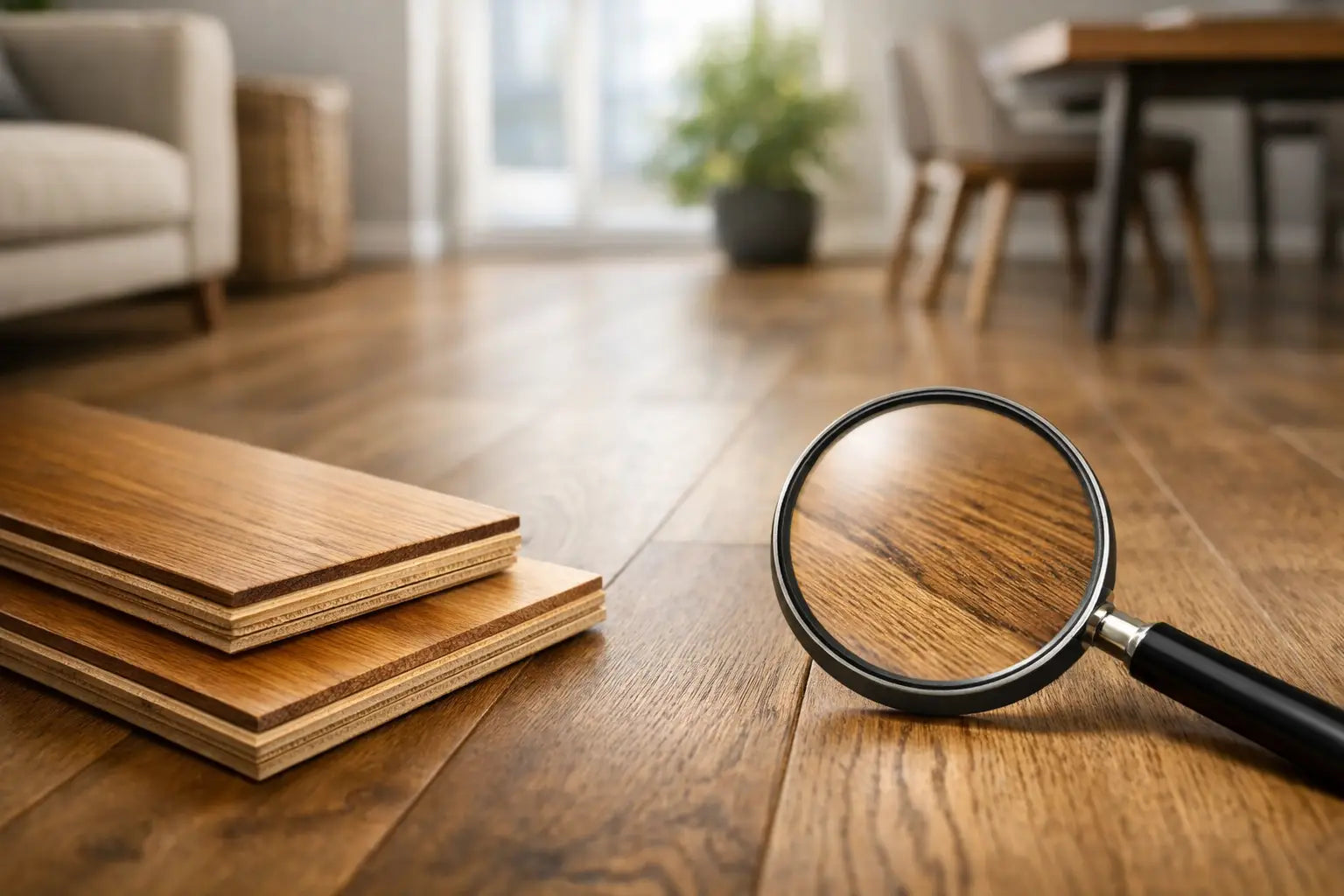
The key is to view samples that show the full range of boards, not just one attractive plank. A floor with more variation should feel intentional in the room, especially across a large open area.
Design Choices That Keep Hardwood Costs Under Control
Plank width has a meaningful impact on budget. Wide planks are popular, but they usually cost more per square foot and may require more careful installation. Standard-width boards can deliver a classic hardwood look at a lower material cost. They also work naturally in many older homes and smaller rooms.
Pre-finished hardwood can be another practical choice. Factory-finished boards arrive with a durable protective coating, which can shorten the finishing process and reduce disruption inside the home. Site-finished hardwood gives you more control over stain color and can create a smoother, more continuous appearance, but it typically requires additional time and on-site work.
Simple layouts also help protect the budget. Straight plank installation generally costs less than herringbone, chevron, borders, or intricate pattern changes. Those details can be striking, but they add labor and material waste. A clean, well-installed straight layout is never a compromise in style.
If your existing hardwood is structurally sound, restoration may be the most affordable option of all. Sanding, repairing, and refinishing an existing floor can reveal beautiful wood that has been hidden under old finishes, carpet, or years of wear. Before replacing a floor, it is worth having a professional assess whether restoration is realistic.
Where It Pays to Avoid Cutting Corners
A beautiful floor is only as good as its foundation. Moisture testing, subfloor preparation, acclimation, and proper expansion space are not extras. They are the work that helps prevent gaps, cupping, squeaks, and premature wear.
Installation is also not the place to gamble on the lowest bid. Hardwood flooring requires careful layout, accurate cuts, clean transitions, and an understanding of how wood behaves through changing seasons. An experienced installer can help you avoid costly corrections later while making sure the finished floor looks intentional from room to room.
For spaces where true hardwood does not fit the budget or performance needs, luxury vinyl and laminate can be sensible alternatives. These products can offer convincing wood visuals, strong scratch resistance, and lower installation costs. The right choice depends on whether your priority is the ability to refinish real wood, maximum water resistance, or the lowest upfront investment.
Choose a Floor for the Way You Actually Live
The most affordable choice is rarely the one with the lowest initial price. It is the floor that fits your home, your daily routine, and your plans for the years ahead. A lighter oak may be ideal for a bright family room; durable hickory may earn its place in a busy entryway; engineered hardwood may be the right answer for a concrete-based lower level.
At FC Hardwood Floors, the process starts with understanding your space rather than steering you toward one material. Comparing samples, reviewing the condition of the subfloor, and discussing your priorities can turn a broad list of choices into a confident decision. A free estimate is a practical first step toward a floor that feels like affordable luxury and makes your house feel more like home.

Leave a comment
This site is protected by hCaptcha and the hCaptcha Privacy Policy and Terms of Service apply.