
Article: Engineered Hardwood Flooring Review: Worth It?
Engineered Hardwood Flooring Review: Worth It?
A floor can look beautiful in a showroom and still be the wrong choice for a busy kitchen, a below-grade family room, or a home with active pets. This engineered hardwood flooring review looks past the sample board to help you decide whether this material offers the right mix of warmth, performance, and value for your space.
Engineered hardwood has become a popular choice for homeowners who want the character of real wood with more flexibility than traditional solid hardwood. It can be an excellent investment, but it is not automatically the best option for every room or every budget. The details matter: veneer thickness, core construction, finish quality, installation method, and the conditions in your home all affect how your new floor will perform.
Engineered Hardwood Flooring Review: The Basics
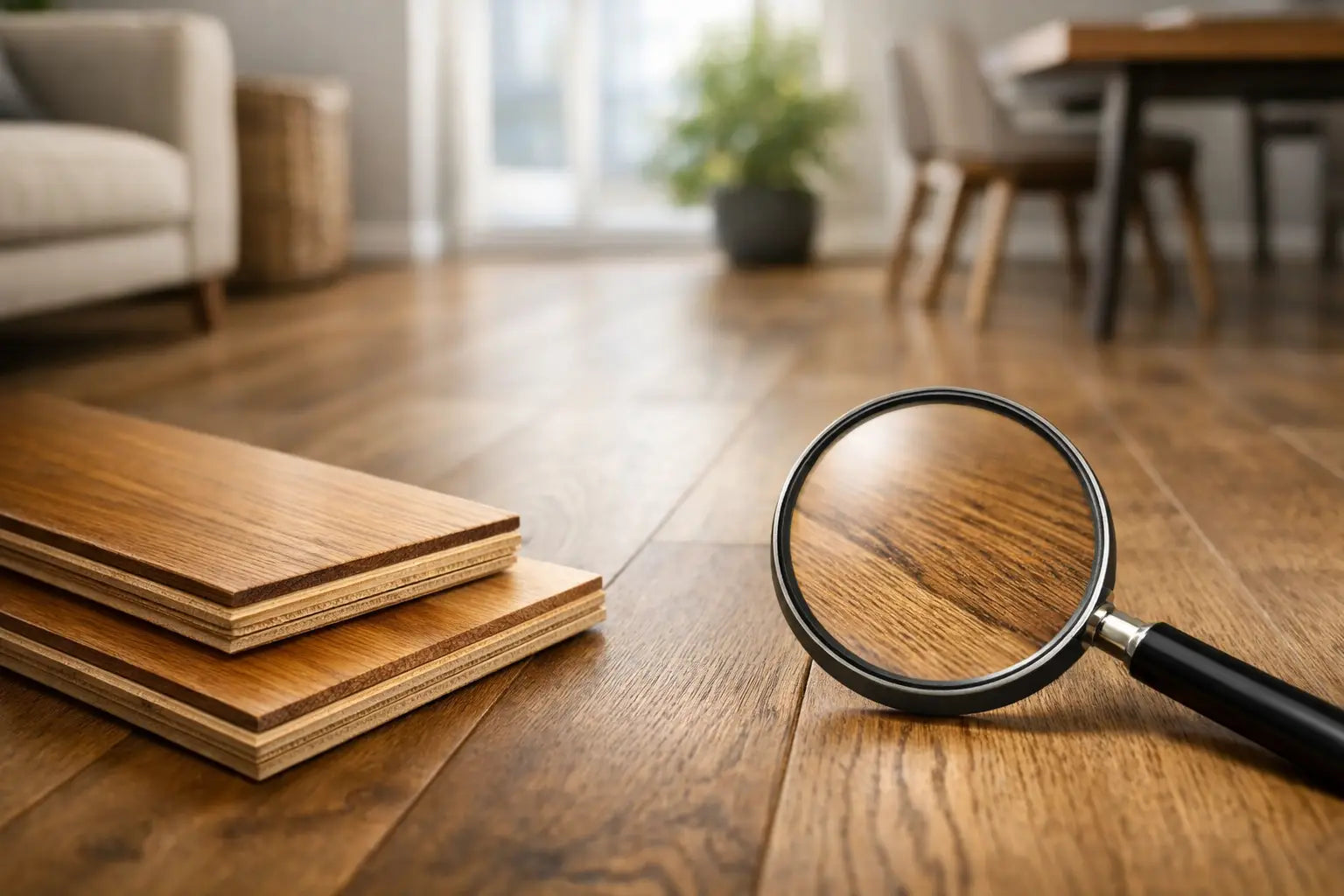
Engineered hardwood is real hardwood on the surface. Each plank has a top layer, called a wear layer or veneer, made from species such as oak, hickory, maple, or walnut. Under that surface is a layered plywood or composite core designed to provide stability.
That construction is the main difference between engineered and solid hardwood. A solid hardwood plank is made from one piece of lumber all the way through. It can expand and contract more noticeably as indoor humidity changes. Engineered hardwood is built in layers with grains running in different directions, which helps reduce that movement.
For homes in the Kansas City area, where humid summers and dry winter heat can put pressure on natural materials, that added stability can be a meaningful advantage. It does not mean engineered wood is unaffected by moisture or climate changes. It means it generally handles normal seasonal movement better than solid wood when the product is selected and installed correctly.
What Engineered Hardwood Does Well
The strongest argument for engineered hardwood is that it delivers an authentic wood appearance. The surface is genuine wood, with natural grain variation, knots, texture, and color changes that printed flooring products cannot fully duplicate. Wide-plank styles and long boards can also create a high-end look that works well in open-concept homes, formal dining rooms, bedrooms, offices, and retail or hospitality settings.
Its construction makes it suitable for more installation situations than solid hardwood. Depending on the product, engineered hardwood can often be installed over concrete slabs, on or above grade, and in areas where solid hardwood may be less practical. That makes it a strong consideration for lower-level living spaces, condo renovations, and homes built on slab foundations.
It also offers a broad range of styles. Homeowners can choose clean, contemporary white oak; character-grade hickory; hand-scraped textures; wire-brushed finishes; matte sheens; and colors ranging from pale natural tones to deep espresso. Because the planks are factory-finished, many projects move faster than site-finished hardwood installation, with less dust and disruption inside the home.
Cost is another reason many customers consider it. Engineered hardwood can provide a premium wood floor appearance at a range of price points. However, “engineered” does not always mean inexpensive. High-quality engineered hardwood with a thick wear layer, a strong multi-ply core, and a durable finish can cost as much as, or more than, some solid hardwood options. The value comes from choosing the right product for the room instead of buying solely by the square foot.
The Trade-Offs to Understand Before Buying
Engineered hardwood is often described as water-resistant, but it should not be confused with waterproof flooring. Standing water, repeated pet accidents, appliance leaks, and wet mopping can still damage wood fibers, stain the finish, or affect the core. Kitchens can work well with engineered hardwood when spills are cleaned promptly and the floor is properly maintained. Full bathrooms, laundry rooms with frequent moisture concerns, and entryways exposed to snow or rain may call for luxury vinyl or another more water-tolerant product.
Refinishing is another important distinction. Solid hardwood can usually be sanded and refinished multiple times over its life. Engineered hardwood may be refinished once, several times, or not at all, depending on the thickness of its wear layer. A thin veneer can be damaged by aggressive sanding, while a quality product with a thicker hardwood layer provides more restoration potential.
This is why comparing samples by color alone is not enough. Ask about the wear-layer thickness, core type, finish warranty, recommended installation methods, and whether the manufacturer permits refinishing. These details tell you far more about long-term value than a sale price on a single sample board.
Dents and scratches are also possible because the top layer is real wood. A hard species such as hickory or white oak generally holds up better than softer species, but no wood floor is completely scratch-proof. A busy household can still enjoy engineered hardwood, especially with a lower-sheen finish that helps disguise everyday wear. Felt pads under furniture, mats at exterior doors, and regular sweeping make a noticeable difference.
How It Compares With Solid Hardwood, Laminate, and Luxury Vinyl
Solid hardwood remains an excellent choice for homeowners who want maximum refinishing potential and a traditional, long-lasting floor. It is especially well suited to main-level rooms with stable indoor conditions and wood subfloors. Its limitation is that it is less flexible over concrete and more sensitive to moisture-related movement.
Engineered hardwood sits between solid hardwood and wood-look alternatives. It offers a real wood surface and can provide a comparable visual result, while its layered construction expands the number of spaces where it can be installed. For many remodels, that combination makes it the practical middle ground.
Laminate flooring can be more budget-friendly and highly scratch-resistant, but it does not have a real hardwood surface. It can be a sensible choice for rental properties, busy households, and rooms where appearance and budget need to be balanced carefully.
Luxury vinyl flooring provides the strongest moisture resistance of these options and is comfortable underfoot. It is a particularly useful choice for basements, bathrooms, mudrooms, and commercial spaces where spills and heavy traffic are part of daily life. Still, for homeowners who want the depth, warmth, and natural variation of actual wood, engineered hardwood has an advantage that vinyl cannot fully replace.
Choosing a Quality Engineered Hardwood Floor
Not all engineered hardwood is built to the same standard. A well-made floor usually has a substantial hardwood wear layer, a stable multi-ply plywood core, and a finish designed for residential or commercial traffic. Wider planks can look striking, but they require a sound, level subfloor and careful installation to prevent gaps, movement, or noise later.
The installation method should fit the product and your home. Some engineered floors are glued down, some are nailed or stapled, and some use a floating click-lock system. Glue-down installation is common over concrete and can create a solid feel underfoot. Nail-down installation may be ideal over a wood subfloor. Floating floors can be efficient in the right setting, but they need proper underlayment and expansion space to perform well.
Moisture testing is not optional, especially over concrete. Before installation, a professional should evaluate the subfloor, check moisture levels, address uneven areas, and confirm that the product is appropriate for the space. Skipping this preparation can lead to problems that have nothing to do with the flooring itself, including cupping, gapping, adhesive failure, or squeaks.
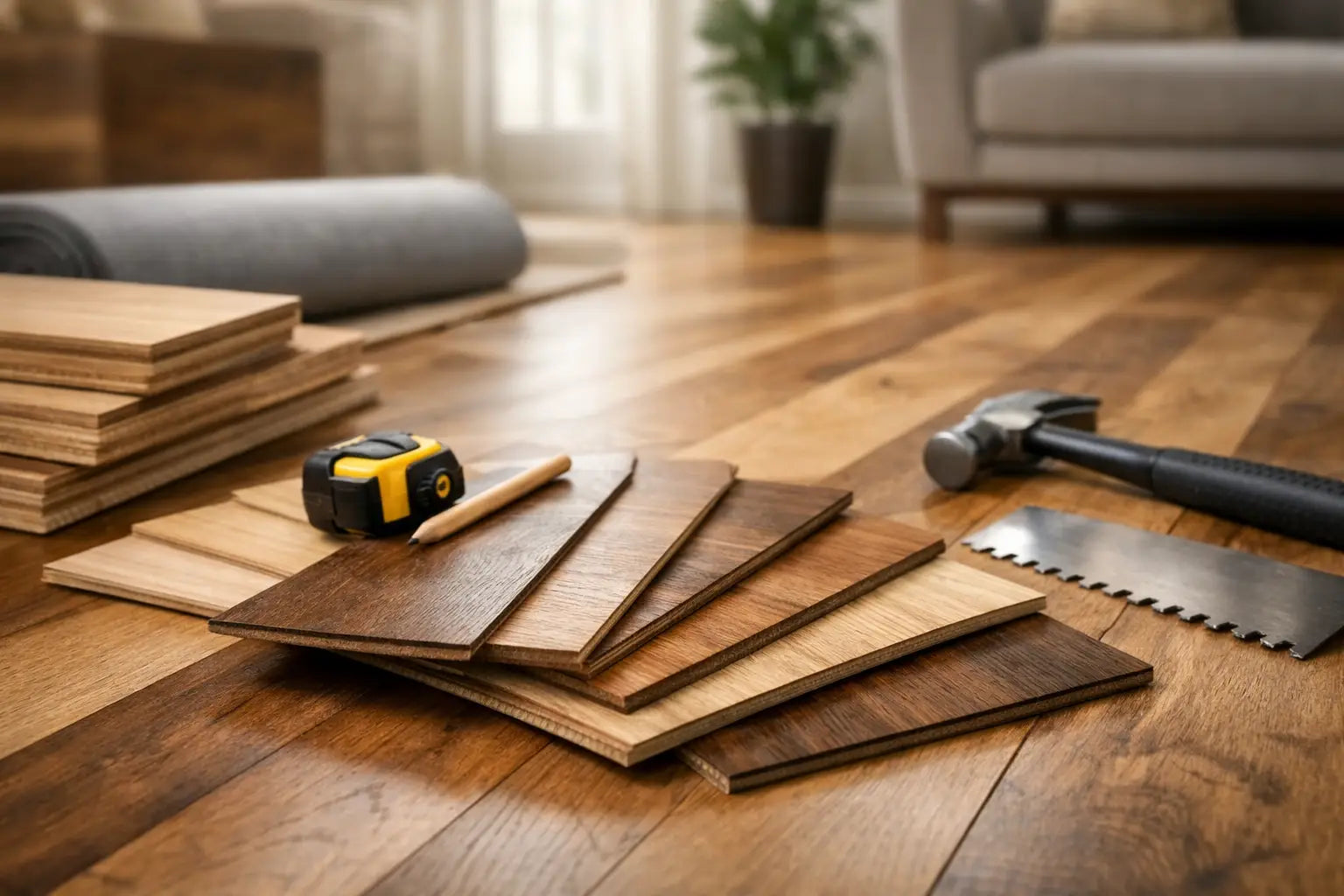
A free estimate and in-home consultation can make the selection process much easier. Seeing samples beside your cabinets, wall color, lighting, and furnishings is more reliable than choosing under showroom lights. An experienced flooring professional can also help you compare products honestly, including when a different material may serve your room better.
Is Engineered Hardwood Worth It?
For many homeowners, yes. Engineered hardwood is worth considering when you want real wood character, need added dimensional stability, and want more installation flexibility than solid hardwood provides. It is especially compelling for main living areas, bedrooms, offices, and finished lower levels where moisture is controlled.
It may not be the best investment if you need a fully waterproof floor, expect frequent standing water, or are choosing the least expensive option available without reviewing its construction. A low-cost engineered product with a thin veneer may look good at first but offer fewer options if it becomes worn or damaged.
The best floor is the one that fits how you actually live. Bring home samples, consider the room's moisture and traffic, and look beyond the initial price. With the right product and careful installation, engineered hardwood can give your house the lasting, comfortable feel of real wood while keeping the project within reach.

Leave a comment
This site is protected by hCaptcha and the hCaptcha Privacy Policy and Terms of Service apply.