Article: Commercial Flooring Guide for Property Managers

Commercial Flooring Guide for Property Managers
A flooring decision can affect far more than a room’s appearance. It can determine how often a unit turns over, how quickly a retail space reopens, whether a lobby feels cared for, and how much of the maintenance budget disappears into repairs. This commercial flooring guide for property managers is built around the practical questions that matter most: What will hold up, what will look right, and what will make sense for the property over time?
For managers of apartments, offices, retail spaces, and mixed-use buildings, the best choice is rarely the cheapest material per square foot. It is the floor that fits the traffic, cleaning routine, tenant expectations, and project schedule without creating expensive surprises later.
Start With How the Space Is Actually Used
Flooring specifications should begin with daily use, not a catalog sample. A surface that performs beautifully in a private office may wear too quickly in an apartment hallway. A product that works in a model unit may be a poor match for a pet-friendly rental with frequent turnovers.
Consider who uses the area, how often they pass through it, and what they bring in on their shoes or wheels. Entrance areas deal with moisture, salt, grit, and heavy foot traffic. Leasing offices need a polished appearance while standing up to rolling chairs and frequent visitors. Multifamily units need materials that can be cleaned quickly between residents and tolerate furniture moves, pets, and everyday spills.
Also look below the finished floor. Concrete moisture, uneven subfloors, old adhesive, and sound-control requirements can change the scope of work significantly. An experienced installer should evaluate these conditions before material is ordered, not after the existing floor has been removed.
Choose Materials by Performance, Not Just Price
Commercial flooring does not need to look institutional to perform well. Today’s luxury vinyl, laminate, and engineered hardwood options offer a wide range of colors, plank sizes, and wood visuals. The right material depends on the job.
Luxury Vinyl for Busy, Spill-Prone Areas
Luxury vinyl plank and luxury vinyl tile are strong choices for many commercial and rental applications. They are comfortable underfoot, available in convincing wood and stone looks, and generally easier to replace in a localized damaged area than a continuous hardwood floor.
Because luxury vinyl is water-resistant or waterproof depending on the product and installation system, it is especially practical for apartment units, break rooms, corridors, leasing offices, and retail spaces where spills are expected. It is not indestructible, however. Thin products, weak wear layers, and poorly prepared subfloors can lead to visible telegraphing, gaps, or premature wear. Product quality and installation preparation matter as much as the material category.
Laminate for Value and Visual Consistency
Commercial-grade laminate can provide a clean, consistent wood look at an approachable price point. It works well in dry areas with moderate traffic, including offices, private workspaces, and rental units where a durable, easy-to-maintain finish is a priority.
The trade-off is moisture. Many newer laminate products offer improved water resistance, but standing water and repeated wet exposure can still cause swelling at joints or edges. For spaces near exterior doors, sinks, or frequent cleaning spills, luxury vinyl may offer more peace of mind.
Hardwood for High-Impact First Impressions
Hardwood brings warmth, character, and long-term value that few other materials can match. In the right commercial setting, such as executive offices, boutique retail, professional service spaces, club rooms, or well-maintained common areas, it creates an elevated impression that supports the property’s brand.
Hardwood is a long-term investment, not always the lowest-maintenance option. It can scratch, it is sensitive to significant moisture, and it requires a thoughtful cleaning plan. Its advantage is longevity: a quality hardwood floor can often be restored rather than completely replaced. For properties where appearance and lasting value are central to the experience, that repairable life cycle can justify the initial cost.
A Commercial Flooring Guide for Property Managers: Budget the Full Project
Material pricing is only one line item. A realistic flooring budget accounts for demolition, disposal, subfloor preparation, moisture mitigation when needed, transitions, baseboards, furniture moving, and installation timing. Skipping these conversations early can turn a straightforward replacement into a change-order problem.
Ask for a clear scope that identifies what is included and what may be discovered once the old flooring comes up. No contractor can see every hidden subfloor issue in advance, but a dependable flooring partner will explain the possible risks and provide a plan for addressing them.
It also helps to compare cost over the expected life of the floor. A lower-priced option that needs frequent replacement may cost more in labor, lost occupancy, and disruption than a stronger product that lasts longer. For a rental portfolio, standardizing one or two dependable flooring selections can simplify ordering, make repairs faster, and maintain a consistent look from unit to unit.
Plan for Downtime Before Work Begins
A beautiful floor is not helpful if the installation schedule creates avoidable disruption for tenants, employees, or customers. Property managers need a plan that covers access, furniture, noise, dust, cure times, and reentry.
Occupied spaces require more coordination than vacant ones. Residents and tenants should know which rooms are affected, when installers will arrive, and whether they need to move personal items. In retail or office environments, phased work may keep part of the space operational. In multifamily properties, scheduling around turnovers can reduce lost rental days.
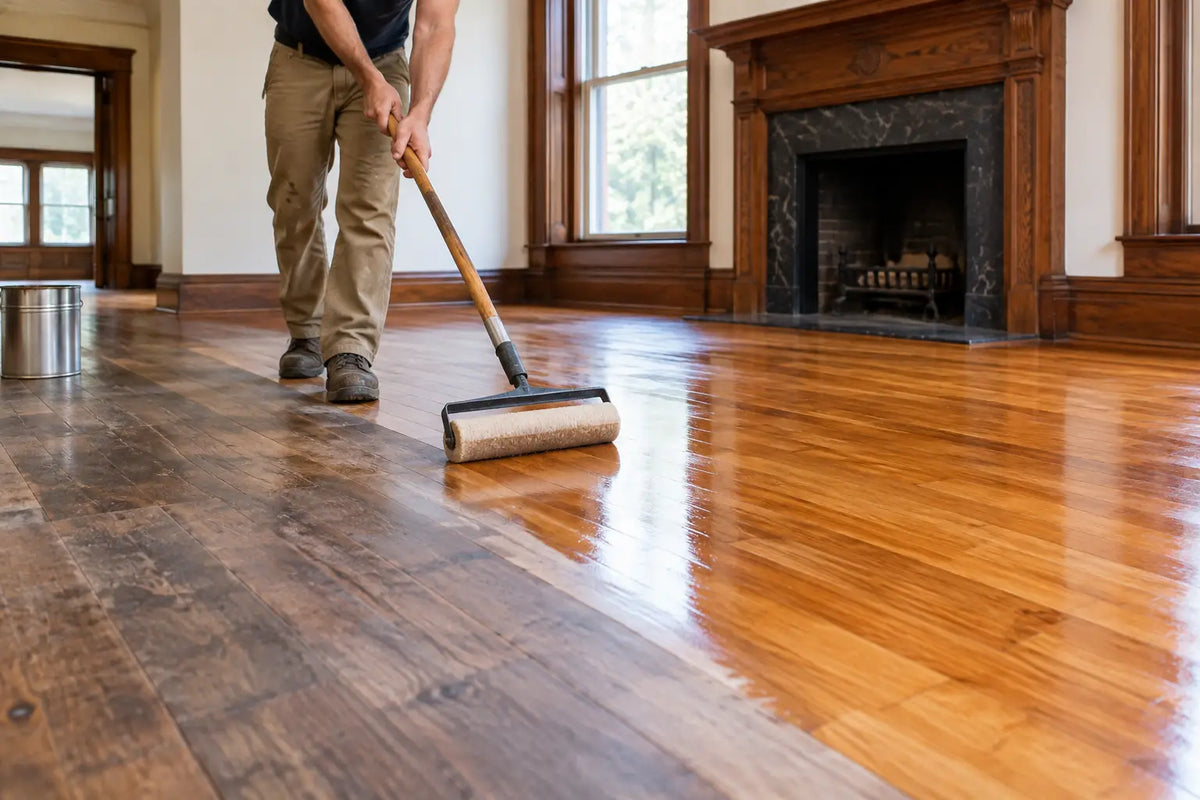
Hardwood refinishing deserves special attention. Sanding and finishing can transform a worn floor, but the process requires time for preparation, drying, and curing. Water-based finishes may shorten the timeline compared with some oil-based systems, yet the floor should still be protected from heavy use until the finish has fully cured. Clear expectations prevent a rushed return to service from damaging the new work.
Do Not Treat Installation as an Afterthought
Even premium flooring can fail when installation is rushed or the subfloor is ignored. Proper moisture testing, leveling, acclimation where required, and manufacturer-approved installation methods protect both the appearance of the floor and the product warranty.
This is particularly relevant in the Kansas City area, where seasonal humidity changes can affect wood-based materials. A professional assessment helps determine whether engineered hardwood, solid hardwood, laminate, or luxury vinyl is the better fit for the building conditions and the level of climate control.
Before approving a project, ask how the crew will protect adjacent surfaces, handle transitions to existing flooring, and address floor-height differences at doors and stairs. These details are easy to overlook on a quote, but they influence safety, accessibility, and the finished appearance.
Build a Simple Maintenance Plan
Commercial floors last longer when cleaning practices match the material. Harsh chemicals, excessive water, abrasive pads, and neglected entry mats can shorten the life of nearly any surface.
A practical plan should include regular dry debris removal, prompt spill cleanup, entry mats that capture grit before it reaches the floor, and approved cleaners for the installed product. Place felt protection under movable furniture and use floor-safe glides under chairs. For hardwood, avoid wet mopping and schedule professional maintenance before the finish wears through to bare wood.
Document the product name, color, lot information, and installation date for every project. Keeping a small amount of extra material can make future repairs far easier, especially when a manufacturer changes a style or dye lot.
Make the Decision With Samples and a Site Visit
Flooring samples are useful, but they should be viewed in the actual space. Lighting, wall color, window exposure, and nearby finishes can make the same plank look very different from one building to another. Ask to compare samples beside trim, cabinets, paint, and furnishings before making a final selection.
A site visit also gives a flooring professional the chance to identify installation concerns and recommend a solution that fits the property’s priorities. FC Hardwood Floors helps property managers weigh appearance, durability, scheduling, and budget with straightforward guidance and a clear estimate before work begins.
The right commercial floor should make your job easier after installation, not add another recurring issue to manage. Choose a material and installation plan that respects how the property operates, then give it the care needed to keep it looking professional for years.

Leave a comment
This site is protected by hCaptcha and the hCaptcha Privacy Policy and Terms of Service apply.