
Article: 7 Hardwood Restoration Examples Worth Seeing
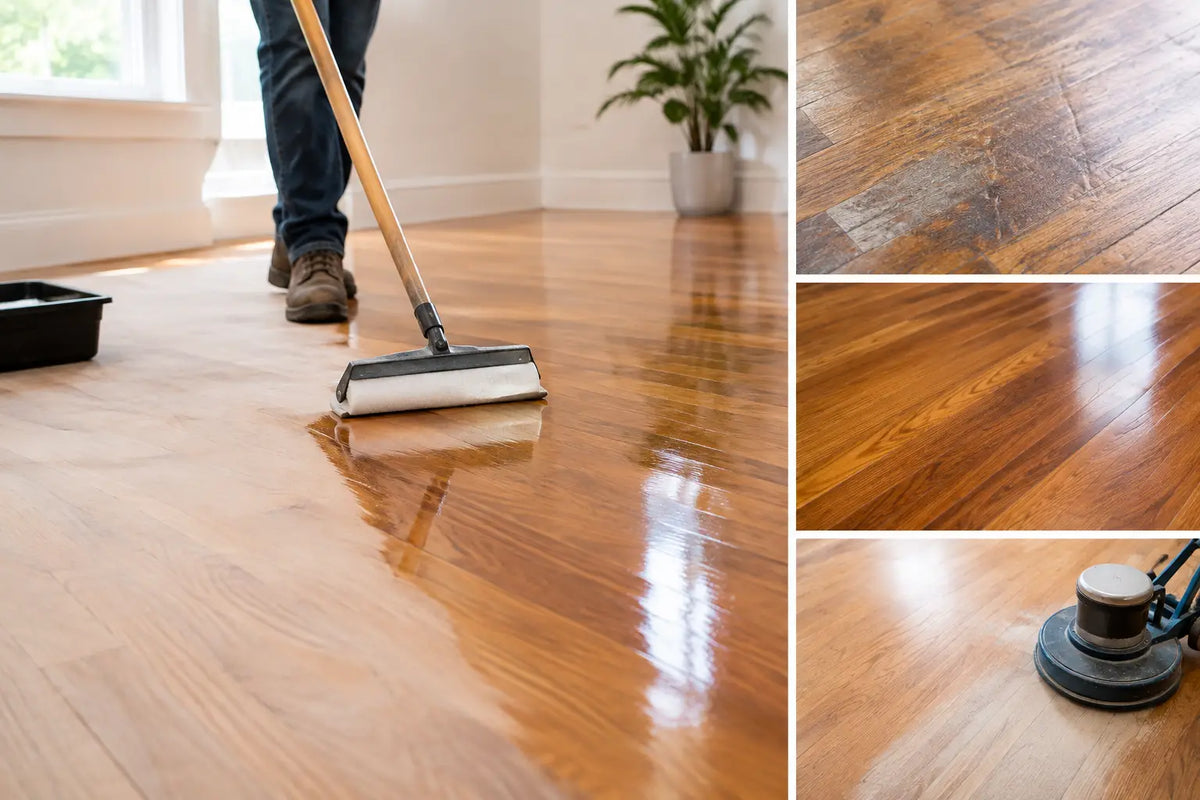
7 Hardwood Restoration Examples Worth Seeing
A hardwood floor can look beyond saving long before it actually is. Deep-looking scratches, cloudy finish, sun-faded boards, pet stains, and gaps between planks often lead homeowners to assume replacement is the only answer. These hardwood restoration examples show why a professional evaluation comes first: the right repair and refinishing plan can bring back character, improve durability, and make a room feel newly finished without losing the wood that gives it warmth.
1. Worn Oak Floors in a High-Traffic Entry
Entryways take the hardest daily use. Grit from shoes works like sandpaper, especially in busy family homes, and the finish near the front door can wear away years before the rest of the floor. What remains may look gray, dull, and uneven, even when the oak itself is still in good condition.
In this type of restoration, the floor is sanded to remove the damaged finish and surface scratches. A few localized board repairs may be needed where moisture or repeated impact has left deeper marks. The floor can then be refinished in a clear natural tone that lets the oak grain stand out while adding a durable protective layer.
The trade-off is that a natural finish will still show the wood's original color variation. That is often a benefit, not a flaw. For homeowners who want a more uniform look, a light stain can help, but it should be tested first because every floor accepts color differently.
2. Orange-Toned Floors Updated With a Softer Color
Many Kansas City homes have hardwood floors finished decades ago in warm amber or orange-toned polyurethane. The wood may be structurally sound, but the color can make a remodeled kitchen or updated paint palette feel dated.
A color update begins with full sanding to remove the old finish and expose fresh wood. From there, a custom stain sample helps the homeowner compare options in the actual lighting of the room. A neutral brown, soft medium walnut, or lighter natural shade may better suit the home's current style while preserving the depth of real hardwood.
This is one of the most dramatic hardwood restoration examples because the layout stays the same while the entire room changes character. It also requires realistic expectations. Red oak, white oak, maple, and hickory do not absorb stain in the same way. Professional sample boards and on-floor test areas prevent costly color surprises.
3. Pet Scratches and Water Marks in a Living Room
Pet owners often worry that visible scratches mean their floor has reached the end of its life. In many cases, claw marks are concentrated in pathways near furniture, doors, and windows rather than spread through every board. A professional can determine whether the scratches sit in the finish or cut into the wood itself.
Light wear may be addressed with a maintenance coat or screen-and-recoat service, which refreshes the protective surface without sanding down to bare wood. This is a practical option when the existing finish is intact and there is no wax, peeling, or major damage.
Deeper scratches, black water marks, or areas where the finish has worn away generally call for sanding and refinishing. Dark pet stains can be more complicated. Some lift during sanding, while others have penetrated deeply enough that affected boards need replacement. Replacing only a few boards can blend well, but matching old wood and aged color takes care and experience.
4. A Dining Room Floor Hidden Under Carpet
Pulling up old carpet can reveal a pleasant surprise: original hardwood that has been protected for years. It can also reveal tack-strip holes, staple marks, paint splatters, and uneven fading around the edges of the room. None of those issues automatically disqualifies the floor from restoration.
After carpet removal, the floor is inspected for board thickness, moisture concerns, loose areas, and previous repairs. Small holes are filled, damaged boards are repaired or replaced, and the surface is sanded in stages until it is smooth and ready for finish. The result often makes a modest dining room feel larger, cleaner, and more connected to the rest of the home.
One caution is that carpet can hide past water damage. If boards are cupped, buckled, or soft, the moisture source must be addressed before restoration begins. Refinishing a floor over an active moisture problem only delays the repair.
5. Sun-Faded Floors Near Large Windows
Sunlight does not fade every species or finish at the same rate, but large windows can leave obvious color differences beneath rugs and furniture. A once-even floor may have a dark perimeter, a pale center, or rectangular shadows where an area rug sat for years.
A full refinish is usually the best way to correct widespread fading because it creates a consistent starting point across the room. If the homeowner wants to retain a lighter appearance, a water-based finish may be a good fit. It tends to keep many wood species closer to their natural color than traditional ambering finishes.
Window treatments, UV-filtering film, and rotating rugs can help slow future fading. Hardwood is a natural material, though, and some gradual color change is part of its life. The goal is not a floor that never changes, but one that ages evenly and remains protected.
6. Historic Character With Gaps, Squeaks, and Patched Boards
Older homes often have floors with details worth preserving: narrow planks, original oak, distinctive grain, and a patina that new flooring cannot duplicate. At the same time, these floors may squeak, have seasonal gaps, or include boards patched after old plumbing or heating work.
Restoration should respect the age of the floor while correcting functional issues. Loose boards can be secured, broken planks can be replaced with compatible material, and repairs can be feathered into the surrounding floor before sanding. Small seasonal gaps are not always a defect. Wood expands and contracts with changes in humidity, so filling every gap can create problems when the boards move again.
This is where a careful consultation matters. A perfectly uniform floor may not be the right goal for a historic home. A well-restored floor can look clean, stable, and cared for while keeping the character that made it worth saving.
7. Commercial Hardwood That Needs a Fast, Durable Refresh
Hardwood in an office, boutique, restaurant, or community space faces a different kind of wear. Chairs, rolling traffic, shoes, cleaning routines, and frequent use can dull the finish quickly. Business owners also need a project plan that respects operating hours and limits disruption.
For commercial restoration, the scope depends on the floor's condition and the facility schedule. A recoat may offer a faster refresh when the finish is worn but the wood is not deeply damaged. A full sand and refinish is better for significant scratches, staining, uneven sheen, or prior finish failure.
Finish selection matters as much as appearance. A commercial setting may benefit from a system chosen for traffic level, cleaning needs, dry time, and the desired sheen. High gloss can look striking at first, but satin or matte finishes often disguise daily scuffs more effectively. The right choice balances visual impact with maintenance expectations.
How to Tell Which Restoration Path Fits Your Floor
The best restoration method depends on how much solid wood remains above the tongue-and-groove joint, the type of existing finish, the extent of staining, and whether moisture or structural issues are present. Engineered hardwood adds another consideration: its wear layer may allow only limited sanding, depending on the product.
A professional estimate should look beyond the surface. It should identify damaged boards, moisture risks, transitions to adjoining rooms, stain options, finish preferences, and the level of prep work required. That clear planning helps homeowners and property managers compare restoration with replacement based on long-term value, not just the initial price.
At FC Hardwood Floors, we believe a restored floor should feel like it belongs in the home or business, not like a shortcut. If your floors are worn, dated, or damaged, a hands-on evaluation can reveal whether their best days are still underfoot.


Leave a comment
This site is protected by hCaptcha and the hCaptcha Privacy Policy and Terms of Service apply.