
Article: Hardwood Versus Tile for Your Kansas City Home
Hardwood Versus Tile for Your Kansas City Home
A kitchen floor can look beautiful in a showroom and still feel wrong after a Midwest winter, a busy holiday dinner, or a child drops a glass near the island. That is why the hardwood versus tile decision deserves more than a quick comparison of colors. Both materials can add lasting value and polished style to a home, but they perform very differently under daily life.
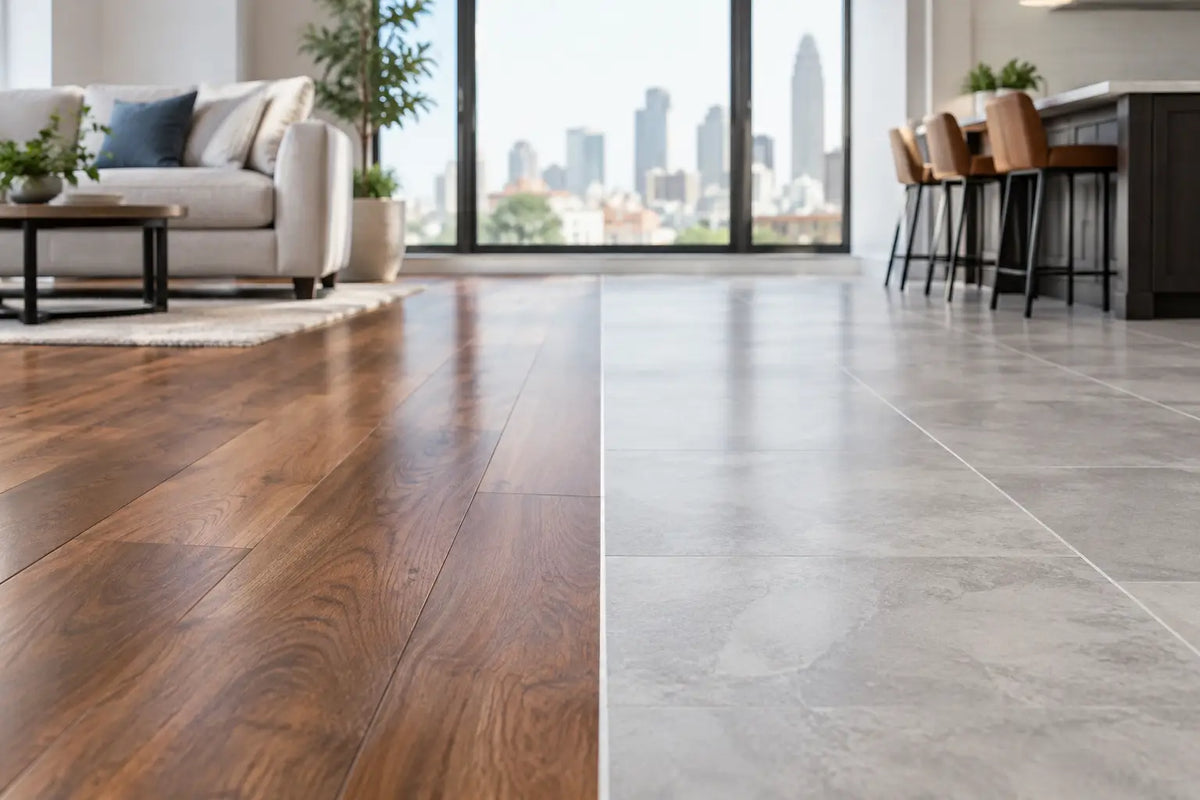
For homeowners in the Kansas City area, the right choice often comes down to the room, the household, the condition of the subfloor, and how you want the space to feel. Hardwood brings warmth and natural character. Tile brings exceptional moisture resistance and a hard-working surface for demanding areas. A thoughtful plan can even use both, giving each material a place where it performs best.
Hardwood Versus Tile: Start With How the Room Is Used
Flooring should support the way you live, not make you work around it. Before selecting a material, consider what happens in the room on an ordinary Tuesday, not just how it will look in listing photos.
Hardwood is a natural fit for living rooms, dining rooms, bedrooms, hallways, and open-concept main floors. It creates visual continuity from room to room and offers a comfortable surface for bare feet, pets, and everyday gathering. The grain variation and warmth of real wood also make a home feel more settled and personal over time.
Tile is often the practical choice in bathrooms, laundry rooms, mudrooms, entryways, and kitchens with frequent spills. Porcelain and ceramic tile can handle moisture that would cause concern with solid hardwood. In an entryway where wet shoes, snow, and road salt are common, tile gives families a little more breathing room.
Neither material has to be limited to one type of space. A well-designed kitchen may use hardwood for a warm, connected look, while a bathroom may use wood-look tile to coordinate with adjacent bedrooms. The best answer depends on the demands of that specific room.
The Feel Underfoot Matters More Than Many People Expect
The difference between hardwood and tile becomes obvious the moment you walk across them. Hardwood has a warmer, slightly softer feel because wood does not pull heat from the body as quickly as tile. It is easier on the feet and legs during long stretches of cooking, folding laundry, or standing at a worktable.
Tile is hard and can feel cold, particularly during Kansas City winters. Area rugs can help in low-moisture spaces, and radiant floor heating can make tile remarkably comfortable in a bathroom or kitchen. Those additions, however, affect the project budget and should be considered early.
For households with young children or older adults, comfort and slip resistance deserve special attention. Tile has many texture and finish options, but a glossy tile can become slick when wet. Hardwood has more give than tile, though any hard surface can be slippery when socks, spills, or loose rugs are involved. The finish, rug placement, transitions, and installation details all matter.
Durability Is Not the Same as Being Indestructible
Both hardwood and tile are durable, but they wear in different ways. Hardwood can dent or scratch when heavy furniture is dragged, a pet runs through the house, or an object falls. Lighter stains, wire-brushed textures, and matte finishes can make everyday marks less noticeable. More importantly, a quality hardwood floor can often be refinished when its finish wears down or when homeowners want a new color.
That ability to restore hardwood is a major long-term advantage. A floor with character does not necessarily need replacement. Professional sanding and refinishing can remove many surface scratches, refresh the protective coating, and give the room a completely updated appearance.
Tile resists scratches, water, and dents extremely well. It is especially strong against the messes common in bathrooms and mudrooms. Yet tile is not impossible to damage. A heavy item can crack a tile, and repairs may be challenging if replacement pieces are unavailable or the original dye lot has changed.
Grout is also part of the durability conversation. Traditional grout lines can collect dirt and may need periodic cleaning and sealing, depending on the product used. Larger-format tiles and stain-resistant grout options can reduce maintenance, but they do not eliminate it entirely.
What about pets and active families?
For a home with large dogs, frequent visitors, and an active household, tile offers outstanding resistance to claws, mud, and water bowls. Hardwood can still work beautifully, especially with the right species, finish, and expectations. Small scratches are often part of a lived-in wood floor, not a failure of the material.
If you love the warmth of hardwood but worry about the kitchen or back door, combining surfaces can be a smart solution. Hardwood through the main living area with tile at exterior doors, in the laundry room, or around a wet bar often provides the balance families want.
Moisture Is the Deciding Factor in Certain Rooms
Water is where the comparison becomes clear. Tile is designed for wet environments when properly installed and grouted. It is the more dependable choice for shower-adjacent bathroom floors, laundry rooms, and spaces where standing water is possible.
Solid hardwood is generally not recommended for full bathrooms because repeated humidity changes and water exposure can lead to cupping, staining, or gaps. Engineered hardwood may offer improved dimensional stability in some settings, but it still is not the same as a waterproof floor. It needs prompt cleanup when spills happen.
In kitchens, the decision is more nuanced. Many homeowners choose hardwood because it extends the style of the rest of the main floor and feels better during meal preparation. Others prefer tile for peace of mind around the sink, dishwasher, and refrigerator. If a kitchen opens directly to a living room, appearance and continuity may push the decision toward hardwood. If the kitchen is a high-traffic hub with kids, pets, and frequent entertaining, tile may be worth the trade-off in comfort.
Cost Should Include the Years After Installation
Material price is only one part of a flooring investment. Installation complexity, subfloor preparation, removal of existing flooring, transitions, trim work, and future maintenance all shape the real cost.
Hardwood installation can require careful acclimation, moisture testing, and precise preparation before boards are installed. Those steps protect the floor and help it perform as intended through seasonal changes. Unfinished hardwood also allows for a custom stain color and a site-applied finish, while prefinished options can shorten installation time.
Tile installation is labor-intensive in a different way. The subfloor must be flat, stable, and properly prepared so tiles do not crack under movement. Layout work matters as well, particularly with large tiles, patterned tile, or rooms where cuts will be highly visible. A low tile price does not always mean a low installed price.
Over the long term, hardwood may need refinishing, while tile may need grout care or occasional repair. A well-installed floor of either type can serve a home for decades. The better value is the one that suits the room well enough that you will not be replacing it prematurely.
Style and Resale Value: Choose a Look You Can Live With
Hardwood remains a favorite for its timeless appearance and broad appeal. It can make smaller rooms feel more connected, give historic homes an appropriate finish, and add natural texture to contemporary spaces. Species, plank width, stain color, and finish sheen all influence whether the result feels traditional, relaxed, modern, or somewhere in between.
Tile offers more visual range than ever. Stone looks, concrete looks, patterned designs, and realistic wood-look porcelain give homeowners many ways to create a tailored space. It can be a quiet backdrop or a design feature, especially in an entryway, fireplace surround, or bathroom.
Resale value is worth considering, but it should not override practical needs. Buyers often appreciate real hardwood in main living areas, while they also expect moisture-resistant flooring in bathrooms and laundry spaces. A home that uses each material thoughtfully tends to feel more finished than one that forces a single surface into every room.
Make the Choice With Samples, Not Screens
Photos are useful for inspiration, but they cannot show undertones, texture, or how a floor changes in your home’s natural light. Bring samples into the room and look at them in the morning, afternoon, and evening. Set them near cabinetry, paint, furniture, and existing trim.
Also consider transitions between rooms. The most successful flooring plans account for plank direction, tile layout, floor height, and where one material meets another. These details are easy to overlook and highly visible once installation is complete.
At FC Hardwood Floors, we help homeowners compare samples, understand installation requirements, and choose surfaces that match both their budget and daily routine. A clear estimate and an honest conversation about trade-offs make the decision much easier.
The right floor is not simply the one that wins a hardwood versus tile debate. It is the surface that welcomes people home, stands up to the room’s real demands, and still looks like it belongs there years from now.


Leave a comment
This site is protected by hCaptcha and the hCaptcha Privacy Policy and Terms of Service apply.