

Laminate Floor Buying Guide for Kansas City Homes
A laminate floor can give a busy kitchen, living room, or rental property the look of natural wood without asking for hardwood-level maintenance. This laminate floor buying guide focuses on the choices that affect how your floor looks, feels, wears, and performs long after installation day.
Laminate has come a long way from the glossy, repetitive patterns many homeowners remember. Better photography, deeper surface texture, wider planks, and more realistic edge details have made it a strong option for homeowners who want attractive flooring at a practical price. Still, not every laminate product is built for the same room or lifestyle. The best choice depends on where it will go, how the space is used, and how much water, traffic, and wear it will face.
Start With the Room, Not the Color
Color matters, but performance should narrow your options before you choose a favorite sample. A quiet guest room has different needs than a mudroom that sees wet shoes, pet paws, and daily traffic. For many Kansas City homes, seasonal weather also means entryways and main-floor living areas can deal with more moisture and grit than expected.
In bedrooms, offices, and low-traffic living spaces, a standard quality laminate may be a smart value. In hallways, family rooms, kitchens, and homes with active children or pets, look for a tougher wear layer and a product rated for heavier residential use. If the room regularly experiences standing water, such as a full bathroom or laundry room with a history of leaks, luxury vinyl or tile may be the more forgiving choice.
Laminate can be water-resistant, but water-resistant does not mean waterproof. That distinction is one of the most important things to understand before buying.
Understand What You Are Buying
A laminate plank is made of several fused layers. At the top is the wear layer, which protects the printed design from scratches, scuffs, and everyday abrasion. Beneath it is the decorative layer that creates the wood or stone appearance. The core provides structure, and a backing layer helps stabilize the plank.
The core is especially relevant. Many laminate floors use a high-density fiberboard core. It is durable and comfortable underfoot, but it can swell if moisture reaches exposed seams or edges. Water-resistant products use improved cores, tighter locking systems, sealed edges, or protective surface technology to slow moisture intrusion.
That protection is valuable for spilled drinks and routine cleaning, but it does not make laminate a safe choice for prolonged flooding or recurring leaks. Read the manufacturer’s water warranty carefully. Some products cover everyday spills for a set number of hours, while others have more limited conditions regarding wet mopping, pet accidents, or moisture from below the floor.
Check the AC Rating
The Abrasion Class, or AC rating, is a useful indicator of how well laminate flooring can handle wear. For a typical home, AC3 is often suitable for moderate residential traffic. AC4 is a strong option for busy households and light commercial environments. AC5 is designed for heavier commercial use.
A higher rating can offer peace of mind in a high-traffic space, but it should not be the only factor in your decision. A floor can have an impressive AC rating and still be the wrong choice if it lacks the water resistance, visual style, or installation requirements your room needs.
Thickness Affects Feel and Forgiveness
Laminate thickness commonly ranges from about 7 mm to 12 mm, although product offerings vary. Thicker planks can feel more substantial underfoot and may help disguise minor imperfections in the subfloor. They also tend to produce a more solid sound when walked on, particularly when paired with the right underlayment.
Thickness alone does not define quality. A well-made 8 mm floor with a durable locking system and quality wear layer can outperform a poorly made thicker product. Consider thickness as part of the overall package, not a shortcut to comparing products.
Subfloor condition matters just as much. Laminate is a floating floor, meaning the planks lock together and rest over the subfloor rather than being permanently fastened to it. If the subfloor is uneven, the floor may flex, separate at joints, or develop unwanted noise. Proper preparation is not an optional extra. It is part of getting the performance you paid for.
Choose a Look You Will Like for Years
The right laminate should complement your home without making every room feel overly matched. Wood-look laminate remains the most popular choice because it works across traditional, transitional, modern, and farmhouse-inspired interiors.
Wide planks can make open living areas feel more expansive, while narrower planks may suit smaller rooms or more traditional homes. Long planks can create a clean, continuous appearance, but they may also require more careful planning in rooms with many doorways or irregular angles.
Pay attention to variation between planks. Natural hardwood has shifts in grain, knots, and color, so a laminate with more unique board patterns usually looks more convincing. Repetitive patterns can become noticeable in larger rooms. Texture also matters. Embossed-in-register texture follows the printed grain pattern and often creates a more realistic wood feel than a smooth surface.
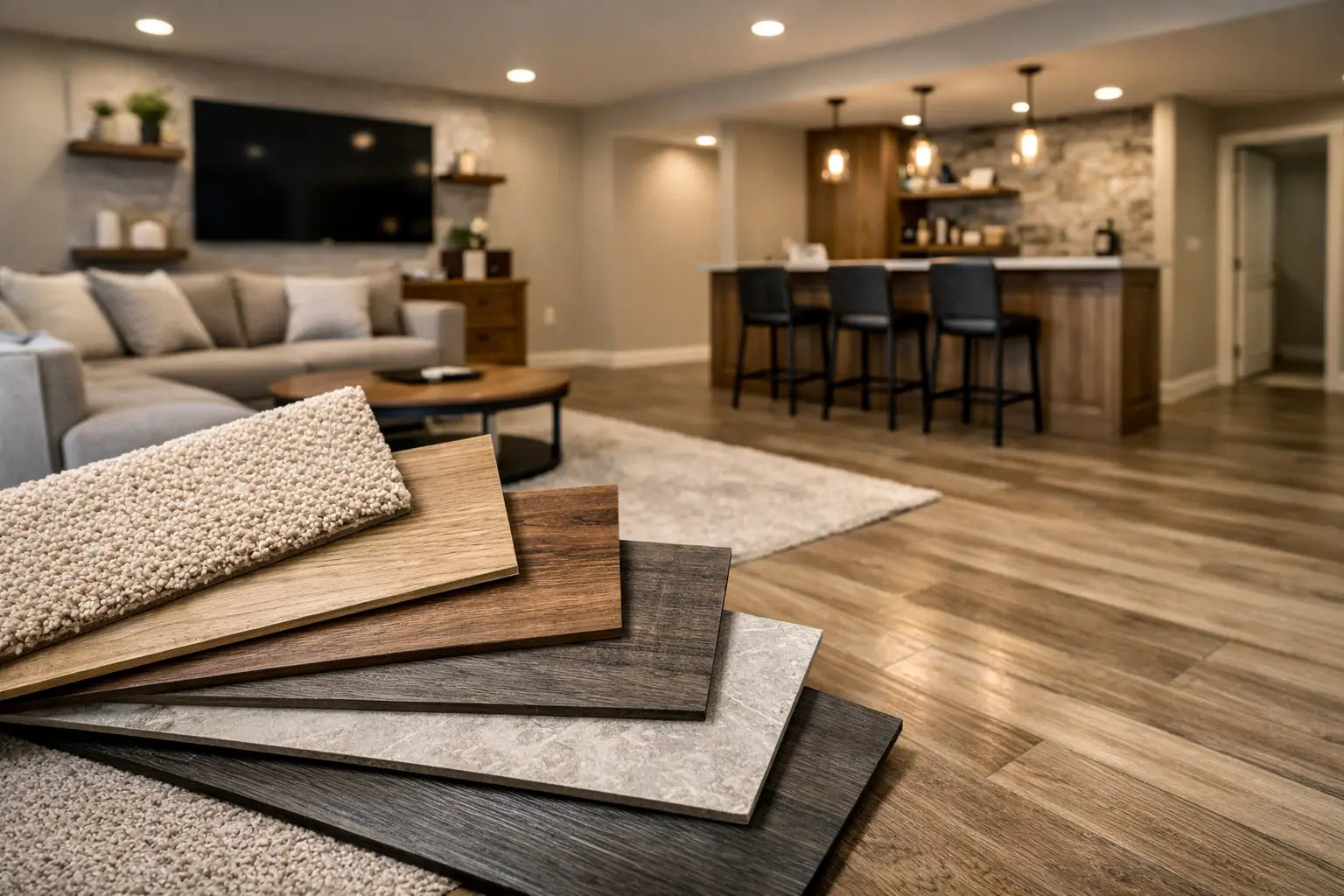
When reviewing samples, look at them in the room where they will be installed. Daylight, warm interior lighting, wall colors, cabinets, and furniture can all change how a floor reads. A pale gray-brown sample may look calm in a showroom but cool or washed out in a north-facing room. Bringing home samples is one of the simplest ways to make a more confident decision.
Do Not Overlook Underlayment and Transitions
Underlayment is the layer installed between laminate and the subfloor. It can help with sound reduction, minor subfloor imperfections, and comfort underfoot. The right type depends on what is below the room and whether the product already includes an attached pad.
Over concrete slabs or below-grade areas, moisture protection is especially important. A suitable vapor barrier helps manage moisture coming up through the slab, but it is not a cure for an active moisture problem. Before installing any floating floor, moisture conditions should be evaluated and addressed properly.
Transitions deserve planning, too. Doorways, stair nosings, fireplaces, kitchen islands, and changes in flooring height all require the correct trim pieces and expansion space. Laminate expands and contracts with changes in temperature and humidity. Professional installation accounts for that movement so the floor has room to perform without buckling or stressing the locking joints.
Compare Installation Costs Honestly
Laminate can be more affordable than hardwood, but the product price is only one part of the project budget. A clear estimate should account for flooring, underlayment, tear-out of existing materials, subfloor preparation, transitions, trim work, furniture moving if needed, and installation.
The lowest material price is not always the lowest long-term cost. A bargain product with weak seams or limited water protection may need replacement sooner in a hard-working room. On the other hand, paying for a commercial-grade floor in a lightly used bedroom may not be necessary. The goal is to place your budget where it makes a visible and practical difference.
For rental properties and commercial spaces, factor in turnover and maintenance as well. A durable, easy-to-clean laminate in a versatile color can simplify future repairs and make a property more appealing to prospective tenants or customers.
Questions to Ask Before You Buy Laminate Flooring
Before making a final selection, ask what the product warranty covers, whether it is approved for your specific room, and what cleaning methods are allowed. Ask whether the product includes attached underlayment, whether a vapor barrier is required, and what preparation the existing subfloor needs.
It is also wise to ask how repairs are handled. Floating laminate can sometimes make individual plank replacement possible, but access, damage location, and the availability of matching material all matter. Ordering a little extra material at the beginning can be helpful for future repairs, especially with styles that may be discontinued.
A knowledgeable flooring professional should be willing to discuss the trade-offs plainly. FC Hardwood Floors helps homeowners compare samples, performance features, and installation needs so the flooring choice fits the home rather than simply fitting a trend.
Care That Protects Your Investment
Laminate floors are easy to maintain when cleaned correctly. Sweep, vacuum with a hard-floor setting, or use a dry microfiber mop to remove grit that can dull the surface over time. Wipe spills promptly, especially along joints and edges.
Avoid soaking the floor, steam cleaning unless the manufacturer specifically permits it, and using abrasive scrubbers or wax-based products. Use protective pads beneath furniture legs, and place durable mats at exterior doors to catch dirt and moisture before it reaches the floor. Those small habits can make a noticeable difference in how the floor looks after years of daily life.
The best laminate floor is not simply the one with the lowest price or the most dramatic sample. It is the one that suits your rooms, supports your routine, and gives you confidence each time you walk through the door.

Leave a comment
This site is protected by hCaptcha and the hCaptcha Privacy Policy and Terms of Service apply.