Luxury Vinyl vs Hardwood: Which Fits Best?
You usually feel this decision before you fully understand it. One floor gives you the warmth, grain, and character people associate with a well-built home. The other offers a polished, durable surface that handles busy households with less worry. When homeowners compare luxury vinyl vs hardwood, they are rarely choosing between a good option and a bad one. They are choosing between two very different kinds of value.
That distinction matters because flooring is not just a finish. It affects how a room sounds, how it wears, how it cleans up after pets or kids, and how confident you feel about the investment. The right answer depends on your home, your budget, and how you actually live in the space.
Luxury vinyl vs hardwood: what really separates them
Hardwood is a natural wood product, typically installed as solid or engineered planks. It brings real texture, unique grain variation, and the kind of visual depth that only natural material can provide. No two boards are exactly alike, which is part of its appeal.
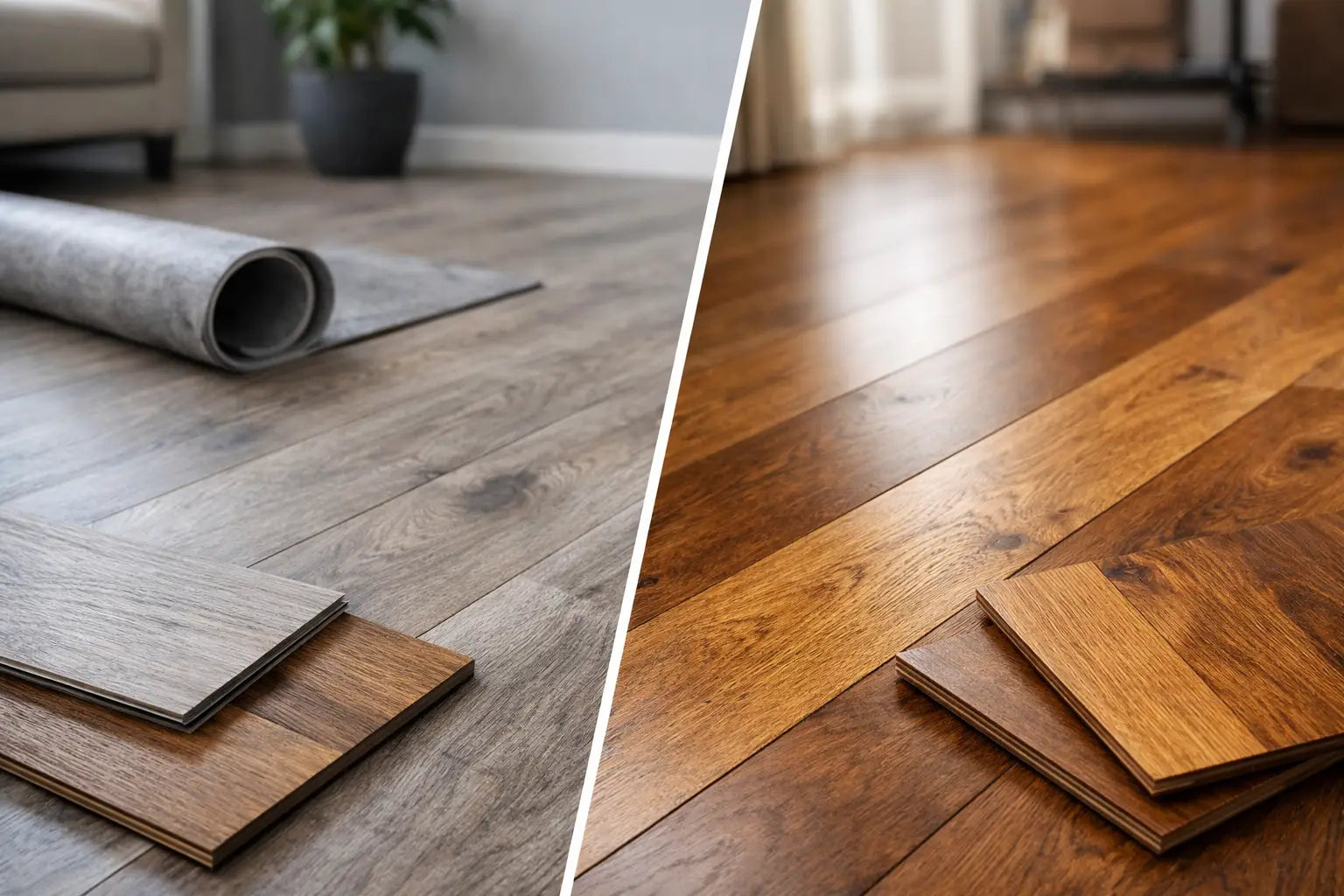
Luxury vinyl is a manufactured flooring product designed to mimic the look of wood while improving performance in certain environments. It is available in plank form and can be highly convincing from a visual standpoint, especially in wider rooms or from standing height. Many homeowners are surprised by how realistic newer luxury vinyl styles look.
The biggest difference is not appearance alone. It is how each material responds to moisture, wear, time, and daily use. Hardwood is often chosen for long-term beauty and resale appeal. Luxury vinyl is often chosen for practicality, lower maintenance, and better water resistance.
Cost upfront and cost over time
For many households, price starts the conversation. Luxury vinyl usually has a lower upfront material and installation cost than hardwood. That makes it attractive for large remodels, rental properties, finished basements, and commercial spaces where controlling project cost matters.
Hardwood tends to require a larger initial investment, especially if you are selecting premium species, custom stains, site finishing, or detailed installation patterns. But cost is not only about day one. Hardwood can be refinished and restored, which can extend its life significantly. In the right home, that changes the long-term math.
Luxury vinyl does not typically offer the same restoration potential. Once it is deeply damaged or worn beyond its lifespan, replacement is usually the next step. So if you are planning to stay in your home for many years, hardwood may justify the higher initial cost. If you want a strong-looking floor with a lower entry point and less financial pressure upfront, luxury vinyl can be the smarter fit.
Durability depends on the kind of traffic
This is where the comparison gets more nuanced. Luxury vinyl is highly resistant to scratches, dents, and water-related issues in everyday conditions. For homes with large dogs, active kids, or frequent spills, that can be a major advantage. It is also a strong option for commercial settings where durability and speed of installation matter.
Hardwood is durable too, but in a different way. It can last for decades when properly maintained, yet it is more vulnerable to surface scratches, furniture dents, and moisture damage. That does not mean it is fragile. It means it shows life more honestly.
Some homeowners love that natural patina over time. Others want a floor that looks as close to new as possible with minimal effort. If your main concern is protecting against day-to-day abuse, luxury vinyl generally wins. If your priority is a floor that can age gracefully and be restored rather than replaced, hardwood has the edge.
Water resistance changes where each product works best
If you are comparing luxury vinyl vs hardwood for kitchens, basements, bathrooms, or entryways, water resistance should carry serious weight. Luxury vinyl performs much better in spaces where spills, tracked-in rain, pet accidents, or humidity are part of normal life. Many products are marketed as waterproof or highly water resistant, which makes them a dependable choice in moisture-prone areas.
Hardwood and standing water do not mix well. Even engineered hardwood, which offers better dimensional stability than solid wood, still needs careful moisture management. In dining rooms, living rooms, bedrooms, and main-level spaces with controlled conditions, hardwood performs beautifully. In basements or rooms with repeated water exposure, it is often not the best recommendation.
This is one of the clearest examples of where the right answer depends on the room, not just the material.
Appearance and feel underfoot
Photos can make these products look closer than they feel in person. Hardwood has natural warmth, visual depth, and a more authentic feel underfoot. It tends to sound more solid and adds a sense of permanence that many homeowners notice immediately.
Luxury vinyl can look excellent, especially with modern embossing and color variation, but it does not fully replicate the character of real wood. The pattern repeat, surface texture, and overall feel may be less noticeable in some rooms than others. In a busy family room, that trade-off may be easy to accept. In a formal dining room or a custom renovation, it may matter more.
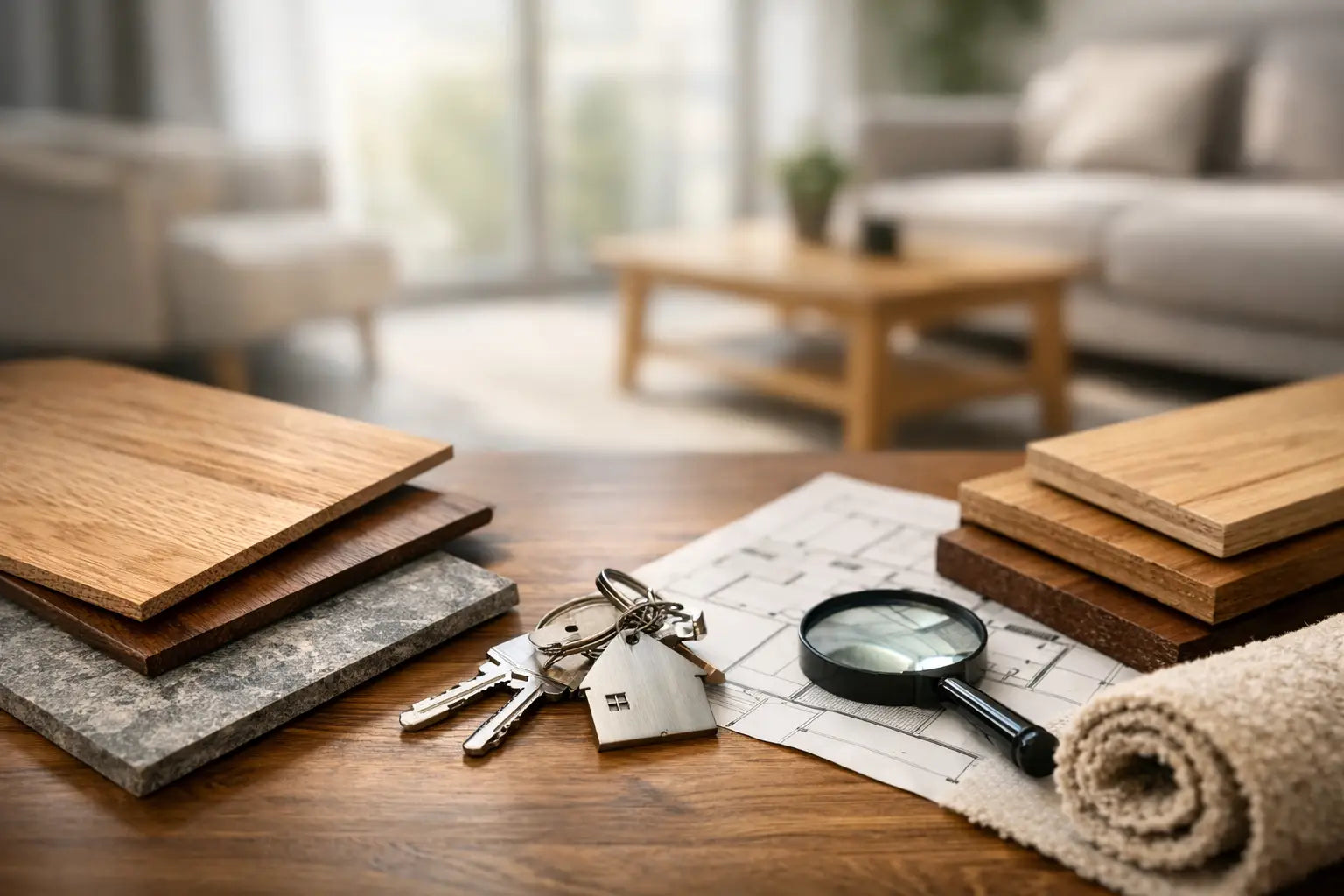
This is why samples are so important. A product that looks great online can feel very different once it is in your hands and placed next to your cabinets, trim, and lighting.
Maintenance and everyday care
Luxury vinyl is easier for most households to maintain. Routine sweeping and occasional damp mopping are usually enough. It does not require refinishing, and owners tend to worry less about shoes, pet nails, or minor spills.
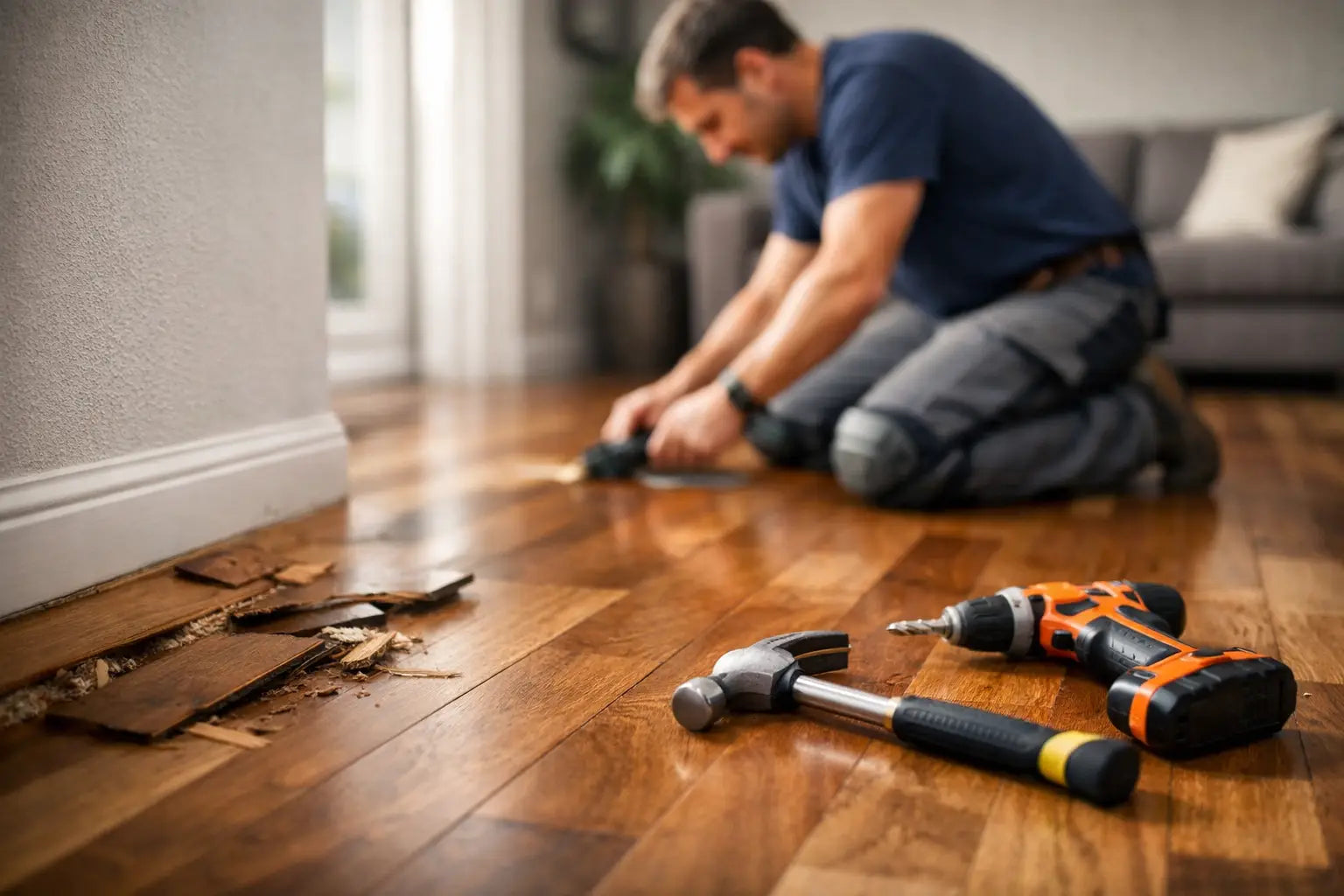
Hardwood needs more care and a little more discipline. You will want to clean with wood-safe products, manage moisture carefully, and use felt pads under furniture. Depending on wear over time, refinishing may eventually be part of ownership.
That extra care is not necessarily a drawback if you value the material and plan to maintain it properly. But for homeowners who want a lower-maintenance floor without giving up a high-end look, luxury vinyl makes day-to-day life easier.
Resale value and buyer perception
Hardwood still carries strong appeal in the real estate market. Many buyers view it as an upgrade and associate it with quality construction and long-term value. In higher-end homes especially, hardwood often strengthens buyer perception.
Luxury vinyl has improved its reputation considerably, and in many homes it is now seen as a practical, attractive choice rather than a compromise. Still, it does not always deliver the same emotional response or resale impact as genuine wood.
That said, resale value depends on context. A beautifully installed luxury vinyl floor in the right home will usually outperform a poorly chosen or damaged hardwood floor. Material matters, but fit and condition matter too.
When hardwood makes the most sense
Hardwood is often the better choice when you want a classic look, plan to stay in the home long term, and are willing to invest in both installation and upkeep. It fits especially well in living areas, dining rooms, bedrooms, and upscale renovations where authenticity and lasting value are top priorities.
It also makes sense if you appreciate character. Wood changes over time, and many people see that as part of its beauty rather than a flaw to avoid.
When luxury vinyl makes the most sense
Luxury vinyl is often the right call when your space needs durability, water resistance, and a more budget-conscious path to a polished finish. It works well in households with pets, children, heavy foot traffic, or rooms where moisture is part of daily use.
It is also a smart option for investment properties, commercial environments, and homeowners who want the look of wood without the maintenance demands that come with the real thing.
The best choice often is not one material for the whole house
One of the most practical approaches is mixing materials based on how each room functions. Hardwood may be ideal for the main living spaces where appearance and resale value carry more weight. Luxury vinyl may be the better fit for basements, lower levels, mudrooms, or commercial areas where performance matters most.
That kind of room-by-room planning often gives homeowners the best overall result. You protect your budget where needed, invest where it counts, and avoid forcing one product into spaces where it is not likely to perform well.
At FC Hardwood Floors, that is often where the conversation becomes most helpful. The right recommendation is not about pushing one material over another. It is about understanding the traffic, moisture, style goals, and budget of the space in front of you.
A good floor should make your home feel better the day it is installed and still feel like the right decision years later. If you are weighing luxury vinyl against hardwood, start with how the room is used, how much maintenance you want to take on, and what kind of value matters most to you. The best flooring choice is the one that fits real life as well as it fits the room.

Leave a comment
This site is protected by hCaptcha and the hCaptcha Privacy Policy and Terms of Service apply.