
Solid vs Engineered Hardwood: Which Fits?
Choosing flooring often gets harder the moment you narrow it down to solid vs engineered hardwood. On paper, both give you the warmth, character, and long-term value people want from real wood. In practice, they perform differently depending on your subfloor, moisture levels, budget, and how long you plan to stay in the space.
That is why this decision should not come down to which product sounds more premium. It should come down to which one fits your home or commercial space better. A floor that looks great on day one but struggles with seasonal movement, installation limits, or maintenance expectations is rarely the best value.
Solid vs engineered hardwood: the core difference
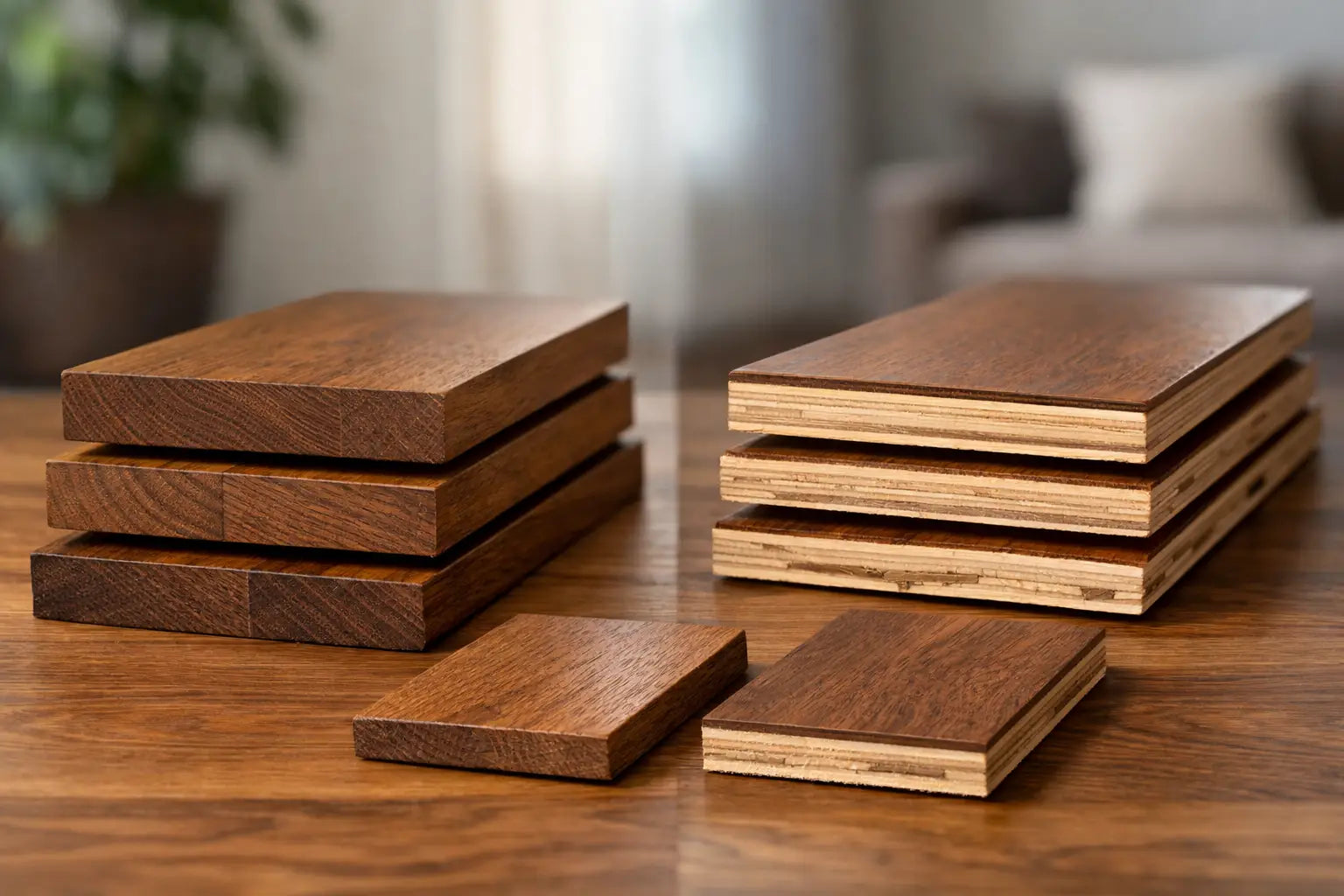
Solid hardwood is exactly what it sounds like - each plank is made from one solid piece of wood. Engineered hardwood has a real hardwood wear layer on top, but the core beneath it is built from multiple layers of plywood or high-density material designed for stability.
From the surface, the two can look very similar. Many homeowners are surprised to learn that engineered hardwood is still real wood. The visible top layer is genuine oak, maple, hickory, white oak, or another species, not a printed image like laminate. The biggest difference is what is happening underneath that top layer.
That layered construction gives engineered hardwood an advantage in environments where moisture and temperature shifts are more of a concern. Solid hardwood, on the other hand, carries a traditional appeal that many buyers still love, especially when they want a floor with the longest possible refinishing life.
How they look once installed
For most rooms, appearance alone will not settle the debate. Both solid and engineered hardwood come in a wide range of species, stains, plank widths, finishes, and surface textures. If the material is well made and professionally installed, either option can deliver a high-end result.
The more meaningful visual differences usually show up in product design choices, not in whether the floor is solid or engineered. Engineered hardwood often comes in wider planks because its construction helps control expansion and contraction. That can be a major plus if you want a more current, open look. Solid hardwood is often associated with classic strip flooring, although wider solid planks are available too.
If your goal is a timeless hardwood look, both products can get you there. The better question is whether you want design flexibility in areas where solid wood may be more limited.
Moisture, humidity, and seasonal movement
This is where the practical differences become more important.
Solid hardwood naturally expands and contracts as indoor humidity changes. In a well-controlled main-level living space, that is usually manageable. But in rooms with higher moisture exposure, concrete subfloors, or noticeable seasonal swings, solid wood can be more vulnerable to gapping, cupping, or movement over time.
Engineered hardwood is built for better dimensional stability. Because its layers run in different directions, it tends to handle humidity changes more effectively than solid planks. That does not make it waterproof, and it still needs proper care, but it usually performs better in places where moisture risk is higher.
For many Kansas City-area homes, that matters. Seasonal weather changes can put stress on flooring, especially if the home has uneven indoor humidity through the year. In those situations, engineered hardwood often gives homeowners a little more peace of mind.
Where each option works best
Solid hardwood is usually a strong fit for above-grade spaces like living rooms, dining rooms, hallways, and bedrooms where moisture is controlled and the goal is long-term traditional value. It is often chosen in homes where owners want the option to sand and refinish the floor multiple times over the decades.
Engineered hardwood tends to be the more flexible choice. It can work well on main floors, upper floors, and in some below-grade applications depending on the product and site conditions. It is also commonly installed over concrete, which opens up more options for basements, condos, offices, and additions where solid hardwood may not be ideal.
This is one of those areas where a site visit matters. The same flooring that performs beautifully in one property can be the wrong pick in another because of the subfloor, room use, or moisture levels.
Installation matters more than many people expect
Homeowners often focus on material first and installation second, but the two are closely tied.
Solid hardwood is commonly nailed or stapled to a wood subfloor. That can limit where it can go and may add labor depending on the existing floor structure. Engineered hardwood offers more installation methods, including nail-down, glue-down, and floating systems, depending on the product.
That flexibility can reduce prep challenges in some projects and speed up installation in others. For commercial clients or busy households, that can be a real advantage. Less disruption and faster turnaround are not small details when you are trying to keep a remodel moving.
Still, easier installation does not mean lower standards. Either floor needs careful prep, moisture testing, acclimation when required, and skilled installation to look right and last. Good flooring products can fail early when corners are cut.
Durability and everyday wear
Durability is not just about whether a plank is solid all the way through. It also depends on species hardness, finish quality, foot traffic, pets, furniture use, and maintenance habits.
Solid hardwood has a strong reputation because it can be sanded and refinished many times. That makes it appealing for long-term owners who see flooring as a decades-long investment. If the floor gets scratched or worn, there is more material to work with in future restoration.
Engineered hardwood varies more by product quality. A thicker wear layer can allow for sanding and refinishing, sometimes more than once. A thinner wear layer may have more limited restoration potential. That does not make it a poor choice, but it does mean the details matter.
For a busy family home or a commercial setting, finish quality is often just as important as construction type. A strong factory finish on engineered hardwood can hold up very well to daily wear. On the other hand, a softer species in either category may show dents sooner.
Cost: upfront price versus long-term value
When customers compare solid vs engineered hardwood, cost usually enters the conversation quickly. The answer is not as simple as saying one is always cheaper.
Material pricing overlaps more than people expect. Some engineered hardwood products are very affordable, while premium engineered collections can cost as much as or more than solid hardwood. The same goes for solid wood, where price varies by species, grade, plank width, and finish.
Installation costs can shift the equation. If engineered hardwood works with your subfloor more easily or reduces prep time, the total project cost may come in lower. If you are choosing based on lifetime refinishing potential, solid hardwood may look stronger from a long-range value standpoint.
The smartest comparison is total value for your specific project, not just the price per square foot of the material.
Which is better for resale?
Both options can support home value when they are well selected and professionally installed. Buyers generally respond to the look and condition of real hardwood more than the technical structure beneath the surface.
Solid hardwood still carries strong appeal because many people see it as the traditional gold standard. Engineered hardwood, though, is widely accepted in today’s market and often preferred in spaces where stability is a concern.
If resale is part of your thinking, focus on choosing a quality product in a style that fits the home. A floor that matches the architecture, performs well in the space, and stays in good condition will usually do more for resale than simply picking the option with the more familiar name.
How to make the right choice for your space
If you want the most traditional hardwood construction, plan to stay in the property long term, and have a dry, stable above-grade environment, solid hardwood is often an excellent investment.
If you need more flexibility with subfloors, want wider planks, are installing over concrete, or need better stability in changing humidity, engineered hardwood is often the better fit.
That is why a consultative approach matters. At FC Hardwood Floors, these conversations usually come down to a few practical questions: Where is the floor going? What is under it? How much wear will it take? What look are you after? And what budget feels comfortable without cutting corners?
There is no universal winner in solid vs engineered hardwood. There is only the option that works better for your room, your routine, and your long-term plans. The best floor is the one you can live on confidently, not just the one that sounds best in a showroom.
A good flooring decision should leave you feeling clear, not pressured. When the product matches the space, the result is the kind of everyday comfort and durability you notice long after installation day.

Leave a comment
This site is protected by hCaptcha and the hCaptcha Privacy Policy and Terms of Service apply.