
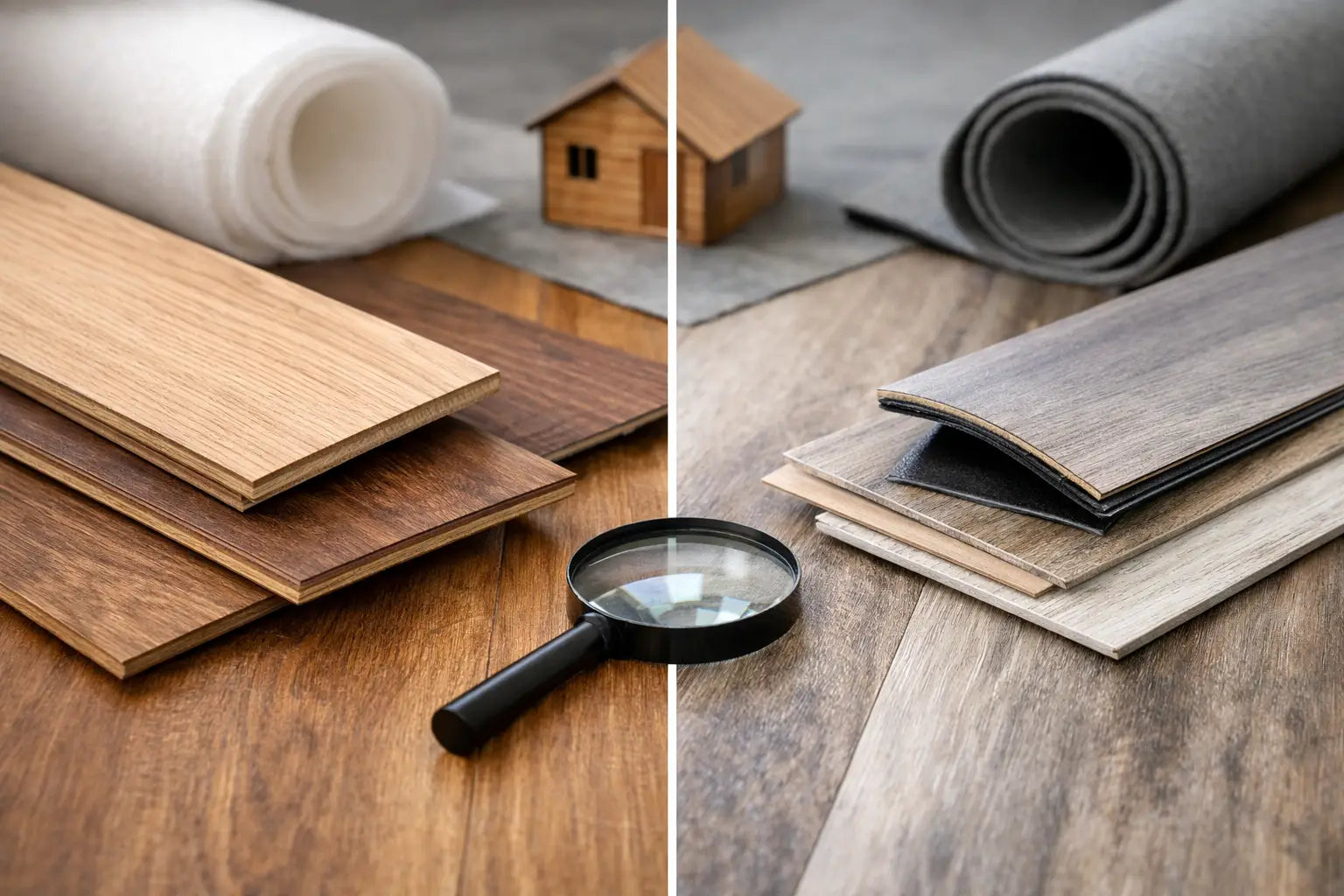
Laminate vs Vinyl Plank: Which Fits Best?
A floor can look perfect on a sample board and still be the wrong choice once real life starts happening on top of it. Wet shoes at the back door, dogs racing through the hallway, chair legs in the dining room, and busy mornings in the kitchen all change the equation. When homeowners compare laminate vs vinyl plank, they are usually asking a bigger question: which one will hold up best in my space without pushing the budget too far?
That is the right way to think about it. Both materials can give you the look of wood at a more approachable price than solid hardwood, and both have improved dramatically over the years. But they do not perform the same way, and the best option often depends on where the floor is going, how the room is used, and how long you want it to look its best.
Laminate vs vinyl plank at a glance
Laminate flooring is typically made with a fiberboard core, topped with a photographic layer that creates the wood look, plus a wear layer for protection. Vinyl plank, especially luxury vinyl plank or LVP, is made primarily from synthetic materials and is built for moisture resistance.
At a glance, laminate often feels a little firmer and can offer very realistic wood visuals with textured surfaces. Vinyl plank tends to be more forgiving around water and is often the safer pick for bathrooms, kitchens, laundry rooms, and basements. If your decision starts and ends with moisture, vinyl usually pulls ahead. If your focus is a dry living space and you want a floor that feels closer to traditional wood underfoot, laminate may deserve a closer look.
Appearance and style
Both laminate and vinyl plank are designed to mimic hardwood, and both can look excellent when the product quality is strong and the installation is done well. This is one area where the gap between the two has narrowed.
Higher-end laminate products often do a very good job with texture, board variation, and a more natural wood-like appearance. Some homeowners prefer the visual depth laminate can offer, especially in living rooms, bedrooms, and home offices where the floor is a major part of the room's design.
Vinyl plank has come a long way too. Better products now offer embossed textures, matte finishes, and more convincing grain patterns than older generations ever did. If you want a clean, modern wood-look floor with a wide range of color options, vinyl gives you plenty to work with.
The better question is not which one looks better in a showroom. It is which product line looks better in your home, with your lighting, cabinetry, wall color, and trim. Samples matter here. A floor that seems warm in the store can read much cooler once it is placed next to your existing finishes.
Water resistance is where the difference gets real
If there is one category that most clearly separates laminate vs vinyl plank, it is moisture performance.
Vinyl plank is the stronger choice in areas where spills, splashes, and humidity are part of normal life. Because the material itself is water resistant and many products are fully waterproof, it is better suited for kitchens, bathrooms, mudrooms, laundry rooms, and below-grade spaces. That does not mean every vinyl product is identical, but as a category, it handles moisture with more confidence.
Laminate has improved, and many newer options are marketed as water-resistant or even waterproof for a set period of time. Still, its core is generally more vulnerable if water finds its way into seams or sits too long. In a home with kids, pets, or frequent kitchen messes, that difference can matter.
This is where we often encourage customers to think honestly about their routines. If spills get wiped up right away and the room stays dry, laminate may be perfectly workable. If life tends to be messy, vinyl usually gives more peace of mind.
Durability in busy homes and commercial spaces
Durability is not just about whether a floor scratches. It is also about dents, edge wear, fading, and how well the surface holds up to daily traffic.
Laminate has a tough wear layer that can perform very well against scratches and general wear, especially in active households. It is often a strong candidate for family rooms, hallways, and bedrooms. One thing to watch is impact resistance. Because laminate has a harder core, heavy drops can sometimes cause chipping or damage that is difficult to disguise.
Vinyl plank is generally a bit softer underfoot, which can make it more comfortable to walk on for long periods. That softer construction can also make it somewhat less prone to chipping from impact, but depending on the product, it may be more vulnerable to gouges from sharp objects or deep furniture pressure.
For commercial settings or rental properties, the right answer depends on the traffic pattern. Offices, waiting areas, and retail spaces often benefit from vinyl's moisture tolerance and resilience. Dry areas with moderate use can do very well with laminate if the product is selected carefully.
Comfort, sound, and feel underfoot
This category often surprises people.
Laminate usually feels more solid and can have a more traditional flooring feel, especially when installed with a quality underlayment. Some homeowners like that firmer response because it feels substantial. Others find it a bit louder, especially in large open rooms or upper-level spaces.
Vinyl plank is often quieter and a little softer to stand on, particularly if it includes an attached pad or is installed over the right underlayment. In homes where sound control matters, that can be a meaningful advantage. It can also feel warmer than tile in moisture-prone rooms, which is one reason many people choose it for kitchens and basements.
That said, subfloor condition matters with both materials. Even a premium product can feel off if the floor underneath is uneven or poorly prepared. Good installation is not just about appearance. It affects comfort, sound, and long-term performance.
Cost and long-term value
Many homeowners start with price, and that makes sense. Both laminate and vinyl plank can be budget-friendly compared to hardwood, but exact cost depends on product quality, room size, prep work, and installation complexity.
Entry-level laminate is often less expensive than higher-end vinyl plank, which makes it appealing for larger dry areas when budget is tight. But material cost is only part of the story. If a floor needs to handle moisture, choosing a cheaper product that fails early is not really saving money.
Vinyl plank can cost more upfront, especially for thicker, better-performing options with strong wear layers and realistic visuals. In return, you may get better water protection and lower risk in rooms where spills are part of everyday use.
Value comes from matching the material to the job. A lower-cost laminate in a dry bedroom may be a smart choice. A premium vinyl plank in a busy kitchen may be the better investment. Affordable luxury is not about buying the cheapest floor. It is about choosing the right floor the first time.
Which rooms are best for each?
Laminate tends to work best in living rooms, bedrooms, home offices, dining rooms, and hallways where moisture is limited and you want a clean wood-look surface with good scratch resistance.
Vinyl plank is usually the better fit for kitchens, bathrooms, basements, laundry rooms, entryways, and commercial spaces where water, humidity, and heavy use are bigger concerns.
There are gray areas, of course. A carefully selected laminate may work in a kitchen with disciplined maintenance. A vinyl plank can look great in a formal living room. The decision does not have to be rigid. It just needs to be realistic.
Installation matters more than most people expect
When customers ask whether laminate or vinyl is better, the product gets most of the attention. But installation quality often decides whether the floor performs the way it should.
Both materials require a properly prepared subfloor, accurate layout, and careful attention to transitions, expansion space, and finish details. If the floor is uneven, if moisture issues are ignored, or if the wrong underlayment is used, even a good product can disappoint.
That is one reason many homeowners in the Kansas City area prefer a guided process instead of guessing from online comparisons alone. Seeing samples in person, evaluating the room conditions, and getting a clear recommendation can save time, money, and frustration.
How to choose without second-guessing it later
If your top concern is water resistance, choose vinyl plank. If your top concern is a wood-look floor for a dry space and you want strong style at a competitive price, laminate may be the better fit.
If you have pets, kids, or a lot of traffic, look beyond the category and compare the specific product's wear layer, thickness, warranty, and surface texture. If the floor is going into a rental or commercial setting, think about maintenance and how quickly you need installation completed. If design is your priority, bring home samples and look at them morning, afternoon, and evening before you decide.
At FC Hardwood Floors, this is the kind of choice we help customers work through every day. Not with pressure, and not with one-size-fits-all advice. Just practical guidance based on the room, the budget, and how you actually live in the space.
The best floor is the one that still feels like the right decision after muddy shoes, holiday traffic, and a few years of everyday use. That is the standard worth choosing by.


Leave a comment
This site is protected by hCaptcha and the hCaptcha Privacy Policy and Terms of Service apply.