
Article: Vinyl Plank Reviews: What Actually Matters
Vinyl Plank Reviews: What Actually Matters
A five-star rating can make one luxury vinyl plank floor look like an obvious choice. But useful vinyl plank reviews are less about the average score and more about the details behind it: where the floor was installed, how long it has been in place, what the subfloor was like, and what the homeowner expected from it. A plank that performs beautifully in a low-traffic bedroom may tell you very little about how it will hold up in a busy kitchen with children, pets, and a back door.
For homeowners and property managers, luxury vinyl can be a smart way to get a refined wood-look floor without the maintenance demands or moisture sensitivity of solid hardwood. The key is choosing a product that fits the room, the traffic level, and the installation conditions - not simply the one with the loudest marketing or the most reviews.
How to Read Vinyl Plank Reviews with Context
Start by looking past broad statements such as “looks great” or “poor quality.” Those comments can be honest, but they rarely explain whether the product itself was the issue. A review becomes more valuable when it identifies the plank type, wear layer, installation method, room, and time since installation.
For example, a homeowner who reports that a floor has resisted scratches for two years in a home with a large dog offers a more useful data point than someone who posted a review the day after installation. On the other hand, a complaint about gaps, bouncing, or lifting planks may point to an uneven subfloor, insufficient expansion space, moisture conditions, or an installation error rather than a defective vinyl product.
Pay special attention to reviews written after six months or longer. Early reviews are helpful for assessing color, texture, and first impressions. Longer-term reviews reveal how the floor handles chair legs, rolling traffic, sunlight, tracked-in grit, and regular cleaning.
It also helps to separate product reviews from retailer and installer reviews. A well-made floor can disappoint when it is installed over an unprepared surface. Likewise, a skilled installation cannot turn a thin, low-grade plank into a high-performance commercial floor. Both the material and the workmanship matter.
The Details That Matter More Than Star Ratings
When comparing luxury vinyl, look for information that can be measured and matched to your project. The following details often predict performance more reliably than an overall rating.
Wear layer thickness
The wear layer is the clear protective surface above the printed wood or stone design. It plays a major role in scratch resistance, stain resistance, and daily durability. For a lightly used bedroom or guest room, a modest wear layer may be appropriate. Active family spaces, rental properties, offices, and commercial settings generally benefit from a thicker wear layer designed for greater traffic.
Do not assume that total plank thickness and wear-layer thickness mean the same thing. A thick plank may feel more substantial underfoot, but its wear layer is still the better indicator of how well the decorative surface will stand up to use.
Core construction
Luxury vinyl plank comes in several constructions, including flexible glue-down vinyl, traditional click-lock products, rigid core SPC, and WPC. Each has a place.
SPC, or stone polymer composite, is dense and stable. It can be a good choice for high-traffic rooms and areas where temperature changes are a concern. WPC, or wood polymer composite, often feels slightly warmer and softer underfoot, which may appeal in bedrooms and living areas. Glue-down vinyl can be an excellent option for commercial spaces and large open areas because it creates a secure, low-profile installation, though the subfloor must be carefully prepared.
Reviews that mention a “hard” or “hollow” feeling should be read with this construction in mind. Rigid-core flooring naturally feels firmer than some other floor types, while underlayment, subfloor condition, and acoustics can influence how it sounds when walked on.
Water resistance versus waterproof claims
Luxury vinyl is widely valued for moisture resistance, and many products are marketed as waterproof. That does not mean every installation can ignore water management. Water may not damage the plank itself, but it can still find its way into perimeter gaps, beneath baseboards, or into the subfloor. Standing water should be cleaned promptly, especially near tubs, exterior doors, refrigerators, and dishwashers.
If reviews mention swelling or odor, look for clues about the room and the source of moisture. A flooring warranty may cover manufacturing defects while excluding issues caused by flooding, plumbing leaks, or improper installation over a damp slab.
Visual realism and repeat patterns
Online photos can make nearly any vinyl plank look convincing. In person, the difference often comes down to embossing, plank variation, bevel detail, and the number of distinct printed boards in the collection. A floor with limited pattern variation can repeat noticeably across a large great room.
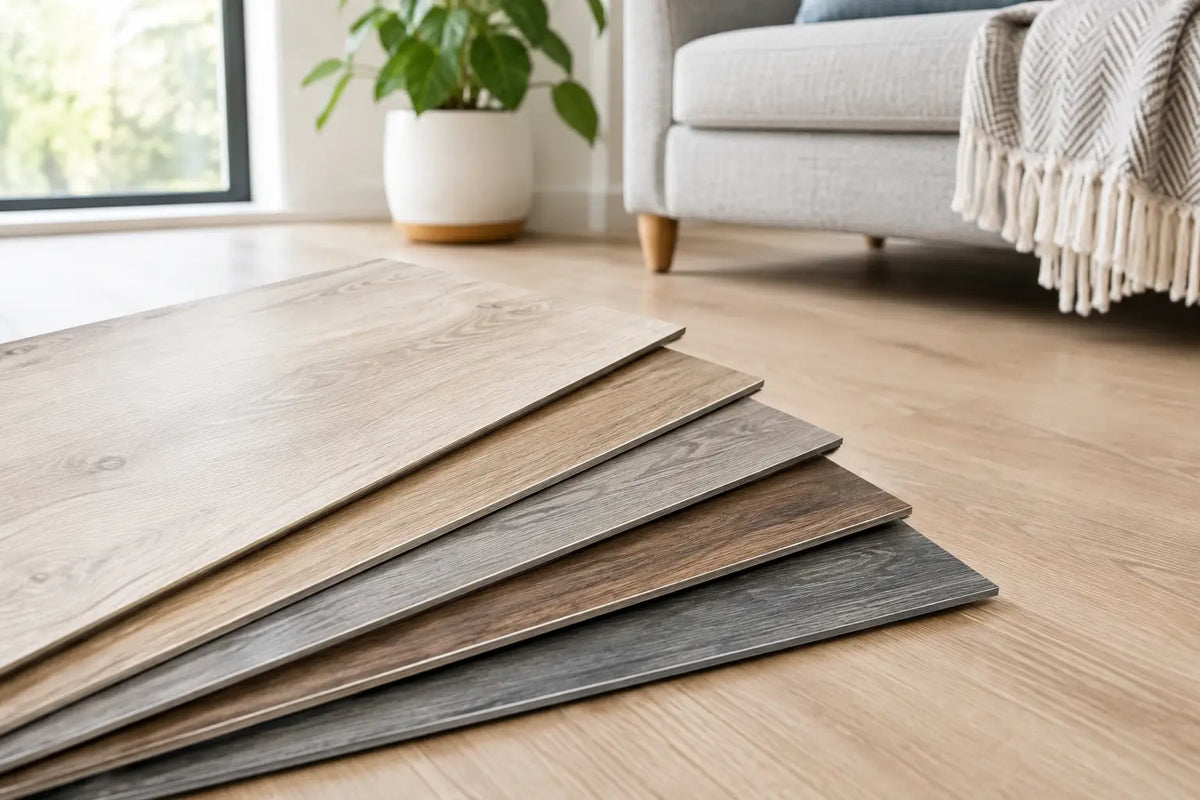
Order or request samples whenever possible. Place them near your cabinets, paint colors, furniture, and natural light. A gray-brown plank can look warm in a showroom and unexpectedly cool in a north-facing room. This small step prevents many of the disappointments that appear in color-related reviews.
Why Installation Reviews Deserve Extra Attention
Luxury vinyl is often described as easy to install, particularly click-lock floating floors. That can be true in a simple, square room with a flat, clean, dry subfloor. Real homes are rarely that simple.
Subfloor flatness is one of the most common make-or-break factors. Vinyl plank follows the contours underneath it. If there are dips, high spots, loose areas, or uneven transitions, the finished floor may flex, make noise, separate at joints, or show premature wear. Proper preparation takes time, but it protects the investment.
Kansas City-area homes can present a mix of older wood subfloors, basement concrete slabs, additions, and rooms with uneven transitions. A professional site evaluation helps determine whether a floating floor, glue-down installation, moisture barrier, or subfloor repair is needed before materials are ordered.
Be cautious with reviews that focus only on how quickly a floor was installed. Fast turnaround is valuable, but the best installation is one that includes accurate measurements, material acclimation when required, appropriate expansion gaps, clean transitions, and careful finishing around doors and walls.
Common Complaints and What They Usually Mean
Negative reviews are not automatically a reason to eliminate a product. They can help you ask better questions before you buy.
Scratching complaints may mean the wear layer was not suited to the traffic level, or that abrasive dirt was being tracked across the floor. Vinyl is durable, but no finish is immune to grit, metal furniture feet, or repeated dragging. Entry mats, felt pads, and routine sweeping make a meaningful difference.
Complaints about gaps or broken locking edges often point to subfloor movement, heavy point loads, or installation problems. Large appliances, rolling office chairs, and extremely heavy furniture need to be considered before selecting a floating floor.
Fading concerns deserve a closer look at the room’s sunlight exposure. Some vinyl products have stronger UV protection than others, but direct afternoon sun can be demanding on any finished surface. Window coverings and product-specific guidance may be especially important in rooms with expansive glass.
Finally, odor complaints should be evaluated carefully. New flooring can have a temporary smell after unboxing, but strong or persistent odors should be discussed with the seller or installer. Choosing quality materials and allowing proper ventilation during and after installation supports a more comfortable home.
A Better Way to Compare Vinyl Plank Options
Rather than trying to find one “best” brand from online reviews, narrow the choices based on your room and priorities. Start with how the space is used. A quiet primary bedroom, a mudroom used by an active family, a restaurant entry, and a rental unit have different needs.
Then compare samples side by side and ask for the product specifications: wear layer, core type, overall thickness, warranty terms, installation requirements, and recommended maintenance. Check whether the warranty makes sense for residential or commercial use and whether it includes the conditions that apply to your project.
At FC Hardwood Floors, that conversation is part of helping customers find affordable luxury that performs as well as it looks. A sample, a clear estimate, and an honest look at the existing subfloor can provide more confidence than pages of anonymous ratings.
The floor you choose should fit the way you actually live, not just the look you saved in a photo. When a vinyl plank has the right construction, a realistic finish, and professional preparation beneath it, it can give your space the durable, welcoming foundation it deserves.


Leave a comment
This site is protected by hCaptcha and the hCaptcha Privacy Policy and Terms of Service apply.