Best Flooring for Office Spaces That Lasts
A worn entryway, noisy conference room, or stained breakroom floor can shape how clients and employees feel about a business before a meeting even starts. The best flooring for office spaces has to do more than look polished on installation day. It needs to stand up to foot traffic, rolling chairs, spills, daily cleaning, and the demands of the specific work happening in each room.
For business owners and property managers, the right choice is usually not one material throughout the entire office. A smart flooring plan considers how each area is used, how quickly the project needs to be completed, and what level of maintenance makes sense for the property. With the right product and professional installation, an office floor can deliver the upscale look your business deserves without creating unnecessary upkeep or replacement costs.
What the Best Flooring for Office Spaces Must Handle
Office flooring works harder than many people expect. Even a small professional office may see dozens of people crossing the same paths every day. Reception areas collect dirt and moisture from outdoors, office chairs put repeated pressure on a small surface area, and kitchens or breakrooms introduce water, food, and cleaning products.
Before choosing a color or plank width, consider four practical questions:
- How much daily foot traffic will the space receive?
- Will chairs with casters be used regularly?
- Are spills, moisture, or wet-weather entry conditions likely?
- Does the space need sound control for calls, meetings, or focused work?
Luxury Vinyl: A Practical Choice for Busy Offices
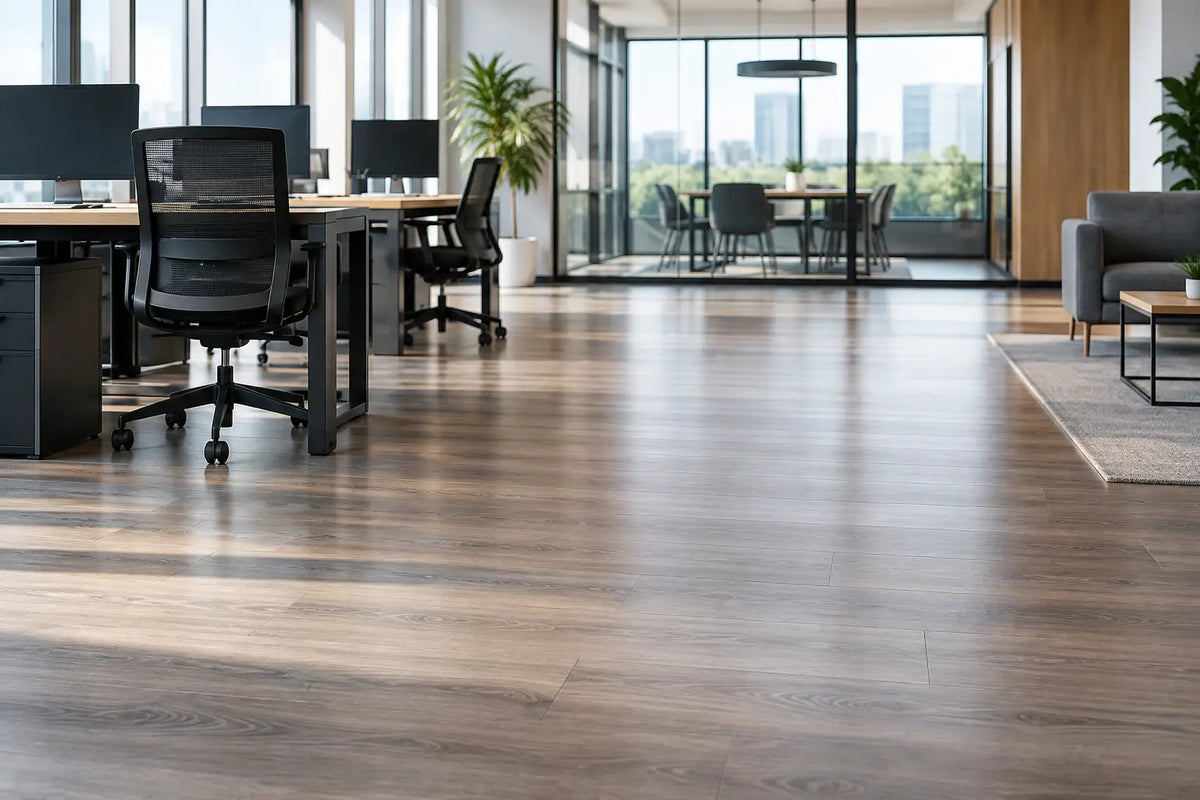
Luxury vinyl plank and luxury vinyl tile are strong contenders for many commercial office projects. They can closely resemble natural wood or stone while offering excellent resistance to scratches, stains, and moisture. This makes luxury vinyl particularly useful in reception spaces, corridors, breakrooms, retail-adjacent offices, and other areas where cleanup needs to be simple.
For Kansas City-area businesses, luxury vinyl can also be a sensible choice near exterior doors where rain, snow, and road salt may be tracked inside. Unlike natural hardwood, it is not as vulnerable to moisture-related movement or damage. Many styles also provide a softer feel underfoot than tile, which can make a difference for employees who stand often.
Not every luxury vinyl product is equal. Wear-layer thickness, core construction, and installation method all affect how it performs. A commercial setting generally benefits from a higher-quality product selected for the expected traffic level. The lowest-priced option may look appealing at first, but it can show wear sooner in high-use areas.
Hardwood Flooring: Timeless and Professional
Hardwood gives an office a level of warmth, credibility, and lasting character that few materials can match. It is especially well suited to executive offices, law firms, financial offices, boutique professional spaces, conference rooms, and client-facing areas where a premium first impression matters.
A well-finished hardwood floor can also be restored rather than completely replaced when it begins to show wear. That long-term repairability is a meaningful advantage for owners who see their office as a long-term investment. Species, stain color, plank width, and finish can all be tailored to create a traditional, contemporary, or distinctly local look.
The trade-off is maintenance and moisture sensitivity. Hardwood is not usually the best fit for a frequently wet breakroom or a lobby that receives heavy winter moisture without protective mats. It can also show scratches from rolling chairs if the wrong finish is used or chair mats are overlooked. In the right rooms, however, hardwood remains one of the most impressive and value-building office flooring choices available.
When engineered hardwood makes sense
Engineered hardwood provides the look of real wood with layered construction that can offer greater dimensional stability than solid hardwood. It is often a good option for offices built over concrete slabs or for spaces where changes in indoor humidity are a concern. It still deserves the same thoughtful care as other wood flooring, but it broadens the opportunities to bring genuine hardwood style into commercial settings.
Laminate Flooring: Budget-Friendly Style for Low-Traffic Areas
Laminate can be an attractive option for private offices, small administrative areas, and other lower-traffic spaces where budget is a major consideration. Modern laminate offers a broad range of wood-look designs and is typically easier to maintain than natural hardwood. It can give an office a clean, updated appearance at a more accessible initial cost.
Its limitations should be considered honestly. Laminate is not ideal for rooms with regular moisture exposure, and once it suffers significant damage, it generally cannot be refinished like hardwood. Quality varies widely, so commercial spaces should avoid selecting a product based on appearance alone. A durable laminate with proper installation can serve an office well, but it is best used where its strengths match the space.
Carpet Tile: Comfort and Acoustic Control
Open offices, call centers, meeting rooms, and collaborative workspaces often benefit from carpet tile. Its greatest advantage is sound absorption. Hard surfaces can allow conversations, footsteps, and rolling-chair noise to travel throughout a workplace, while carpet tile helps quiet the space and makes it more comfortable for long workdays.
Carpet tile also offers a practical repair advantage. If one section is stained or damaged, it may be possible to replace individual tiles instead of replacing an entire room of carpet. That is helpful in high-use office environments, especially around desks, coffee stations, and conference tables.
On the other hand, carpet tile requires routine vacuuming and prompt attention to spills. It may not create the crisp, easy-to-clean experience needed in every commercial setting. Many offices use it selectively in work zones while choosing luxury vinyl or hardwood for reception areas and corridors.
Why Mixed Flooring Often Works Best
A single flooring material throughout an entire building can simplify the design process, but it is not always the most practical decision. Different rooms have different demands, and using the same product everywhere may mean compromising where performance matters most.
For example, an office may use hardwood in a client-facing conference room, luxury vinyl in the lobby and breakroom, and carpet tile in workstations. When the colors and finishes are coordinated carefully, the result feels intentional rather than pieced together. This approach also lets you invest more heavily in prominent areas while controlling costs in rooms with lighter use.
Transitions between materials need professional attention. Uneven surfaces, poorly placed seams, or abrupt style changes can undermine an otherwise beautiful project. A qualified flooring team can help plan materials, subfloor preparation, and transitions before installation begins.
Details That Affect Office Floor Performance
The product itself is only part of the equation. Subfloor condition, moisture testing, adhesive selection, expansion space, and installation technique all influence how a floor performs over time. Commercial projects often have limited downtime, which makes planning especially valuable. A rushed installation that ignores subfloor issues can lead to loose planks, uneven areas, gaps, or premature wear.
Furniture protection is another simple but valuable consideration. Use felt pads beneath stationary furniture, choose chair mats or commercial-rated casters for rolling chairs, and place quality walk-off mats at exterior entrances. These measures help protect nearly any flooring type and reduce the amount of grit that can scratch or dull the surface.
Cleaning should match the material. Harsh cleaners, excess water, and abrasive tools can shorten the life of even a high-quality floor. A straightforward maintenance plan gives employees and cleaning crews clear direction from the start.
Choose Flooring With the Whole Office in Mind
The right office floor should support how your team works while giving visitors confidence in your business. For a durable, low-maintenance surface in active areas, luxury vinyl is often difficult to beat. For warmth and long-term character, hardwood has lasting appeal. Laminate can serve lower-traffic spaces on a tighter budget, while carpet tile brings comfort and sound control where concentration matters most.
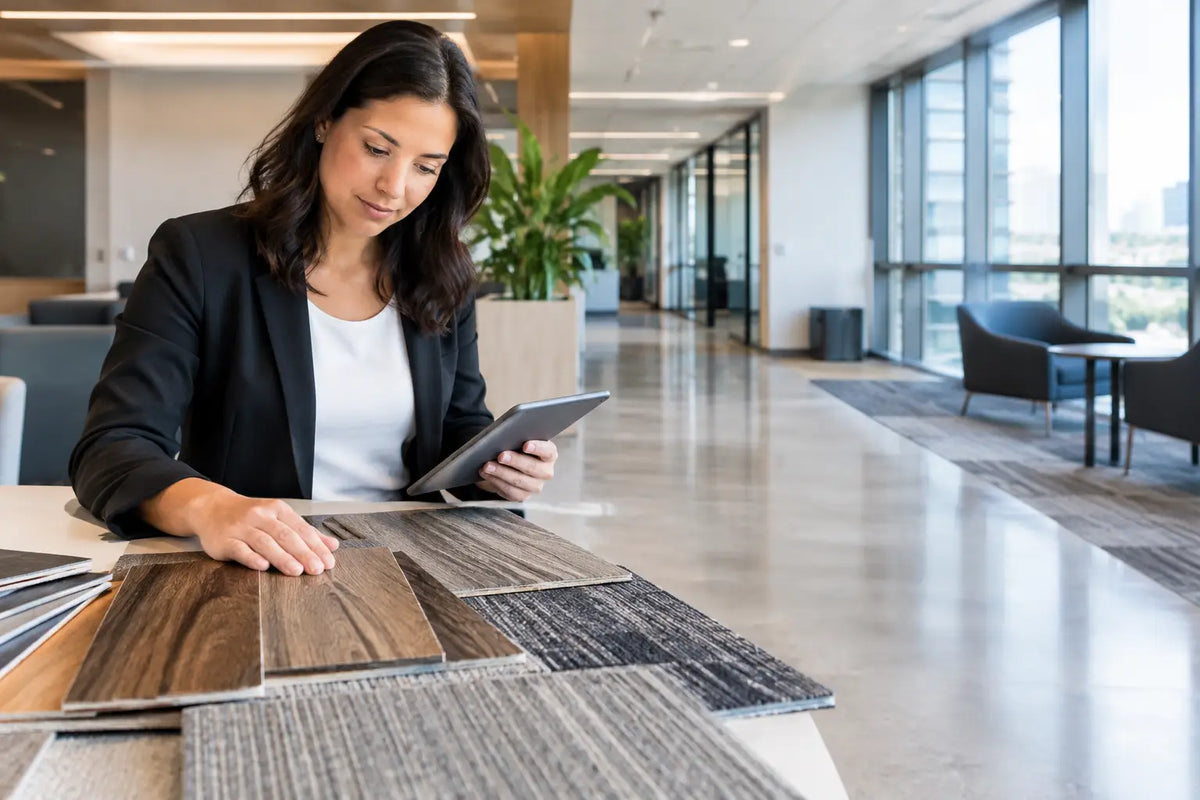
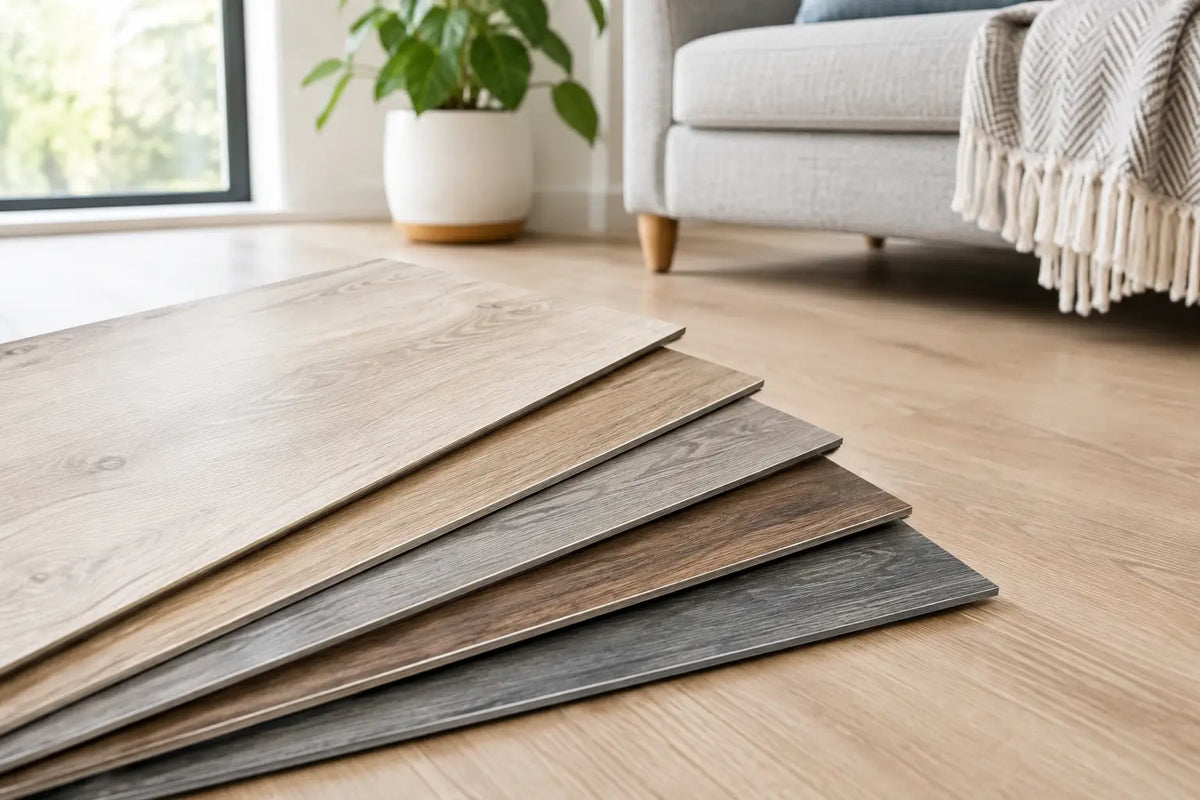
At FC Hardwood Floors, we help commercial clients compare samples, understand the trade-offs, and select flooring that fits the space, schedule, and budget. A thoughtful consultation before work begins can prevent expensive surprises later and help turn an ordinary workplace into a polished environment people are proud to enter.

Leave a comment
This site is protected by hCaptcha and the hCaptcha Privacy Policy and Terms of Service apply.