Article: Best Entryway Flooring for Durability at Home
Best Entryway Flooring for Durability at Home
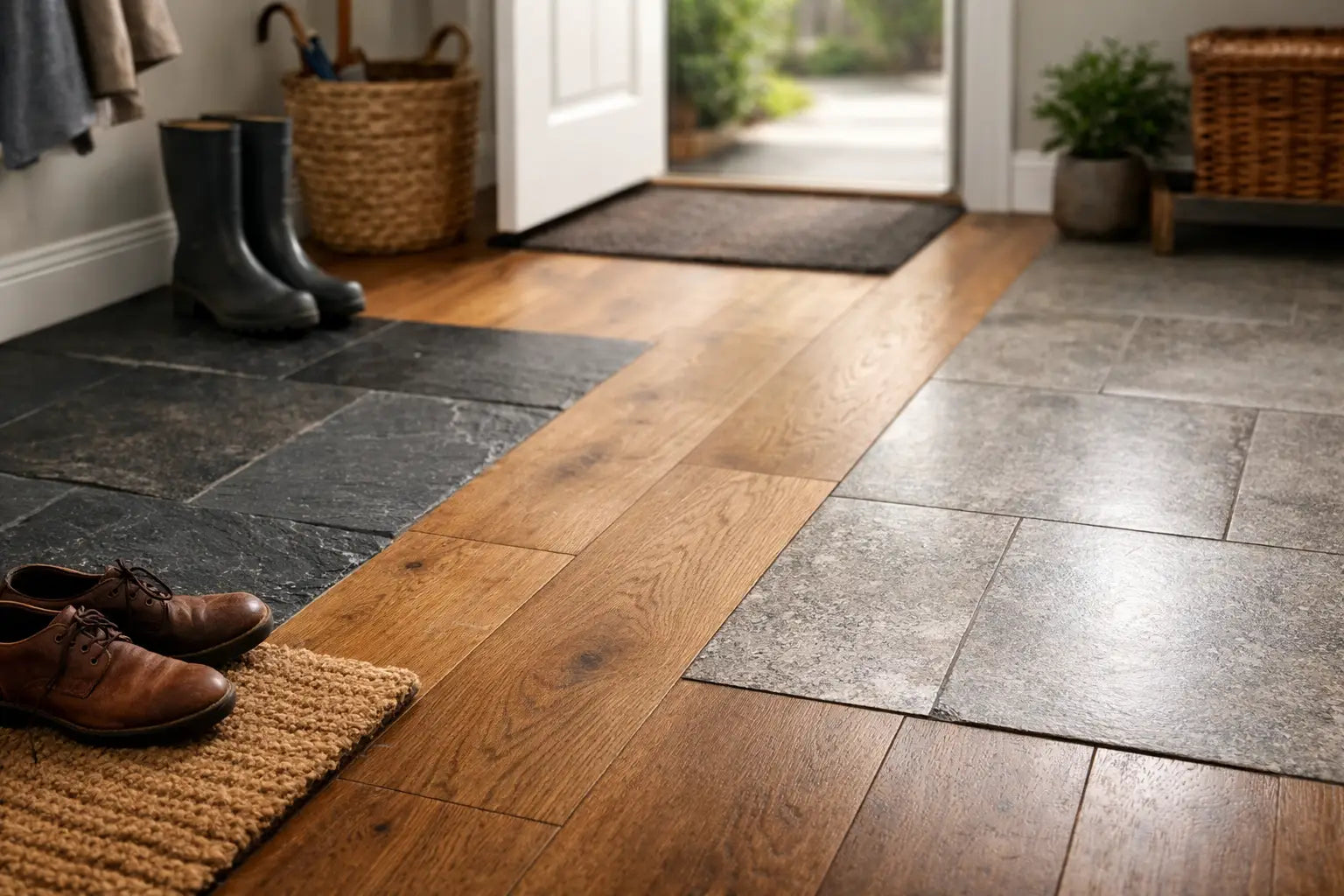
A front entry has a tougher job than almost any other floor in the house. It receives wet shoes, road salt, pet paws, dropped bags, grit from driveways, and the repeated impact of people coming and going. Finding the best entryway flooring for durability means choosing a surface that can handle that traffic without making your home feel cold, overly commercial, or disconnected from the rest of your design.
For many Kansas City-area homes, the right answer is not simply the hardest material available. It is the flooring that suits the entry’s exposure to moisture, the way your household uses the space, and the level of maintenance you are comfortable with. A beautiful floor that requires more care than your family can realistically give it is rarely the best long-term investment.
What Durable Entryway Flooring Must Handle
An entryway floor needs protection from three main threats: abrasion, moisture, and impact. Fine dirt and gravel act like sandpaper under shoes. Rain and snowmelt can work into seams or sit along the edge of a rug. Then there is daily wear - heels, boots, rolling bags, kids racing inside, and pets stopping at the door.
Durability also depends on installation details. A well-chosen product can still have problems if the subfloor is uneven, expansion space is ignored, or transitions are poorly finished. This is why material selection and professional installation should be considered together, especially in a high-traffic area where small weaknesses show quickly.
Best Entryway Flooring for Durability: Top Choices
Luxury vinyl plank or tile
Luxury vinyl is one of the most practical choices for busy entryways. Quality luxury vinyl plank and luxury vinyl tile are water-resistant, comfortable underfoot, and highly resistant to scratches and everyday scuffs. They also offer a wide range of wood and stone looks, making it easier to carry a consistent style from the entry into nearby living spaces.
For families with dogs, young children, or frequent wet-weather traffic, luxury vinyl provides impressive peace of mind. Most spills can be wiped up quickly, and the floor does not require refinishing over time. The trade-off is that luxury vinyl cannot be sanded and refinished like real hardwood, and a damaged plank may need replacement. Choosing a quality product with a strong wear layer and having it installed over a properly prepared subfloor makes a noticeable difference in how it performs.
Porcelain or ceramic tile
Porcelain tile is among the most durable entryway materials available. It stands up exceptionally well to water, salt, mud, and heavy foot traffic. It also makes sense for a true drop zone near an exterior door, particularly if your family regularly comes inside with wet boots or sports gear.
Porcelain is generally denser and less absorbent than ceramic, so it is often the stronger choice for demanding entrances. Both materials can deliver a polished look, from classic stone-inspired designs to warm wood-look tile. Choose a tile with a slip-resistant finish rather than a high-gloss surface, especially near a door exposed to rain or snow.
Tile does have a few practical drawbacks. It feels harder and cooler underfoot than vinyl or wood, and grout lines require periodic cleaning and sealing, depending on the grout used. It is also a more involved installation, but when installed correctly, tile can serve an entryway for decades.
Engineered hardwood
Homeowners who want a warm, timeless entry often choose engineered hardwood. It brings genuine wood character to the space and works beautifully when the entry flows directly into hardwood living areas. Engineered hardwood has a real hardwood surface layer over a layered core, which gives it more dimensional stability than solid hardwood in many conditions.
That said, wood is not waterproof. It is best for covered entries, low-to-moderate moisture exposure, and households that are willing to wipe up wet shoes and spills promptly. A durable species, a quality finish, and strategically placed rugs all help protect the surface. Wider planks can look striking, but they may make scratches or gaps more noticeable over time than a floor with natural variation and a lower-gloss finish.
Engineered hardwood is a strong choice when appearance and long-term value are priorities, but it asks for a little more care than vinyl or tile. For an uncovered doorway with frequent snowmelt, it may be wiser to create a tiled landing or select luxury vinyl instead.
Solid hardwood
Solid hardwood can absolutely work in an entryway, particularly in historic homes and interior vestibules where moisture is controlled. Its biggest advantage is longevity. Unlike most flooring products, solid hardwood can often be sanded and refinished multiple times, allowing the surface to be renewed after years of wear.
The key is realistic expectations. Hardwood develops character over time. Minor dents, small scratches, and changes in finish are part of a lived-in wood floor. A matte or satin finish and a species with natural grain variation can make daily wear less visible than a smooth, glossy floor. Oak remains a dependable entryway favorite because it is durable, readily available, and takes stain well.
Avoid treating hardwood as though it were waterproof. Use absorbent mats inside and outside the door, never leave wet footwear on the floor, and clean grit regularly. With those habits, hardwood can be a beautiful and lasting part of a welcoming entry.
Laminate flooring
Modern laminate has improved significantly in appearance and scratch resistance. It can be a cost-conscious option for an entry that sees plenty of dry foot traffic, and its tough wear layer can handle scuffs better than some wood finishes. For homeowners pursuing an affordable luxury look, quality laminate can deliver a convincing wood visual at a lower upfront cost.
Moisture is the deciding factor. Not every laminate product is appropriate near an exterior door, so it is essential to select one specifically rated for water resistance and follow the manufacturer’s installation requirements. Standing water and moisture entering seams can cause swelling or edge damage. In a protected entry with good mats and quick cleanup, laminate can perform well. In a wet mudroom-style entrance, luxury vinyl or tile is usually the safer choice.
Match the Material to Your Entryway Conditions
The best flooring choice often becomes clear when you consider the path people take through the door. A formal front entry that guests use occasionally has different needs than the family entrance connected to the garage. If your front door is covered by a deep porch and your household removes shoes immediately, hardwood or laminate may be completely reasonable. If the door opens straight onto the driveway and serves as the daily route for kids, pets, and groceries, waterproof performance deserves greater weight.
Think about sunlight as well. Strong afternoon light can fade some finishes and make scratches more visible. Textured surfaces, natural color variation, and medium-tone floors are often more forgiving than very dark, very light, or high-gloss options. This does not mean you must avoid a favorite color. It means choosing a finish that supports the way you live.
For commercial entries, durability requirements rise quickly. A retail space, office, or rental property may benefit from porcelain tile or commercial-grade luxury vinyl because both are easier to maintain through frequent traffic and regular cleaning. The right choice should balance appearance with downtime, replacement needs, and cleaning routines.
Installation Details That Protect Your Investment
Even durable flooring benefits from a smart entryway setup. Place a weather-resistant mat outside the door to capture the first layer of dirt and moisture, then use an absorbent rug inside. Select rugs with a backing that is safe for your flooring type, and lift them periodically to clean underneath. Trapped grit and moisture can damage nearly any surface.
Door thresholds, transitions, and perimeter edges also deserve close attention. These areas are exposed to moisture and movement, and they need a clean, properly sealed finish where appropriate. If you are replacing only the entry floor, consider how the new material will meet adjoining rooms. A thoughtful transition prevents tripping hazards and makes the installation look intentional rather than patched together.
Routine care is simple but valuable. Sweep or vacuum grit often using a hard-floor setting, wipe up water promptly, and use cleaners approved for your specific flooring. Avoid soaking wood, laminate, or vinyl floors with excess water. For tile, keep grout clean and address any cracking before moisture has a chance to reach below the surface.
Make Durability Feel Like Home
The most durable entryway floor should still welcome people in. Tile can create a hardworking landing zone, luxury vinyl can bring easy-care warmth, and hardwood can add lasting character when the conditions are right. Samples are especially helpful here because light, texture, and adjacent flooring all affect how a material looks once it is inside your home.
A personal consultation can save you from choosing a floor based on a showroom impression alone. At FC Hardwood Floors, we help homeowners weigh traffic, moisture, style, and budget so the finished entry feels polished and performs confidently through every season. Start with how your household actually enters the home, then choose the surface that will support that routine for years to come.

Leave a comment
This site is protected by hCaptcha and the hCaptcha Privacy Policy and Terms of Service apply.