
Article: Prefinished Versus Unfinished Hardwood Floors
Prefinished Versus Unfinished Hardwood Floors
A hardwood floor can look completely different under showroom lighting than it does beside your kitchen cabinets, in the afternoon sun, or after a busy Saturday with kids and pets. That is why the prefinished versus unfinished hardwood decision deserves more than a quick comparison of stain colors. Both options can create a beautiful, long-lasting floor. The better fit comes down to your design goals, household routines, project schedule, and budget.
For many homeowners, the decision is not about choosing a better product. It is about choosing the hardwood installation process that gives their home the right result with the fewest compromises.
What Is the Difference Between Prefinished and Unfinished Hardwood?
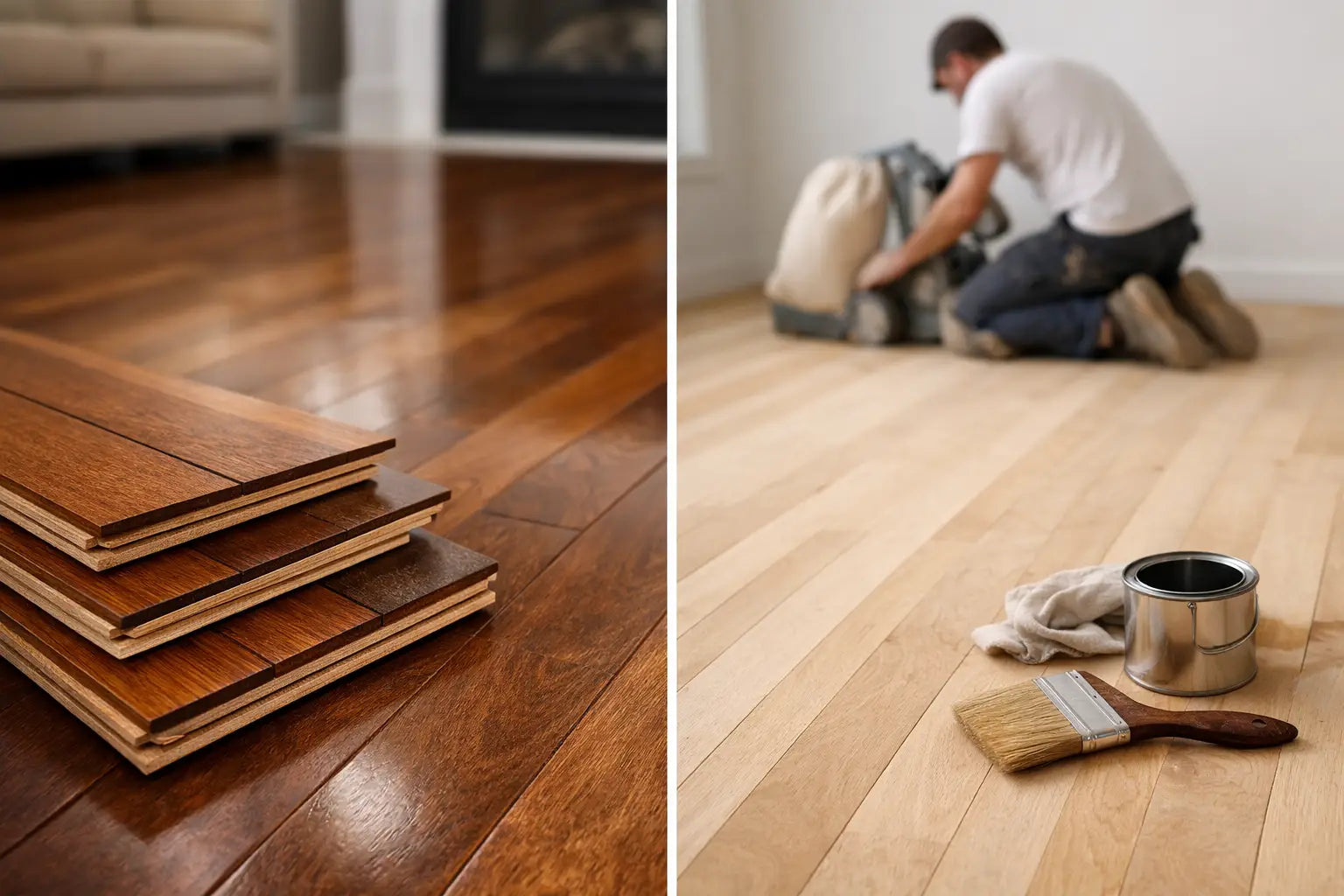
Prefinished hardwood arrives at your home with its stain and protective topcoat already applied at the factory. The boards are installed as finished pieces, so there is no sanding, staining, or coating process required after installation. This makes it a practical choice when you want less disruption and a faster path to enjoying your new floor.
Unfinished hardwood is installed as raw wood. After the boards are secured, the floor is sanded, stained if desired, and sealed on site. That extra work creates more opportunity to customize the final appearance, including the exact stain color, sheen, and how closely the floor coordinates with existing woodwork or adjoining hardwood.
Both can be solid hardwood, and both can provide decades of service when the material, installation, and maintenance are handled properly. The difference is largely in when and how the finish is applied.
Prefinished Versus Unfinished Hardwood for Appearance
If you have a specific vision for your floors, unfinished hardwood offers the greatest design flexibility. Because the stain is chosen after installation and sanding, you can compare samples directly with your walls, cabinetry, trim, and furnishings. This is especially valuable in a remodel where the new flooring must blend with original hardwood in nearby rooms.
Unfinished flooring also creates a more continuous visual effect. The finish coats cover the surface of the boards after they are installed, including the seams between them. For homeowners who prefer a smooth, traditional floor with less emphasis on individual board edges, that can be a meaningful advantage.
Prefinished hardwood offers consistency. Factory finishing is completed in controlled conditions, so the color and protective coating are applied with precision. Many prefinished collections also include attractive options that would be difficult or time-consuming to recreate on site, including wire-brushed textures, hand-scraped looks, matte finishes, and wider planks with distinctive character.
One visual detail to consider is the bevel. Most prefinished boards have a small beveled edge where planks meet. This helps accommodate natural variation in the wood and makes individual boards more defined. Some homeowners like that dimension; others prefer the flatter look of a site-finished floor. Looking at full-size samples in your own space is often more useful than deciding from a small display piece.
Installation Time and Household Disruption
Prefinished hardwood generally makes the installation phase easier on a lived-in home. Once the flooring is installed, it does not need to be sanded or finished, which reduces dust, odors, and drying time. Depending on the scope of the project, rooms may be ready for use much sooner.
That convenience matters for families trying to stay in the home during a renovation, as well as property managers and business owners working around occupancy or operating hours. There are still normal installation considerations, such as moving furniture, preparing the subfloor, and allowing the wood to acclimate to indoor conditions. But the final finishing stages are removed from the schedule.
Unfinished hardwood requires more patience. Sanding creates dust, even when professional dust-control equipment is used. Stain and finish may produce odors, and each coat needs proper drying and curing time before the space can return to normal use. The schedule can also be affected by humidity, temperature, floor repairs, and the number of finish coats required.
The trade-off is control. For a whole-home renovation, new construction project, or restoration where the house is already vacant, the additional finishing time may be well worth it. A professional installer can coordinate the process so the flooring is completed at the right point in the renovation, after heavy work is done but before final move-in.
Durability Is About More Than the Topcoat
Factory-applied finishes on prefinished hardwood are known for their toughness. Many use multiple layers of aluminum oxide or similar high-performance coatings cured under controlled conditions. They can be an excellent choice for active households, entry areas, and commercial spaces where a strong finish is a priority.
Still, no hardwood finish is scratch-proof, dent-proof, or waterproof. Dogs, moving furniture, grit from shoes, dropped cookware, and moisture can damage either type of floor. A durable finish helps, but daily care has a major effect on how the floor looks over time. Use mats at exterior doors, felt pads under furniture, and a hardwood-safe cleaner rather than excessive water or harsh cleaning products.
Unfinished hardwood can also receive very durable modern finishes. Its long-term strength depends on the finish system selected and the quality of the application. One benefit is that the entire installed floor receives the same finish coats, including the joints. This can offer a little more protection against small spills reaching the edges between boards, although standing water should always be cleaned up promptly.
When future refinishing is part of your plan, unfinished hardwood may offer an advantage because the floor begins with a uniform site-applied finish. Prefinished hardwood can also be refinished, but deeper bevels and certain factory textures may make the process more involved. The thickness of the wood, its condition, and the product itself all need to be evaluated before refinishing.
Cost: Look Beyond the Price Per Square Foot
Prefinished hardwood can cost more per square foot because the finishing work is included in the product. However, it can reduce labor time on site, which may help balance the total project cost. It may also limit the number of days your household needs to work around a flooring project.
Unfinished hardwood may have a lower initial material price, but the estimate should include sanding, staining, finishing supplies, labor, and the additional time required. If custom stain matching, repairs, intricate transitions, or extensive preparation are needed, those details can affect the final investment.
The most useful comparison is an itemized estimate for the same space and wood species. A clear estimate should account for subfloor preparation, removal and disposal of existing flooring if needed, trim work, transitions, furniture moving, and finishing. That gives you a more honest picture than comparing material prices alone.
Which Hardwood Floor Is Right for Your Home?
Prefinished hardwood is often the right fit when you want a predictable color and finish, a shorter installation timeline, and minimal on-site sanding. It works especially well for homeowners who have found a factory finish they genuinely love and want their rooms back quickly.
Unfinished hardwood is often the better choice when customization matters most. Choose it if you need a close stain match to existing floors, want a particular sheen or color, prefer a smooth floor without pronounced bevels, or are completing a larger renovation where the finishing schedule is manageable.
Your wood species matters, too. Oak remains a dependable choice because it takes stain well and offers a wide range of looks. Maple has a cleaner grain but can be more challenging to stain evenly. Hickory brings dramatic character and hardness, while walnut offers rich color with a softer feel under everyday use. The right material and finish should suit how your household actually lives, not just how the floor looks on installation day.
Make the Decision With Samples and a Clear Plan
Before committing, bring samples into the room where the floor will be installed. View them in morning light, evening light, and alongside your cabinetry, paint, and upholstery. Ask how the product performs in kitchens, entryways, pet-friendly homes, and high-traffic spaces. A good flooring professional should also explain the installation timeline plainly, including acclimation, preparation, and when furniture can return.
At FC Hardwood Floors, we believe affordable luxury starts with a floor you will still be glad you chose years from now. Whether that means the efficiency of prefinished hardwood or the custom character of an unfinished floor, a thoughtful estimate and the right samples can turn a difficult choice into a confident one.

Leave a comment
This site is protected by hCaptcha and the hCaptcha Privacy Policy and Terms of Service apply.