
Article: Guide to Laminate Flooring Thickness for Homes
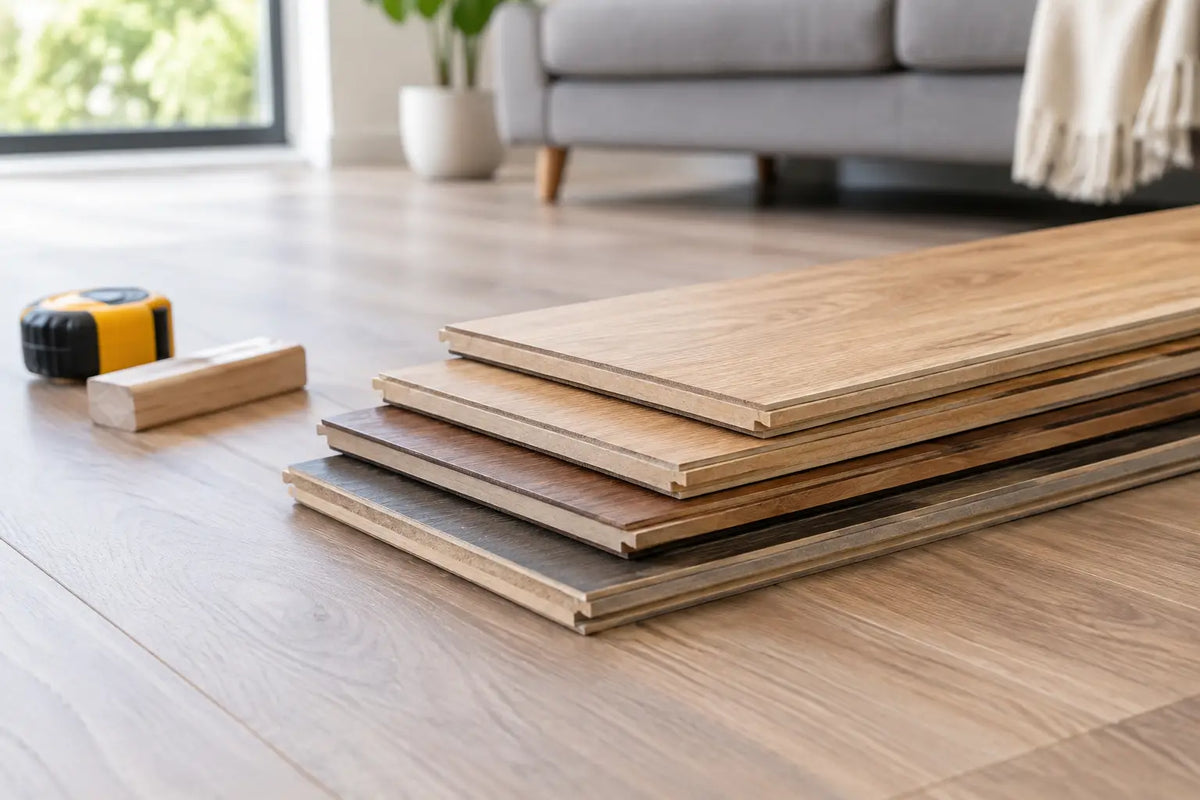
Guide to Laminate Flooring Thickness for Homes
A laminate floor can look nearly identical in a showroom whether it is 7mm or 12mm thick. Once it is installed, though, the difference may show up in how solid it feels underfoot, how it handles minor subfloor variation, and how well it fits your home’s transitions. This guide to laminate flooring thickness will help you look beyond the sample board and choose a floor that suits your room, budget, and expectations.
Thickness matters, but it is not a stand-alone measure of quality. A well-made 8mm laminate with a strong locking system and durable surface can be a better choice than a lower-quality 12mm product. The right decision comes from considering the entire flooring system: the plank, the subfloor, the underlayment, and the way the room will be used.
What Laminate Flooring Thickness Means
Laminate flooring thickness is measured in millimeters, usually from 6mm to 12mm. That measurement includes the decorative surface, protective wear layer, core, and backing. It does not necessarily include a separate underlayment, although some laminate products have a pad attached to the bottom of each plank.
The core accounts for most of a plank’s thickness. It is typically made from dense fiberboard, which helps provide stability and gives the locking edges their strength. A thicker core can make the plank feel more substantial and can help it bridge very slight imperfections in a properly prepared subfloor.
However, no laminate thickness can solve a major subfloor problem. If the floor beneath the laminate has dips, humps, loose areas, or moisture concerns, those issues should be addressed before installation. Preparing the foundation is one of the most important steps in achieving a quiet, long-lasting floor.
A Guide to Laminate Flooring Thickness by Range
6mm to 7mm: Budget-conscious and room-specific
Thinner laminate is often the most affordable option. It can work in low-traffic areas, rental properties, closets, or rooms where a homeowner wants an updated appearance without a major investment. It is also helpful when overall floor height is a concern.
The trade-off is that thinner planks are less forgiving. They need a very flat subfloor, and their locking edges may be more vulnerable if the floor flexes underfoot. In busy family spaces, thinner laminate can also sound more hollow unless the underlayment and subfloor preparation are handled carefully.
8mm: A practical choice for many homes
For many households, 8mm laminate offers a strong balance of value, appearance, and everyday performance. There are many attractive colors, wood looks, and surface textures available at this thickness, including options that complement traditional, modern, and transitional interiors.
An 8mm floor can perform very well in bedrooms, living rooms, hallways, and moderate-use dining spaces when paired with a quality underlayment and installed over a level subfloor. Product quality still varies, so look closely at the warranty, locking system, water-resistance features, and wear rating rather than choosing based on thickness alone.
10mm: More substance underfoot
At 10mm, laminate tends to feel firmer and more substantial. The additional thickness can contribute to a more solid walking experience and may help reduce the click or hollow sound sometimes associated with floating floors. It can also provide a bit more confidence in areas with steady foot traffic.
This range is often a smart fit for active households that want an affordable luxury look without moving into the price of hardwood. It is also worth considering for larger open rooms, where the floor is highly visible and used throughout the day.
12mm: Premium feel and added durability potential
Twelve-millimeter laminate is commonly chosen for its heavier feel and premium appearance. The thicker core can make the floor feel more like a solid surface, and many 12mm lines include deeper textures, beveled edges, and realistic wood-grain details.
That said, 12mm is not automatically the best option for every project. It costs more, raises the finished floor height, and may require adjustments at doorways, appliances, stairs, or existing flooring transitions. It is a worthwhile investment when the product’s construction and finish meet the demands of the space, but it is not necessary simply because a room gets regular use.
Thickness Is Not the Same as Wear Resistance
One common mistake is assuming that a thicker plank has a tougher surface. Thickness primarily affects the core and the feel of the floor. Scratch, scuff, stain, and wear resistance depend more on the quality of the top layer and the product’s abrasion class rating.
For homes with children, pets, or frequent entertaining, look for laminate designed for higher residential traffic. Commercial settings, rental turnovers, and busy office areas may call for a product rated for heavier use. A floor’s finish, texture, edge construction, and manufacturer warranty all deserve attention alongside the millimeter measurement.
Water performance is separate, too. Some laminate products are water-resistant for a limited time, while others offer more complete protection against spills. Neither feature means the floor should be installed over an untreated moisture problem or regularly exposed to standing water. Kitchens, entryways, laundry areas, and below-grade spaces require a careful conversation about moisture and material selection.
How Your Subfloor Changes the Decision
The condition of the subfloor should guide your choice at least as much as the thickness of the laminate. A floating floor follows the plane of the surface beneath it. If the subfloor is uneven, the laminate can move, creak, separate at the joints, or develop damaged edges over time.
Concrete slabs need to be checked for moisture, especially in basements and on-grade rooms. In Greater Kansas City, seasonal humidity and temperature changes can also make proper acclimation and expansion spacing essential. Wood subfloors should be secure, level, and free of movement before the new flooring goes down.
Underlayment can improve sound control, cushion the feel slightly, and provide moisture protection when the product and installation conditions call for it. It cannot level a floor or compensate for structural issues. Using an underlayment that is too thick or too soft can even put unnecessary stress on a laminate locking system.
Match the Thickness to the Room
A bedroom with low traffic may not need the same laminate as a busy kitchen, front entry, or family room. In a quieter room, a quality 8mm floor can be an excellent value. In a central living area where people gather daily, 10mm or 12mm may deliver the more grounded, substantial feel many homeowners want.
For commercial spaces, focus on the expected traffic, cleaning routine, furniture movement, and time available for installation. A thicker commercial-grade laminate may make sense, but the finish rating and installation details are usually more decisive than thickness by itself.
Also consider finished floor height. Even a few extra millimeters can affect clearance under doors, dishwasher installation, trim work, and transitions to tile, carpet, or existing hardwood. Planning those details before installation helps the finished project look intentional rather than patched together.
Questions to Ask Before Choosing Laminate Thickness
When comparing samples, ask whether the quoted thickness includes an attached pad, what wear rating the product carries, and whether it is appropriate for your room’s moisture exposure. Ask how the floor will transition into adjoining rooms and whether the subfloor needs leveling or repair.
It is also reasonable to ask for a sample to take home. Looking at the color and texture in your own lighting is often more useful than seeing it beneath showroom lights. Set the sample near cabinets, furniture, wall paint, and natural light at different times of day.
At FC Hardwood Floors, we help homeowners compare flooring choices in the context of the actual room, not just a display rack. A clear estimate and an honest review of the subfloor can prevent expensive surprises later.
The best laminate is the one that feels right for your space, performs well for the way you live, and is installed on a properly prepared foundation. Start with samples, ask the practical questions, and choose a thickness that supports the whole project rather than simply chasing the highest number on the label.

Leave a comment
This site is protected by hCaptcha and the hCaptcha Privacy Policy and Terms of Service apply.