
How to Choose Hardwood Flooring That Lasts
A hardwood floor can make a room feel finished before the furniture is even in place. It adds warmth, character, and long-term value, but choosing hardwood flooring involves more than picking a color from a sample board. The right floor has to suit your household, your subfloor, the room's moisture level, and the way you want the space to look years from now.
For homeowners in the Kansas City area, that decision also needs to account for seasonal humidity changes, busy family routines, pets, and the realities of remodeling around an existing home. A little planning upfront helps you choose a floor that looks like an investment and performs like one.
Start With How the Room Will Be Used
Before comparing oak to hickory or light finishes to dark ones, consider the room itself. A formal dining room with occasional use has different needs than a kitchen entry that sees wet shoes, dropped backpacks, and a dog racing in from the yard.
Solid hardwood is an excellent choice for many living rooms, bedrooms, hallways, and dining areas. It is made from one piece of wood and can usually be sanded and refinished several times over its life. That makes it a lasting option for homeowners who want the ability to update the color or restore the surface down the road.
Engineered hardwood has a real hardwood top layer over a layered core. Its construction provides greater dimensional stability, which can make it a smart option over concrete slabs, in below-grade spaces, or where moisture and temperature changes are a larger concern. Quality varies widely, so the thickness of the top veneer matters. A thicker wear layer generally offers more opportunity for future refinishing.
Neither option is automatically better. The best choice depends on where it will be installed, the condition of the subfloor, and whether the floor needs to handle daily wear, moisture risk, or unusual site conditions.
Hardwood Flooring Species Affect More Than Color
Wood species determine the grain pattern, natural color variation, and hardness of the floor. They also influence how much a floor shows dents and everyday activity.
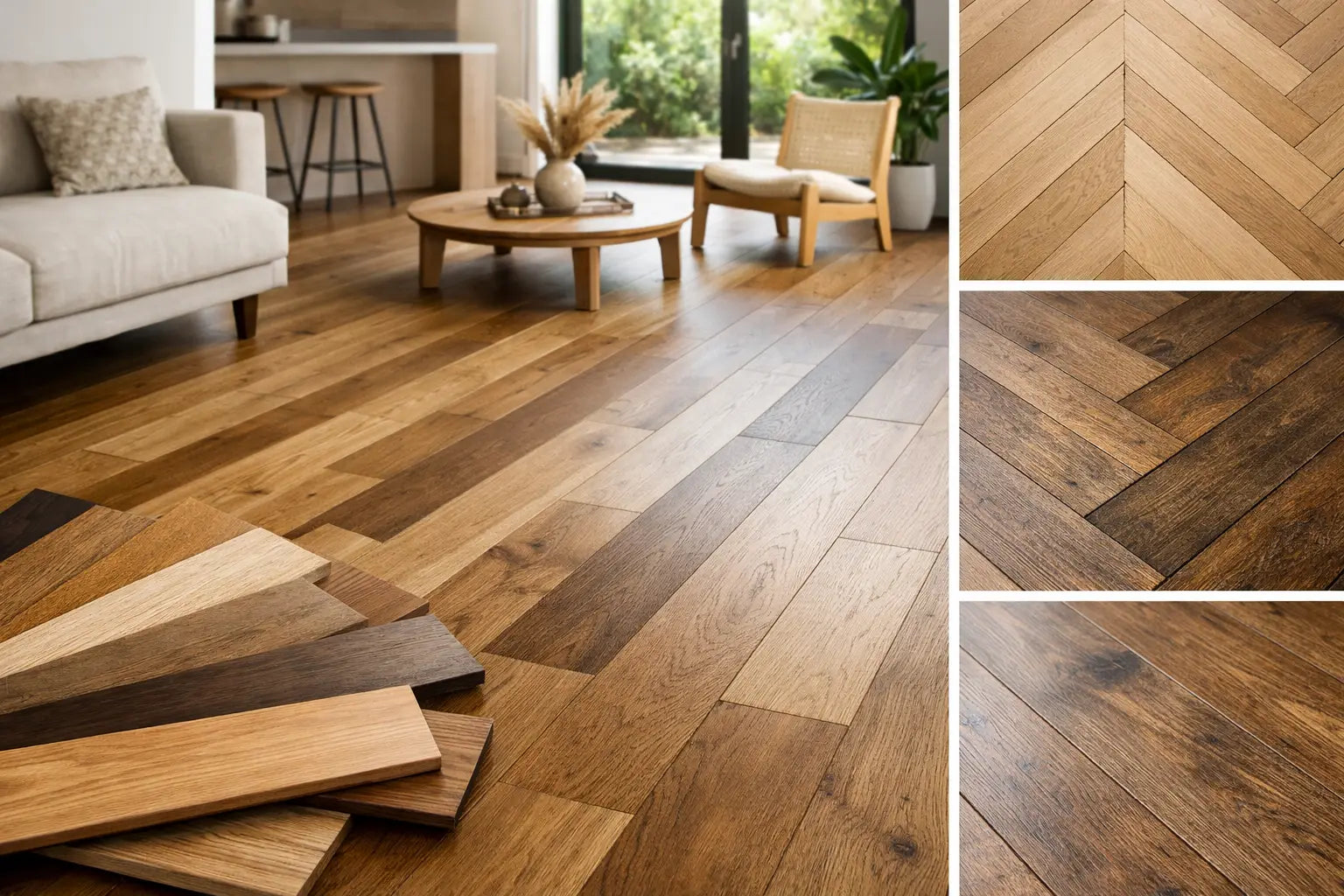
Oak remains a favorite because it is durable, versatile, and available in a broad range of stain colors. Red oak has a warmer, more pronounced grain, while white oak has a more subtle pattern and a naturally cooler tone that works especially well with many current design styles. Both can be refinished beautifully and have a proven track record in homes of every age.
Maple offers a cleaner, finer grain and a lighter natural appearance. It can be a good fit for contemporary spaces, although its dense surface can take stain differently than oak. Hickory brings bold grain movement and exceptional hardness, making it a practical choice for active households. Its natural color variation creates a more rustic, expressive look, which some homeowners love and others find too busy.
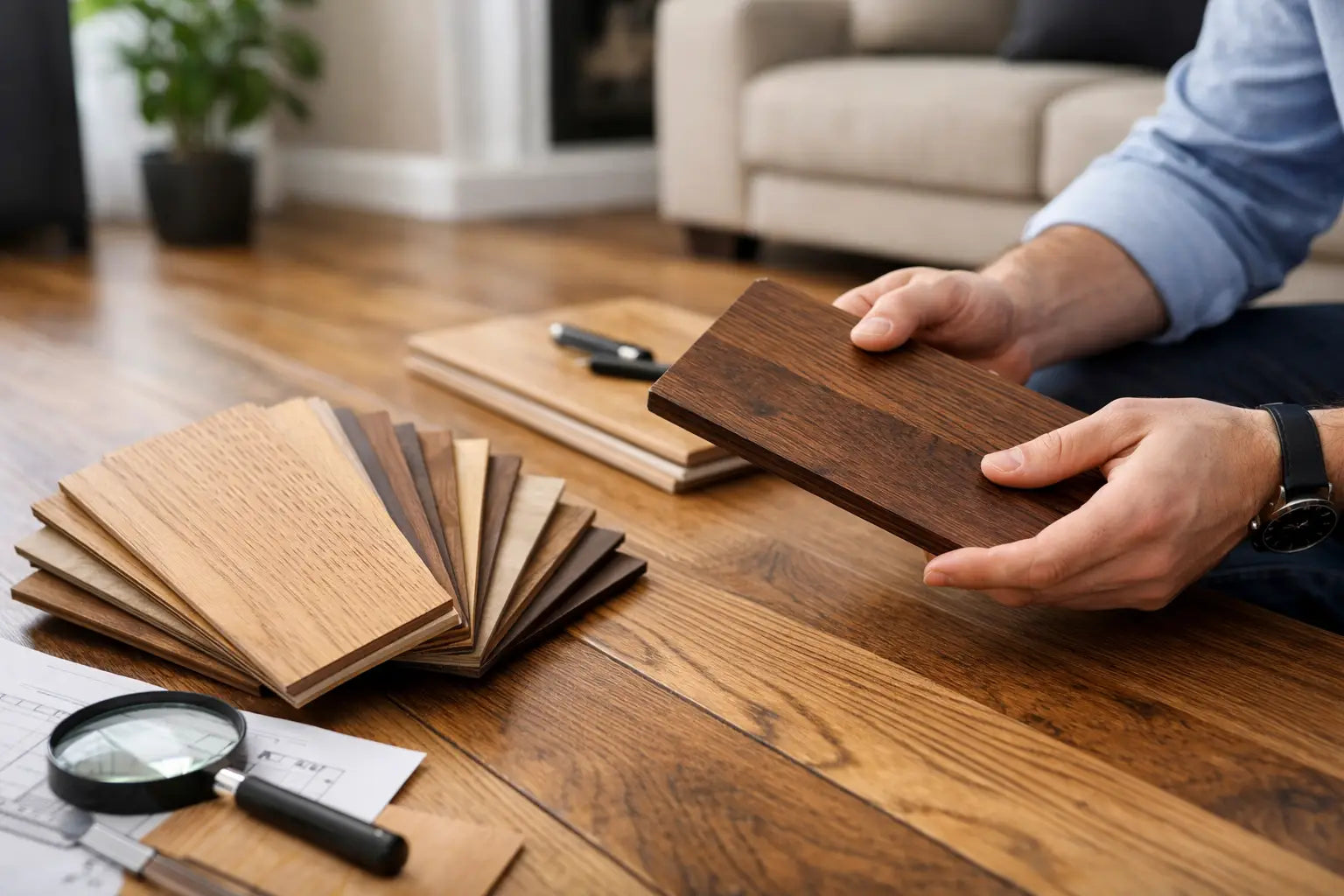
Walnut delivers rich, deep color and a refined feel, but it is softer than oak or hickory. It is often best in lower-traffic spaces where appearance is the main priority. The lesson is simple: do not choose a species based on a small sample alone. Ask to see larger boards and consider how the wood's grain and variation will look across an entire room.
Choose Color and Finish for Real Life
A floor color can change the perceived size and brightness of a room. Lighter hardwood tends to make spaces feel more open and is generally forgiving of dust, small scratches, and pet hair. Medium tones provide warmth and flexibility, pairing well with a wide range of cabinetry and furnishings. Dark floors can create a dramatic, polished look, but they often show dust, footprints, and surface scratches more easily.
Finish is just as important as stain color. A low-sheen matte or satin finish is a popular choice because it softens glare and makes normal wear less noticeable. High-gloss finishes can look striking, but they require more frequent cleaning to maintain that polished appearance.
Site-finished hardwood is sanded and finished after installation, giving you more control over stain color and a smooth, continuous appearance. Factory-finished flooring arrives with its protective coating already applied, which can shorten installation time and reduce disruption inside the home. Factory finishes are often very durable, while site finishing offers more customization and can be especially valuable when matching existing hardwood.
Samples should always be viewed in the actual room. Natural daylight, paint colors, cabinet finishes, and nearby textiles can make the same wood sample look completely different from one area of the house to another.
Installation Details Protect Your Investment
A beautiful hardwood floor depends on correct preparation. Even premium material can underperform if it is installed over an uneven subfloor, exposed to excess moisture, or put in place before it has acclimated to the home.
Professional installers evaluate the subfloor, check moisture levels, address uneven areas, and determine the best installation method for the product and setting. Depending on the material and subfloor, boards may be nailed, glued, floated, or installed using a combination of methods. These details are not visible once the project is finished, but they make a significant difference in how the floor feels and performs.
In Greater Kansas City, indoor humidity can shift substantially between summer and winter. Wood naturally expands and contracts with those changes. Proper acclimation, expansion gaps around the perimeter, and a stable indoor environment help reduce the risk of gaps, cupping, or movement over time.
Installation planning should also include transitions, stair nosing, vents, baseboards, and door clearances. These finishing details give the project a clean, intentional appearance instead of making the new floor look added on.
Think About Maintenance Before You Buy
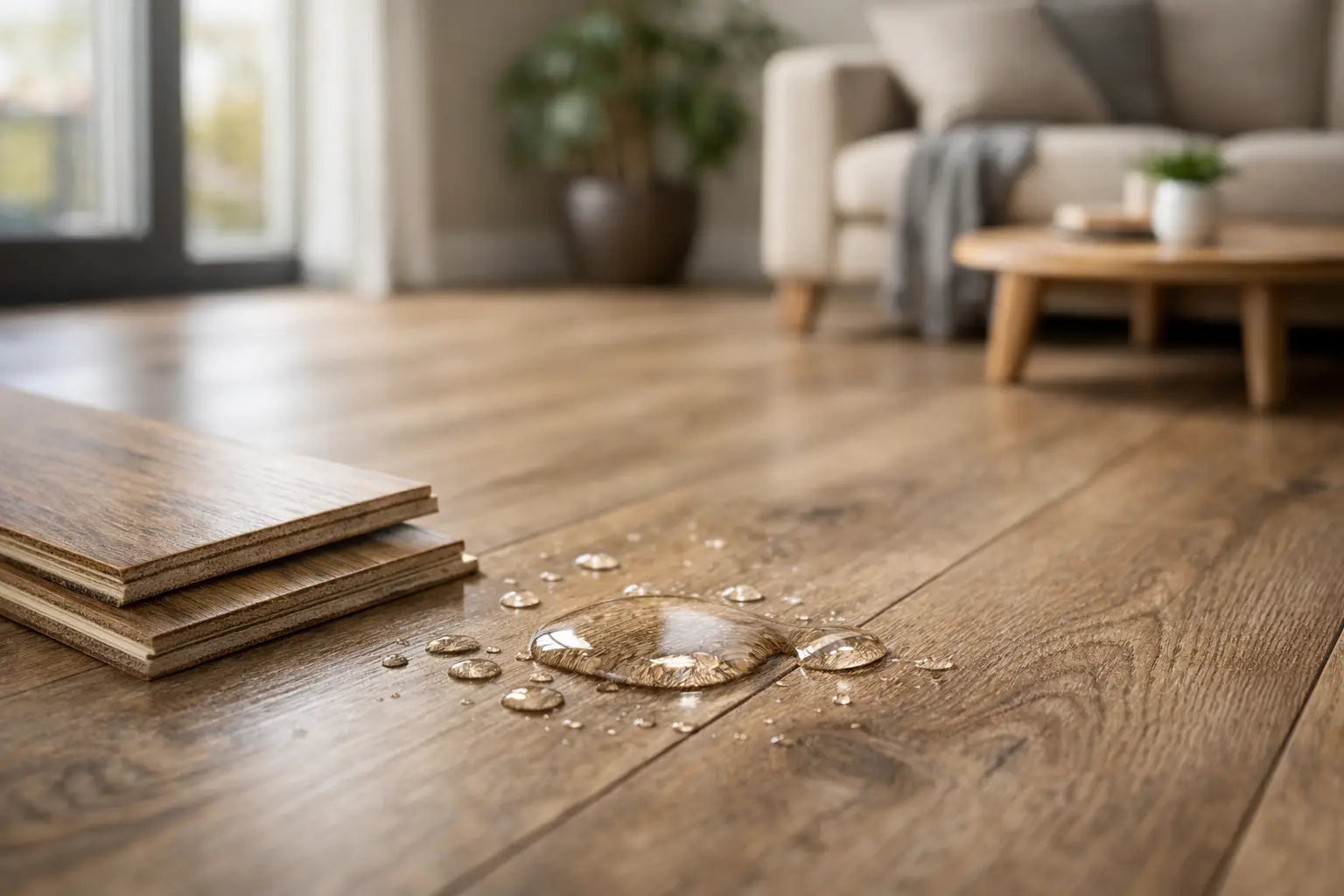
Hardwood is durable, but it is not maintenance-free. Regular sweeping or vacuuming with a hard-floor setting prevents grit from acting like sandpaper underfoot. A lightly damp microfiber mop and a cleaner recommended for the floor's finish are usually enough for routine care. Standing water, steam mops, and harsh cleaners can damage wood or dull the protective coating.
Place mats at exterior doors, use felt pads under furniture, and clean spills promptly. These are small habits, but they help preserve the finish in the places that take the most abuse. Area rugs can protect high-traffic zones, although rugs should be breathable and should not trap moisture against the floor.
One of hardwood's biggest advantages is that wear does not always mean replacement. When the surface begins to look dull or scratched, a professional screen and recoat may restore the finish without sanding down to bare wood. Floors with deeper damage, discoloration, or worn-through finish may need full sanding and refinishing. The right maintenance plan can extend the life of a hardwood floor for decades.
Set a Budget Around the Complete Project
Flooring budgets should include more than the cost per square foot of material. Removal and disposal of existing flooring, subfloor repairs, moisture protection, trim work, stairs, transitions, furniture moving, and finishing can all affect the final scope. A clear estimate should explain these items so there are fewer surprises once work begins.
Material cost also does not tell the whole story. A less expensive product installed in the wrong location can become costly sooner than expected. On the other hand, an engineered floor with the right construction may be the more practical investment for a concrete-based room, even if solid hardwood was the original plan.
At FC Hardwood Floors, the goal is to help customers compare those options honestly, from premium solid wood to complementary laminate and luxury vinyl choices where they make more sense. A floor should fit the home and the budget, not force a compromise that creates regret later.
The best hardwood floor is not simply the one that looks best in a showroom. It is the one that feels right in your home, handles the way you live, and is installed with the care needed to keep it beautiful for years. Bring home samples, ask questions about the subfloor and finish, and use a detailed estimate to make a decision you will be glad to live with every day.

Leave a comment
This site is protected by hCaptcha and the hCaptcha Privacy Policy and Terms of Service apply.