Article: When Should Floors Be Replaced? Signs to Know
When Should Floors Be Replaced? Signs to Know
A floor can look tired long before it is truly worn out, and a small issue can become an expensive one when moisture, movement, or structural damage is involved. So, when should floors be replaced? The answer depends on the material, the condition beneath the surface, and whether repairs can restore both the appearance and performance of the floor.
For homeowners and property managers, the goal is not to replace flooring at the first scratch. It is to recognize when repairs are no longer a smart investment. A professional assessment can separate normal wear from damage that affects safety, indoor comfort, and long-term value.
When Should Floors Be Replaced Instead of Repaired?
Replacement is usually the right choice when damage is widespread, the floor has lost its structural stability, or the needed repairs would cost nearly as much as new installation. Cosmetic issues alone do not always require a new floor. Surface scratches, dull finish, and minor dents may be repairable, especially on solid hardwood.
The bigger concern is what the visible damage may be telling you. Floors that feel soft, shift underfoot, cup at the edges, or show repeated moisture staining may have problems below the finished surface. Covering those issues with new material without correcting the source can lead to another failure.
Your floor feels uneven, soft, or unstable
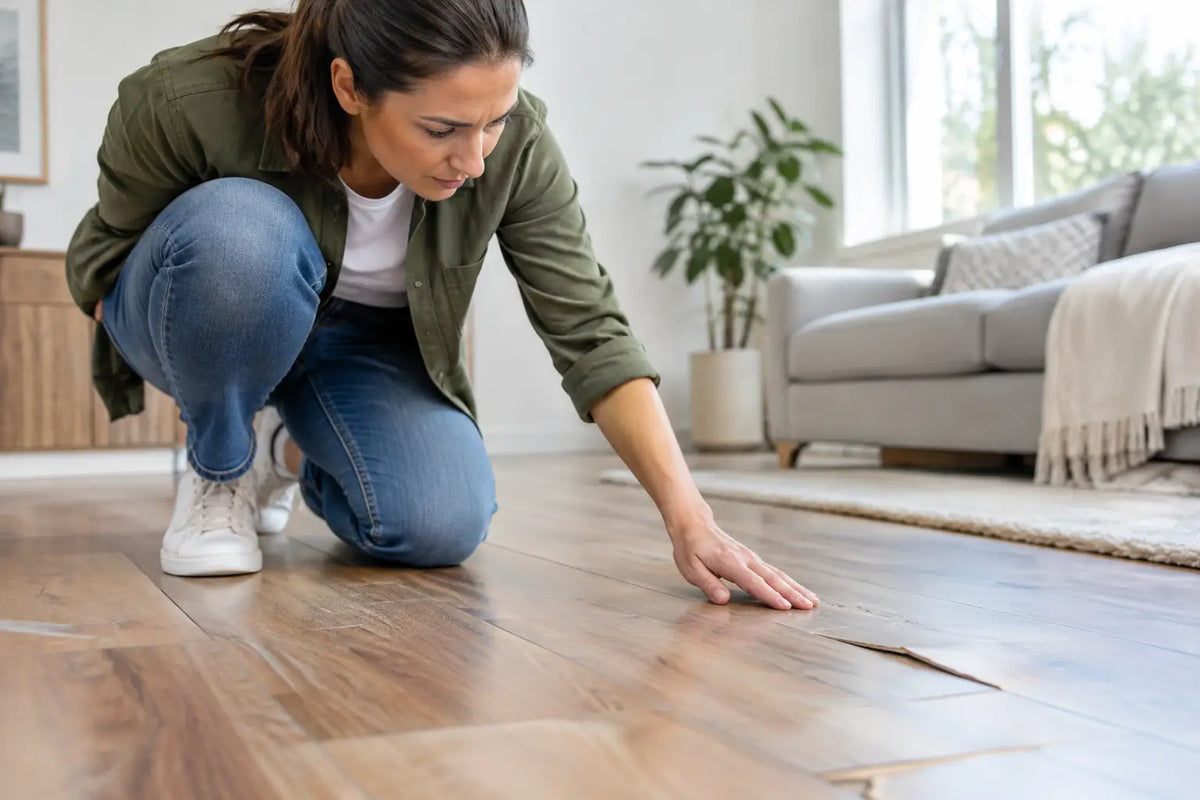
A floor should feel solid when you walk across it. Some minor squeaks are common in older homes, but spongy sections, pronounced movement, loose boards, or a sudden dip can indicate damage to the subfloor or framing. This is not simply an appearance issue. It is a reason to investigate promptly before choosing a repair or replacement plan.
In commercial spaces, uneven flooring can also create a trip hazard. Property owners may need replacement sooner when worn flooring affects customer safety, accessibility, or daily operations.
Water damage keeps returning
Water is one of the clearest reasons to consider replacement. Hardwood boards can sometimes be dried and refinished after a small, short-lived spill. But boards that stay cupped, crown in the center, separate at the seams, turn dark, or develop mold-related odors may not recover fully.
Luxury vinyl and laminate are more water-resistant than many traditional floors, but neither is invincible. Water that reaches the seams or subfloor can cause planks to lift, edges to swell, and adhesive to fail. Before replacing any water-damaged floor, identify the cause: a leaking appliance, plumbing issue, foundation moisture, pet accidents, or poor drainage. The new floor deserves a dry, stable foundation.
Damage appears across large areas
A few damaged boards can often be replaced individually. When scratches, chips, stains, gaps, or worn-through areas appear across most of a room, spot repairs can become obvious and costly. Matching older materials is not always possible, particularly when flooring has faded over time or a product line has been discontinued.
At that point, full replacement may provide better value and a more consistent result. It also gives you the opportunity to select a floor that fits how the room is actually used today, whether that means a tougher finish for active kids and pets or waterproof protection near an entryway.
The floor no longer supports a healthy, comfortable space
Persistent odors, mold growth, pest damage, or flooring that traps allergens can affect how a room feels and functions. Carpet with deep staining or recurring odors often reaches a point where cleaning no longer delivers a meaningful improvement. Damaged wood and underlayment may also need to be removed if moisture has created conditions for mold.
Replacement can be especially worthwhile in bedrooms, rental properties, offices, and retail environments where cleanable, durable surfaces make ongoing maintenance easier.
Signs by Flooring Type
Different materials fail in different ways. Knowing what to look for helps you avoid replacing a floor that could be renewed, while also avoiding the cost of waiting too long.
Hardwood floors: refinish first when possible
Solid hardwood is one of the most repairable flooring options. If the boards are stable and the damage is mostly in the finish, refinishing can remove scratches, restore color, and give the room a dramatic update without removing the entire floor. This is often the best path for worn but fundamentally sound hardwood.
Replacement becomes more likely when boards are badly warped, cracked through, weakened by repeated sanding, severely water-damaged, or affected by extensive insect damage. Deep black stains from long-term moisture can sometimes remain even after sanding. In those cases, replacing selected boards or the full floor may produce a better result.
Engineered hardwood requires a more careful evaluation. Some products can be refinished, depending on the thickness of the top wood layer. Others have too little wear layer for sanding. A flooring professional can determine whether restoration is realistic before work begins.
Laminate floors: watch for swelling and seam failure
Laminate offers an attractive, budget-conscious look, but its core can be vulnerable once moisture gets inside. Swollen edges, bubbling, peeling, and separated locking joints are common signs that replacement may be needed. Unlike hardwood, laminate generally cannot be sanded and refinished.
If damage is confined to a small area and matching planks are available, targeted replacement may be possible. Widespread seam problems or moisture damage usually point to a full replacement, along with a review of the room's moisture conditions.
Luxury vinyl: durable, but not indestructible
Luxury vinyl is a practical choice for busy homes and commercial settings because it handles daily wear well and is available in many wood- and stone-look designs. Still, planks or tiles can tear, gouge, loosen, fade, or develop raised edges. Heavy furniture, rolling loads, improper installation, and an uneven subfloor can all contribute to problems.
A few damaged pieces may be replaced. If the floor is lifting throughout the room or the subfloor is telegraphing through the vinyl, replacement may be the more dependable solution. Preparing the subfloor correctly is just as important as choosing the new product.
Consider Age, but Do Not Let It Make the Decision Alone
Floor age is useful context, not a deadline. A well-maintained hardwood floor can last for generations. Quality luxury vinyl can provide many years of reliable service, while laminate lifespan varies based on product quality, installation, moisture exposure, and traffic.
Instead of asking whether your floor is old, ask whether it still meets the needs of the room. Is it easy to clean? Does it look appropriate for the space? Does it handle pets, children, tenants, customers, or rolling office chairs without constant repairs? A floor that is technically intact may still be worth replacing if it no longer supports the way you live or work.
Kansas City's seasonal humidity and temperature changes can also expose flooring issues over time. Small seasonal gaps in wood can be normal, but major gaps, buckling, or recurring movement deserve professional attention. Proper acclimation, moisture testing, and installation methods help new flooring perform through changing conditions.
How to Choose the Right Replacement Floor
The best replacement is not always the most expensive option. It is the material that balances appearance, maintenance, budget, and the demands of the space. Hardwood brings lasting character and can often be refinished. Engineered hardwood provides real wood style with added construction stability. Laminate offers value for lower-moisture areas, while luxury vinyl is a strong option for rooms that need water resistance and easy care.
Think beyond the color sample. Consider sunlight, the amount of foot traffic, transitions to neighboring rooms, the condition of the subfloor, and how long you plan to stay in the property. A light floor may show less dust but can make dark pet hair more visible. A deep, rich stain can feel classic but may reveal scratches more readily in an active household. Honest guidance at the selection stage prevents regret after installation.
For a whole-home project, it may make sense to use more than one material. Hardwood can create warmth in living areas, while luxury vinyl may be a better fit for a lower level, mudroom, or moisture-prone space. The key is making the transitions look intentional and ensuring each material is installed for the conditions it will face.
Start With the Condition Beneath the Surface
Before making a replacement decision, have the flooring and subfloor evaluated. FC Hardwood Floors helps homeowners and property decision-makers understand whether restoration, repair, or replacement offers the best value for their specific space. A clear estimate and material samples make it easier to compare options without pressure.
If your floors are showing signs of wear, do not wait for a loose plank, water stain, or uneven section to become a larger project. A careful inspection now can protect your budget and help you choose a floor that makes your house feel more like home for years to come.

Leave a comment
This site is protected by hCaptcha and the hCaptcha Privacy Policy and Terms of Service apply.